






Certification Courses
Hands-On Labs
Threat Intelligence
Latest Cyber News
MITRE ATT&CK Breakdown
All Cyber Keywords
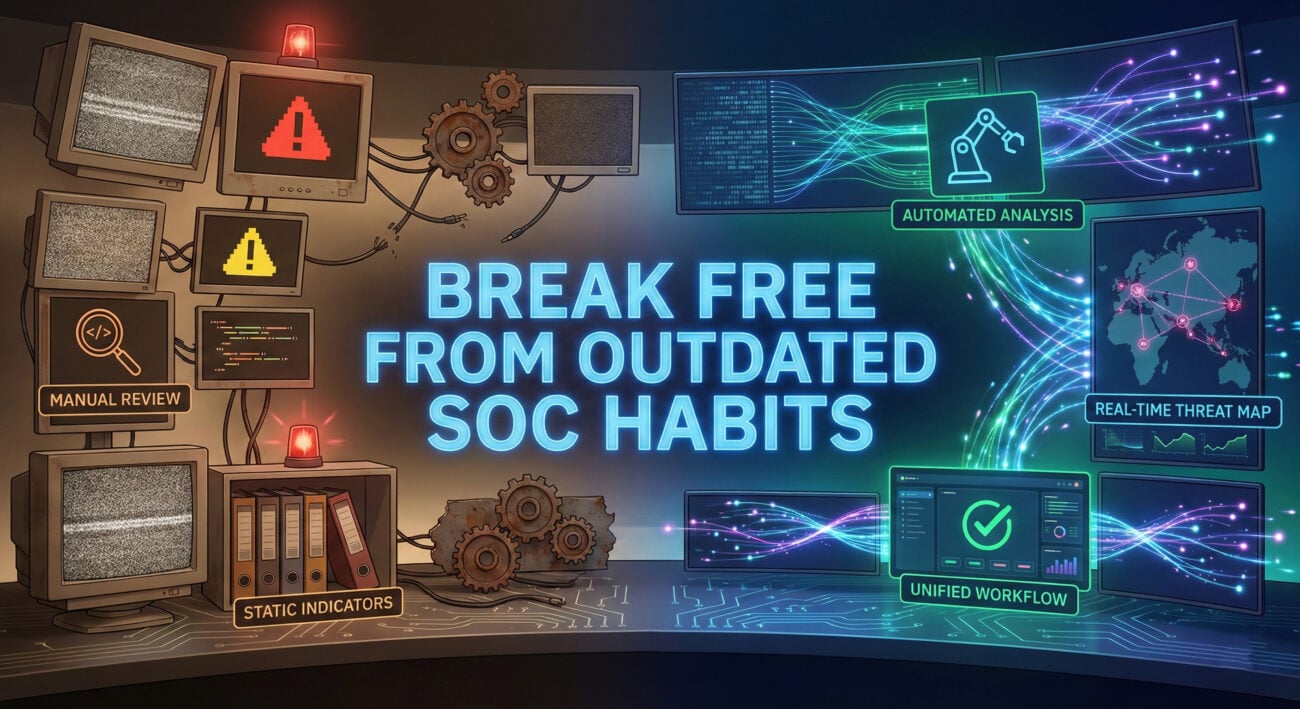
In the relentless arms race of cybersecurity, your Security Operations Center (SOC) is the frontline command. Yet, many SOCs are fighting today's advanced persistent threats with yesterday's playbooks, trapped by outdated SOC habits that create exhaustion, not excellence. This post deconstructs the four most corrosive legacy practices, from SIEM misuse to manual response, and provides a clear, actionable roadmap for SOC modernization. We'll map these habits to specific MITRE ATT&CK techniques they fail to catch, and detail how modernizing your approach is the only way to build a proactive, resilient defense.
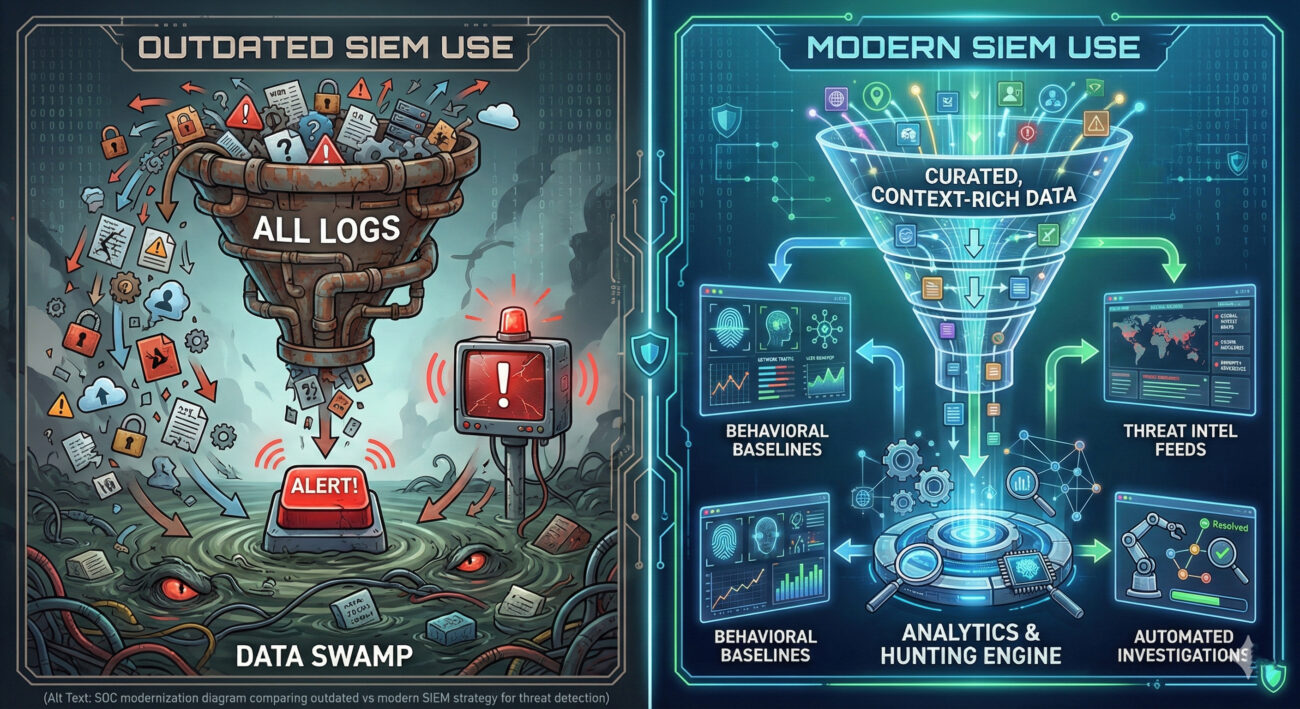
Treating your Security Information and Event Management (SIEM) system as a glorified log collector and alert siren is the foundational failure. The outdated habit is: "Collect everything, hope to find something during an incident." This creates data swamps, skyrockets costs, and buries critical signals in noise.
A threat actor employs living-off-the-land techniques, like using built-in Windows tools (e.g., PowerShell for T1059.001: Command and Scripting Interpreter) or legitimate admin tools. A bloated, untuned SIEM may log these events but won't correlate them into a suspicious sequence (e.g., PowerShell execution followed by network discovery T1046: Network Service Discovery and lateral movement T1021: Remote Services). Without proactive threat hunting queries and behavioral analytics, this attack chain remains invisible until it's too late.
The "alert flood" is the primary symptom of a sick SOC. The outdated habit is: "Prioritize alerts based solely on static, pre-defined severity (High, Medium, Low)." This ignores context, is this "High" alert on a public-facing server or an isolated test machine? Analysts burn out on false positives, creating alert fatigue where real breaches are missed.
Modern SOCs implement Risk-Based Alerting (RBA). An alert's priority is dynamically calculated using:
This approach directly counters techniques like T1078: Valid Accounts, where an attacker uses stolen credentials. A login from a new country might be "Medium," but if it's for a finance department user accessing the SharePoint server containing sensitive data, RBA escalates it to "Critical."
Subscribing to Threat Intelligence Feeds (TI Feeds) and dumping them into a separate portal analysts rarely check is a wasted investment. The outdated habit is: "Threat intel is a separate team's responsibility, not integrated into daily operations."
This leaves the SOC blind to the latest attacker Tactics, Techniques, and Procedures (TTPs). For example, if a feed reports a new Cobalt Strike command-and-control (C2) server IP, but that indicator isn't automatically added to your SIEM's blocklists or detection rules, you remain vulnerable.
Effective intelligence is integrated and actionable. It should fuel:
| MITRE ATT&CK Technique | Outdated SOC Approach | Modern, Intel-Integrated Approach |
|---|---|---|
| T1588.002: Obtain Capabilities - Tool (e.g., Mimikatz) | Read about the tool in a weekly intel report. | SIEM automatically hunts for process names, hash values, or network signatures associated with the tool, triggering proactive alerts. |
| T1190: Exploit Public-Facing Application | Generic "port scan" or "exploit attempt" alerts. | EDR/XDR tools are updated with behavioral patterns matching exploits for the specific vulnerabilities mentioned in intel briefs. |
When an alert fires, if the first step is "Analyst manually opens 5 tools to investigate," you've already lost precious time. The outdated habit is: "Incident response is a purely manual, analyst-driven process." This slows Mean Time to Respond (MTTR) to a crawl, allowing attackers to deepen their foothold.
Security Orchestration, Automation, and Response (SOAR) platforms are not optional. They secure by executing pre-defined playbooks in seconds. For a "phishing email reported" alert, an automated playbook can:
Automatically query the email's sender IP, domain, and attachment hash against internal logs and external threat intel APIs.
If indicators are malicious, automatically quarantine the email from all user inboxes, block the sender domain at the email gateway, and isolate the endpoint if it clicked the link.
Initiate a scan on affected endpoints, reset the password of the user who interacted with the phish (if credentials were entered), and create a ticket for post-incident review.
This automation directly counters fast-moving techniques like T1566: Phishing and its sub-techniques.
Let's see how these outdated habits fail and how SOC modernization succeeds against a multi-stage attack.
Attack Chain: Spear Phishing (T1566.002) → User executes macro (T1204.002) → Downloads Cobalt Strike beacon (T1588.002) → Lateral Movement via PsExec (T1021.002) → Data exfiltration (T1048).
They love outdated SOCs. Their strategy exploits these habits directly:
Their goal is to remain in the "detection gap" created by legacy processes.
The modern Blue Team flips the script through SOC modernization:
The goal shifts from reactive alert triage to proactive threat disruption.
Phase 1: Foundation (Days 1-30)
Phase 2: Integration & Tuning (Days 31-60)
Phase 3: Advanced Operations (Days 61-90)
Q: Isn't collecting all logs the safest option for forensics?
A: While comprehensive data is ideal, unfiltered collection is impractical and costly. The key is strategic collection. Define your investigative requirements (compliance, key systems) and ensure you collect and retain those logs at a higher fidelity. Use cheaper, longer-term storage for less critical logs.
Q: We're a small team with a limited budget. Can we still modernize?
A> Absolutely. SOC modernization is about process first, tools second. Start by tuning your existing SIEM (reduce noise), implementing free threat intel sources (like AlienVault OTX), and using built-in automation features in your current tools. Prioritize changes that reduce workload, like creating dashboards and standard operating procedures (SOPs).
Q: How does MITRE ATT&CK practically help my daily SOC work?
A: It provides a structured knowledge base of adversary behavior. Use it to:
Your SOC doesn't have to be a victim of its own processes. Start your modernization journey today.
Pick ONE of the four habits outlined above that resonates most with your team's pain points. In your next meeting, discuss one concrete step from our 90-day plan to address it. The path from a reactive, overwhelmed SOC to a proactive, resilient security command center begins with a single, deliberate action.
For further learning, explore the CISA Cybersecurity Performance Goals (CPGs) for foundational practices.
© 2026 Cyber Pulse Academy. This content is provided for educational purposes only.
Always consult with security professionals for organization-specific guidance.
Every contribution moves us closer to our goal: making world-class cybersecurity education accessible to ALL.
Choose the amount of donation by yourself.