









































Certification Courses
Hands-On Labs
Threat Intelligence
Latest Cyber News
MITRE ATT&CK Breakdown
All Cyber Keywords
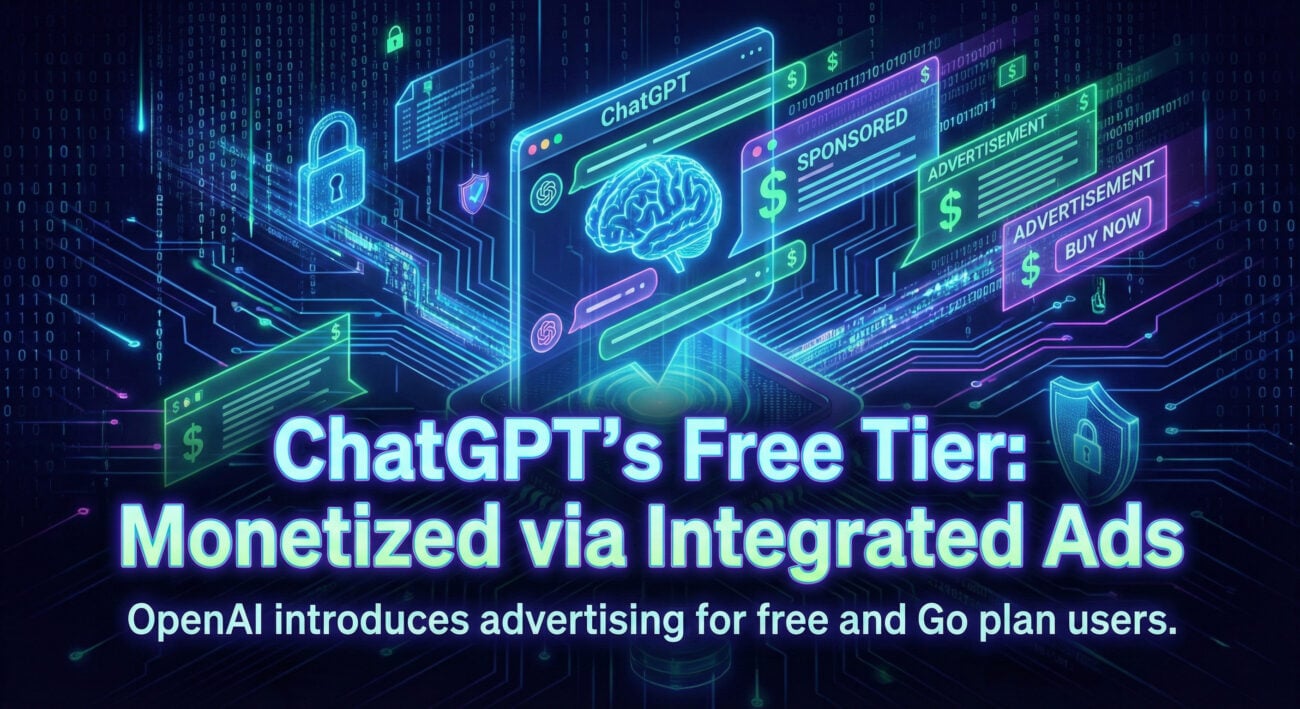
In a significant shift, OpenAI has announced it will begin showing advertisements within ChatGPT to logged-in adult users in the United States. This move introduces a new dynamic between free AI accessibility and user data privacy. While OpenAI promises that "your data and conversations are protected" and that ads will not influence chatbot responses, cybersecurity professionals must scrutinize the implications. This guide provides a comprehensive analysis of the new ChatGPT advertising security model, offering actionable steps to safeguard your information in this evolving landscape.
OpenAI’s announcement marks a pivotal moment for the AI industry. With over 800 million weekly active users as of late 2025, ChatGPT is transitioning from a primarily subscription-based service to one that incorporates advertising for its free and low-cost 'Go' tiers. This directly addresses the challenge of serving a massive user base that desires powerful AI but is unwilling or unable to pay a subscription fee.
The core of the model is "conversation-relevant" advertising. Ads will appear at the bottom of the chat interface, theoretically based on the context of your current dialogue. Crucially, OpenAI states that ads will not be shown to users under 18, nor near sensitive topics like health or politics. For cybersecurity, the primary concern shifts from a pure subscription attack surface to a hybrid model where data collection for ad targeting becomes a new vector for potential privacy invasion.
This approach is not isolated. Google is testing similar integrations within its AI-powered Search. The trend signifies that ad-supported AI will be a dominant model, making it essential for users to understand the associated security risks and for defenders to adapt their strategies accordingly.
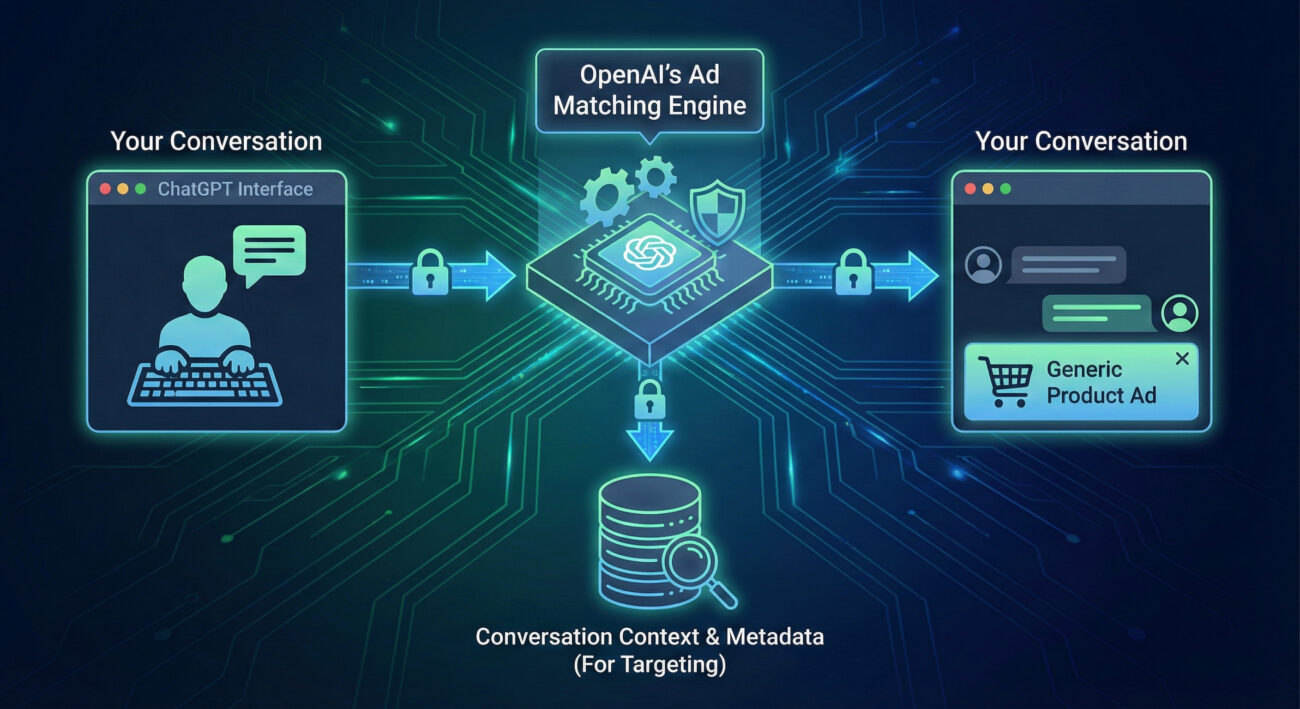
OpenAI's public statements emphasize strong privacy protections: "your data and conversations are protected and never sold to advertisers." However, a critical gap exists in the announcement: OpenAI did not detail exactly what data it will collect on users to serve relevant ads. This lack of granularity is a classic red flag in ChatGPT advertising security analysis.
To serve a "relevant" ad, a system typically needs data. This could range from low-risk metadata (session length, general topic category inferred from the chat) to high-risk personal data (specific keywords, inferred intent, linked account information from a logged-in session). The practice of analyzing user conversation to infer interests for commercial purposes aligns with MITRE ATT&CK technique T1596.005 - Search Victim-Owned Websites, which involves gathering information about a target's interests. While OpenAI is not a threat actor in this context, the technique of information gathering is conceptually similar.
The security controls offered are "ad personalization" toggle and ad feedback tools. While useful, these are post-hoc controls. The fundamental act of data processing for ad matching occurs before a user can opt-out. This model creates an inherent tension: the system must analyze your conversation to determine if you should see an ad and which one, yet promises that the conversation content itself is "protected." Understanding this nuance is key to managing your digital footprint.
| Potential Data Point | Risk Level for Privacy | Likely Use in Ad Targeting |
|---|---|---|
| Conversation Keywords (e.g., "best laptop", "vacation ideas") | High | Direct intent signaling for product/service ads. |
| Session Metadata (Time, date, length, device type) | Medium | Context for ad relevance (time of day, user engagement level). |
| Account Information (Email, region if provided) | High | Demographic targeting and cross-service profiling. |
| Inferred Topics (AI-categorized chat subject: "Technology", "Travel") | Medium | Broad category-based ad matching. |
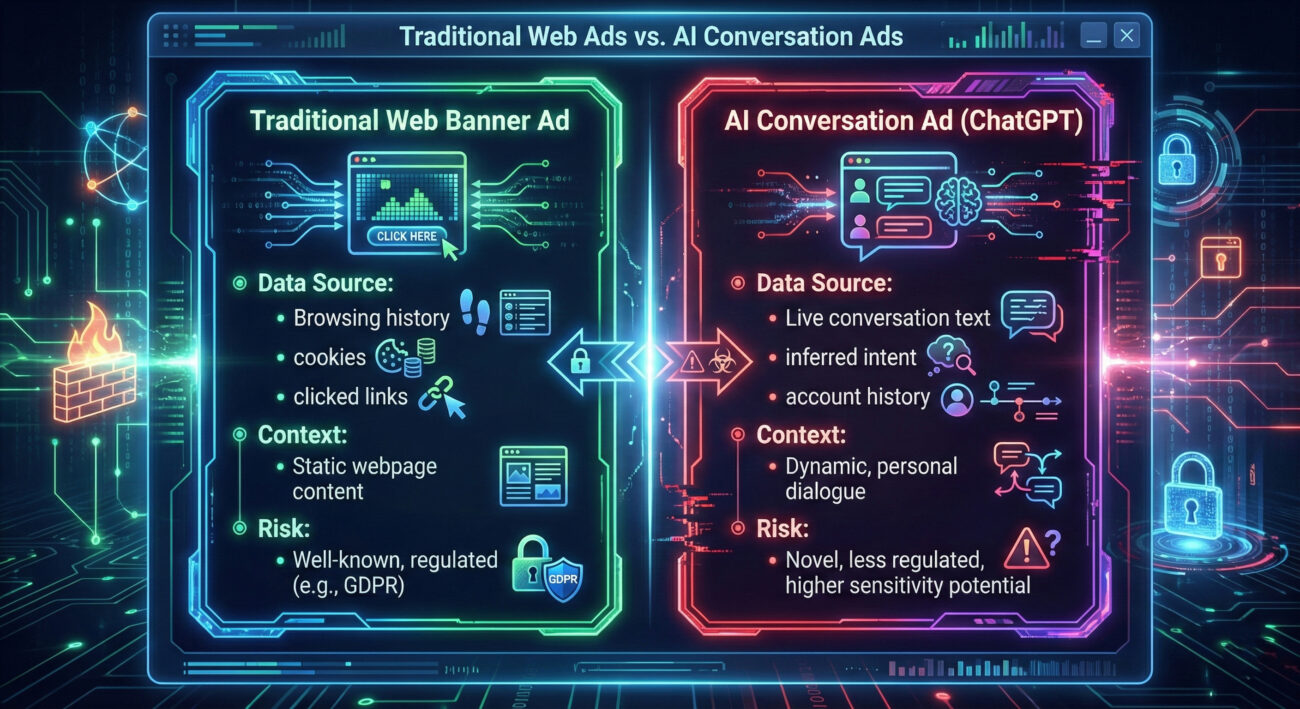
To fully grasp ChatGPT advertising security implications, one must understand the standard online advertising ecosystem. Targeted ads are not magic; they are the result of complex data pipelines. Even if OpenAI does not "sell" data, the internal system that powers ads must create a user profile or signal that is matched against advertiser criteria.
This process often involves Real-Time Bidding (RTB), where an ad impression (the chance to show an ad) is auctioned off in milliseconds as a webpage, or in this case, a chat response, loads. For this to be "relevant," a packet of data about the user and context is sent to potential advertisers. A breach or leak in this automated bidding system could expose these data packets. Furthermore, persistent tracking across the web often relies on identifiers like cookies or device fingerprints. A logged-in ChatGPT session provides a stable, unique identifier, your account, potentially making cross-service tracking more accurate unless explicitly prevented by robust isolation.
Proactivity is your best defense. Follow this actionable guide to lock down your ChatGPT advertising security and privacy settings once the ad rollout begins.
Immediately upon the feature's launch, log into your ChatGPT account. Navigate to Settings > Privacy or a new "Advertising" section. Look for a toggle labeled "Ad Personalization," "Use conversation to improve ads," or similar. This is your primary control.
Turn this setting OFF. This should instruct the system not to use your conversation data for tailoring ads. Note: You may still see generic, non-personalized ads, but the risk of sensitive data being used in the targeting process is reduced.
Check Settings > Data Controls. Review any history of conversations you have saved. For maximum privacy, disable chat history. This not only prevents ads from using past conversations but also aligns with best practices for not feeding sensitive data into AI models.
If you see an ad, use the provided "Why this ad?" or feedback tool. This serves two purposes: it helps you understand what data triggered the ad, and it signals to the system when targeting is off, potentially improving its security and relevance algorithms.
Evaluate if an upgrade to ChatGPT Plus, Pro, Business, or Enterprise is worthwhile for your use case. These tiers are explicitly excluded from seeing ads. This is the most effective, though costly, technical control to eliminate the attack vector entirely.
Opportunity: A new, vast data source. The ad targeting system becomes a high-value target. Attackers might look for:
Goal: Exploit the new complexity and data flows introduced by the advertising backend to steal data, spread malware, or erode trust in the platform.
Challenge: Securing a new, real-time subsystem without compromising performance or privacy promises. Key actions include:
Goal: Ensure the ad-supported model is sustainable not just economically, but also from a security and trust perspective, protecting both user data and platform integrity.
A: The technical specifics are not yet public. Ideally, turning off personalization should mean your conversation text is not processed by the ad-targeting model at all. However, you may still receive generic, context-free ads. The privacy policy should clarify this post-launch.
A: This is a significant risk, known as "malvertising." It depends entirely on the strength of OpenAI's advertiser onboarding and ad content review processes. A strong defense requires rigorous identity verification and continuous scanning of ad assets, similar to practices by major ad platforms like Google Ads.
A: These laws grant users rights over their data. OpenAI's rollout initially targets U.S. adults, but if expanded, it must comply with GDPR's strict consent requirements for profiling. The "legitimate interest" basis often used for ads may be challenged when the data source is intimate conversation. Users should have clear rights to opt-out and access/delete data used for advertising.
A: According to the announcement, Yes. OpenAI explicitly states that Plus, Pro, Business, and Enterprise tiers will not see ads. Furthermore, data from these tiers is typically governed by stricter terms, often guaranteeing it is not used for model training, a policy that would logically extend to advertising.
The integration of ads into ChatGPT is a business reality, but your security and privacy remain in your control. Here is your concise action plan:
The era of ad-supported AI requires a new layer of user vigilance. By understanding the mechanics of ChatGPT advertising security and implementing these practical defenses, you can continue to harness the power of AI while proactively protecting your digital privacy.
© 2026 Cyber Pulse Academy. This content is provided for educational purposes only.
Always consult with security professionals for organization-specific guidance.
Every contribution moves us closer to our goal: making world-class cybersecurity education accessible to ALL.
Choose the amount of donation by yourself.