



































Certification Courses
Hands-On Labs
Threat Intelligence
Latest Cyber News
MITRE ATT&CK Breakdown
All Cyber Keywords
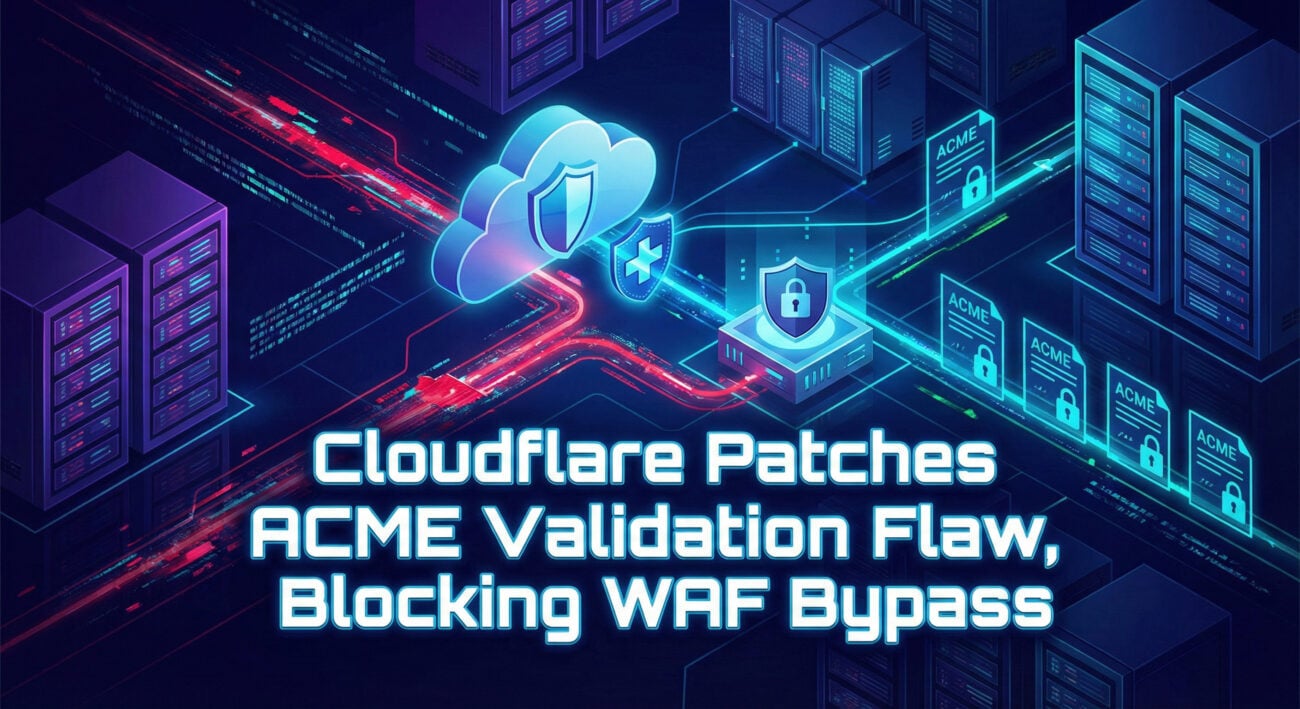
In January 2026, cybersecurity researchers discovered a critical vulnerability in Cloudflare's implementation of the ACME (Automated Certificate Management Environment) protocol that could have allowed attackers to obtain valid SSL/TLS certificates for domains they didn't own. This bug, while promptly patched, revealed fundamental flaws in certificate validation logic that threaten the foundation of web security. The ACME protocol vulnerability highlights how even trusted security providers can inadvertently introduce critical weaknesses into the global internet infrastructure.
The ACME protocol vulnerability discovered in Cloudflare's systems represents a significant threat to internet security. SSL/TLS certificates form the backbone of secure web communications, establishing trust between websites and users. When a flaw allows unauthorized entities to obtain these certificates, the entire trust model collapses.
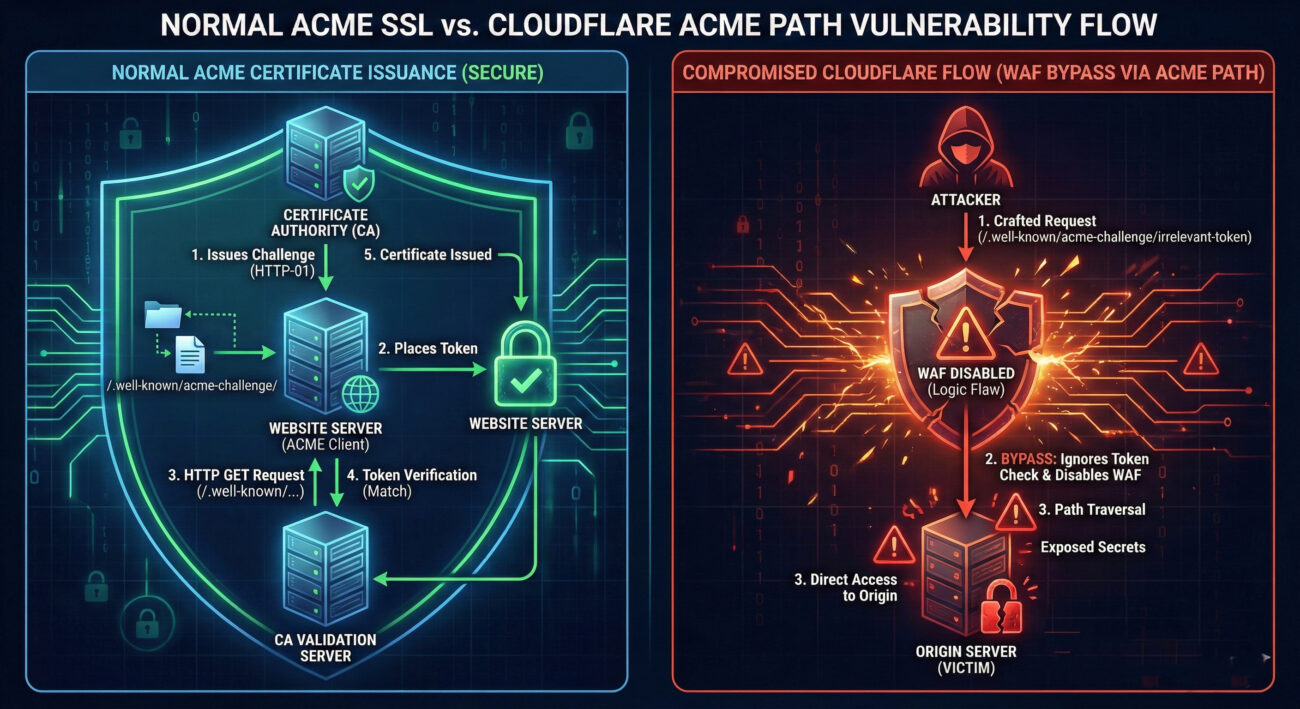
Cloudflare's implementation contained a logic flaw during domain validation where the system would incorrectly validate ownership if certain edge cases occurred in the validation process. This could have enabled attackers to trick the system into issuing certificates for domains they didn't control, potentially enabling sophisticated phishing attacks, man-in-the-middle attacks, and widespread trust erosion.
ACME (Automated Certificate Management Environment) is the protocol that powers Let's Encrypt and other certificate authorities to automatically issue SSL/TLS certificates. It automates domain validation, certificate issuance, and renewal through a standardized API. The protocol has been revolutionary in enabling widespread HTTPS adoption by making certificates free and easy to obtain.
Cloudflare manages millions of certificates through its automated systems, making any vulnerability in their ACME implementation particularly dangerous due to the scale of their infrastructure.
The specific ACME protocol vulnerability involved a race condition and improper state handling in Cloudflare's validation logic. When multiple certificate requests occurred simultaneously for related domains, the validation system could incorrectly associate successful validations with pending requests that hadn't been properly validated.
// VULNERABLE IMPLEMENTATION (Simplified)
function processValidation(requestId, domain, challengeToken) {
    // Race condition could occur here between validation start and completion
    validationCache[domain] = {status: 'pending', requestId: requestId};

    // Challenge verification happens here
    if (verifyChallenge(domain, challengeToken)) {
        // BUG: The system incorrectly updates ALL pending requests for this domain
        // rather than only the specific requestId that passed validation
        updateAllPendingRequests(domain, 'validated'); // VULNERABLE LINE
    }
}
The core issue was that the system used domain-based caching without proper request isolation. When a validation succeeded for one request, it could mark all pending validations for that domain as successful, regardless of whether those specific requests had completed their challenges.
| Component | Role in Vulnerability | Impact |
|---|---|---|
| Validation Cache | Stored validation state by domain instead of by request ID | Allowed state bleed between requests |
| Race Condition Window | Multiple requests could be processed simultaneously | Created timing opportunity for exploitation |
| State Management | Inadequate isolation between validation sessions | Enabled cross-request contamination |
Imagine an attacker targeting a financial institution's online portal. The attacker could have:
The attacker identifies target domains and determines they use Cloudflare for certificate management.
The attacker sends multiple certificate requests for variations of the target domain (subdomains, similar spellings) at nearly the same time.
The attacker only completes the validation challenge for one legitimate domain they control, but due to the race condition, Cloudflare's system could mark ALL pending requests as validated.
Cloudflare issues valid certificates for domains the attacker doesn't own, enabling them to create convincing phishing sites or intercept traffic.
This ACME protocol vulnerability maps to several MITRE ATT&CK techniques, highlighting its sophistication and potential impact:
| Tactic | Technique | Description | Relevance |
|---|---|---|---|
| Initial Access | T1588.003: Obtain Digital Certificates | Adversaries obtain SSL/TLS certificates that can be used during targeting | Direct exploitation - obtaining fraudulent certificates |
| Resource Development | T1587.001: Domains | Adversaries acquire domains that can be used during targeting | Related to obtaining certificates for malicious domains |
| Credential Access | T1557: Man-in-the-Middle | Adversaries position themselves between two communicating parties | Fraudulent certificates enable MITM attacks |
| Impact | T1539: Steal Web Session Cookie | Adversaries steal web session cookies to gain access to web applications | Valid certificates make session hijacking more effective |
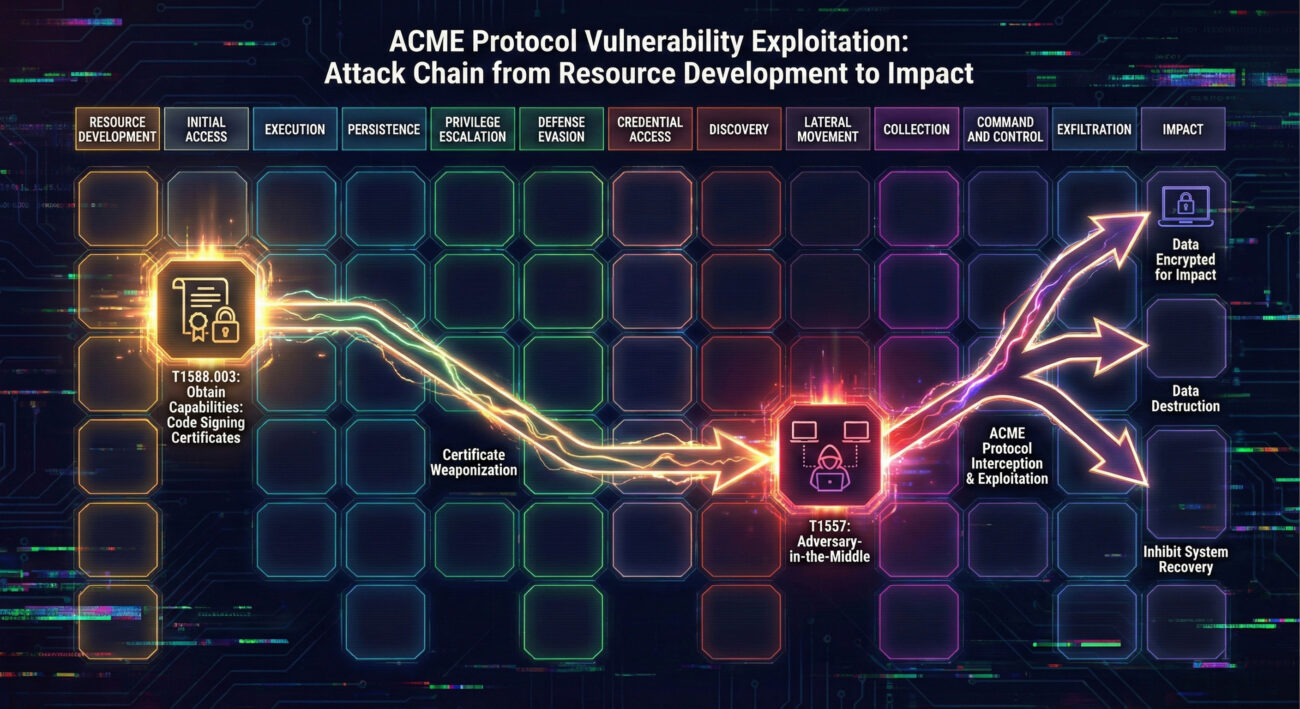
The attacker sets up automated tools to interact with Cloudflare's ACME endpoint, preparing for rapid request submission.
Research identifies high-value targets and their domain structures, noting which use Cloudflare's certificate services.
Using multiple threads or processes, the attacker submits certificate requests for:
The attacker times the validation response for their controlled domain to coincide with the processing window for all pending requests, exploiting the race condition.
Successful exploitation yields valid certificates for unauthorized domains, which can be deployed for malicious purposes.
From an attacker's viewpoint, this vulnerability presented a golden opportunity:
For defenders, this incident highlights critical monitoring gaps:
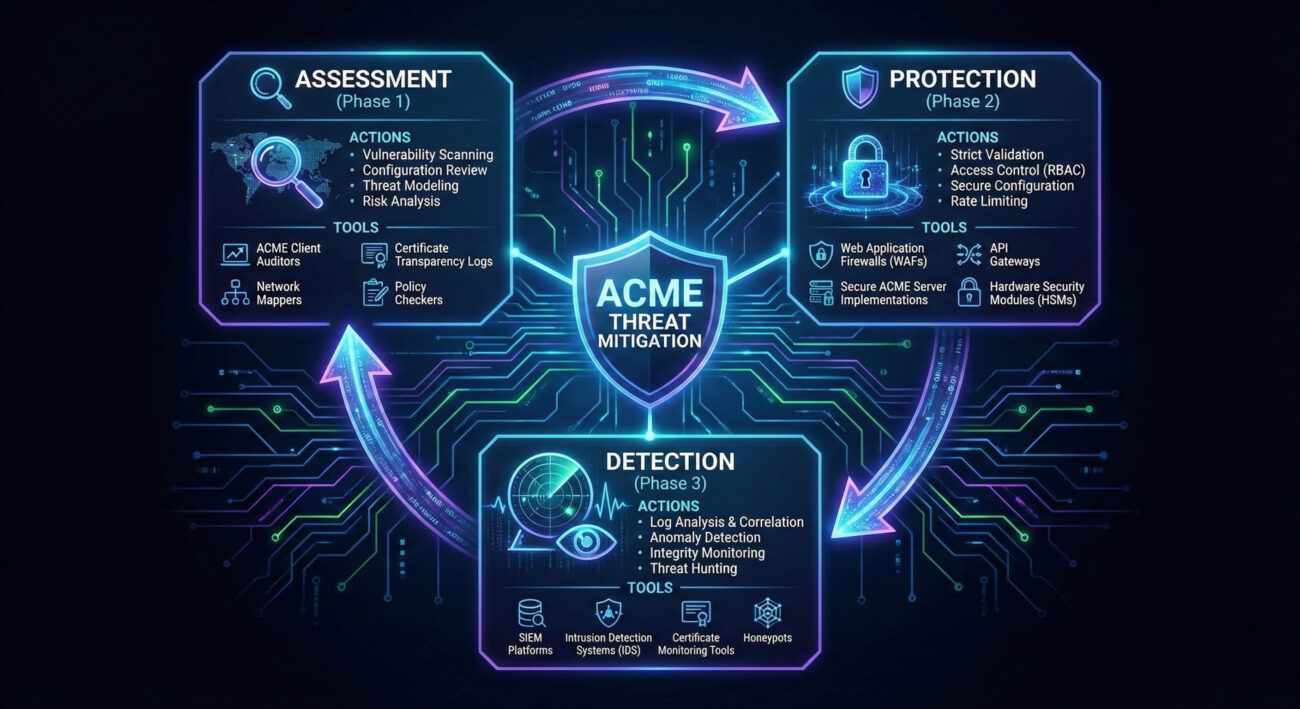
Cloudflare stated there was no evidence of active exploitation before the fix was deployed. However, the nature of such vulnerabilities means it's difficult to be certain, as sophisticated attackers might not leave detectable traces.
If Cloudflare has patched the vulnerability in their systems, certificates issued after the patch should be safe. However, organizations with extreme security requirements might consider reissuing certificates as a precautionary measure.
Use Certificate Transparency search tools like crt.sh or Google's Transparency Report to monitor certificate issuance for your domains.
The specific bug was in Cloudflare's implementation. However, all ACME implementations should be reviewed for similar logic flaws, as the protocol itself doesn't prevent such implementation errors.
The 2020 Let's Encrypt CAA bug involved incorrect validation of Certificate Authority Authorization records. This Cloudflare bug involved race conditions in validation state management. Both highlight different aspects of certificate validation that can fail.
1. Trust Requires Verification: Even trusted security providers can introduce critical vulnerabilities. Implement defense-in-depth rather than blind trust in any single vendor.
2. Automation Introduces New Risks: While ACME automates certificate management, it also creates new attack surfaces. Automated systems require rigorous security testing, especially for race conditions.
3. Certificate Transparency is Essential: CT logs provide crucial visibility into certificate issuance. Regular monitoring can detect unauthorized certificates early.
4. State Management is Critical: The vulnerability stemmed from improper state handling. Security-critical systems must implement robust, isolated state management with proper concurrency controls.
5. Comprehensive Security Reviews Matter: This bug survived standard testing but was caught through security reviews. Regular, thorough security assessments of critical infrastructure are non-negotiable.
Don't wait for a certificate-related breach to impact your organization. Take proactive steps today:
Immediate Actions (Next 24 Hours):
Strategic Actions (Next 30 Days):
For further reading on certificate security best practices, explore these resources:
Stay vigilant, stay informed, and remember: in cybersecurity, trust must be continuously earned and verified.
© 2026 Cyber Pulse Academy. This content is provided for educational purposes only.
Always consult with security professionals for organization-specific guidance.
Every contribution moves us closer to our goal: making world-class cybersecurity education accessible to ALL.
Choose the amount of donation by yourself.