












Certification Courses
Hands-On Labs
Threat Intelligence
Latest Cyber News
MITRE ATT&CK Breakdown
All Cyber Keywords
Gather Victim Identity Information is the reconnaissance technique where adversaries collect personal details about individuals within a target organization , names, emails, credentials, phone numbers, security questions, MFA configurations, and even behavioral patterns. This technique (T1589 in the MITRE ATT&CK framework) sits within the Reconnaissance tactic and serves as the critical intelligence-gathering phase that powers social engineering attacks, spear-phishing campaigns, credential stuffing, business email compromise (BEC), and targeted impersonation. Unlike technical reconnaissance focused on infrastructure, identity reconnaissance exploits the human element , studying people, their roles, their relationships, and their digital footprints to craft highly convincing attacks that bypass technical controls by manipulating trust.
The danger of T1589 lies in its accessibility and scale. Open-source intelligence (OSINT) tools make it trivial to harvest employee data from LinkedIn, corporate websites, social media platforms, data broker services, and breached credential databases. Adversaries cross-reference information from multiple sources to build comprehensive victim dossiers that enable precision-targeted attacks. A threat actor who knows an employee's name, job title, manager's name, recent project, and personal interests can craft a phishing email that is virtually indistinguishable from legitimate internal communication, achieving success rates far above generic campaigns.
Gather Victim Identity Information (T1589) is a MITRE ATT&CK reconnaissance technique where adversaries systematically collect personal data about individuals associated with a target organization. This includes employee names, email addresses, usernames, credentials, phone numbers, job titles, organizational roles, and security question responses. This intelligence fuels social engineering attacks, phishing campaigns, credential stuffing, and targeted impersonation. The technique encompasses three sub-techniques , T1589.001 (Credentials), T1589.002 (Email Addresses), and T1589.003 (Employee Names) , each targeting a specific category of personally identifiable information that attackers can leverage to compromise accounts, deceive employees, or impersonate trusted individuals within the organization.
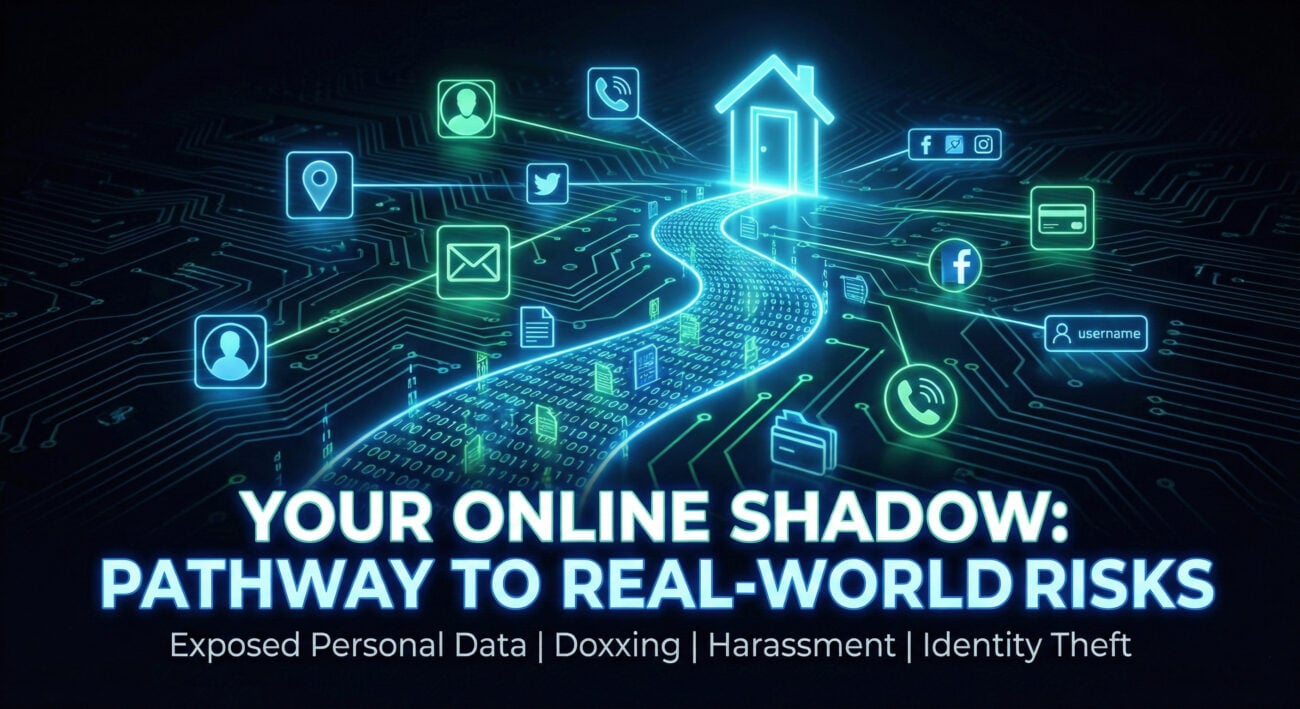
Imagine a con artist who wants to scam a company. Before making any contact, they spend weeks learning everything about the CEO , where they went to school, who their golf buddies are, what conferences they attend, what their assistant's name is, and even what their dog is called. Armed with all these personal details, they can craft an email that sounds exactly like someone the CEO trusts. That's what T1589 does at digital scale. Adversaries use LinkedIn to learn job titles and reporting structures, social media to discover personal interests and travel plans, data breach databases to find reused passwords, corporate websites to map organizational hierarchies, and WHOIS records to connect employees to domain registrations. The more information an attacker gathers, the more convincing their impersonation becomes , and the harder it is for victims to detect the deception.
Target: NovaTech Solutions, a technology consulting firm with 800 employees.
Key Figure: Rachel Kim, Chief Information Security Officer (CISO), tasked with protecting the organization's digital assets and employee data.
NovaTech employees freely shared personal information on LinkedIn , job titles, departments, reporting chains, and even project details were publicly visible. Corporate directories were publicly accessible through the company website, listing full names, email addresses, phone numbers, and office locations. The company used predictable email formats ([email protected]), making it trivial for attackers to guess any employee's email address. A sophisticated threat actor spent 3 weeks profiling 50 key employees using OSINT , gathering names, roles, email addresses, personal interests, upcoming travel plans from social media posts, and even vacation schedules from out-of-office auto-replies. They cross-referenced breached credential databases and found that 12 employees had reused passwords across personal and work accounts. Armed with this comprehensive intelligence, the attackers launched a targeted spear-phishing campaign impersonating the CFO, crafting an urgent email about a time-sensitive acquisition deal that tricked an accounts payable clerk into wiring $3.2 million to an overseas account. By the time the fraud was discovered three days later during a routine reconciliation, the money had been dispersed through multiple shell companies and was unrecoverable.
Rachel implemented a comprehensive identity exposure reduction program across the organization. Corporate directory access was restricted to authenticated internal users only, and public-facing staff listings were removed from the website. She launched mandatory LinkedIn training for all employees, teaching them to limit profile visibility and avoid sharing sensitive organizational details. Email format conventions were randomized for external communications using an alias system, making it significantly harder for attackers to predict email addresses. The company deployed a robust security awareness program featuring quarterly phishing simulations with realistic, personalized phishing tests. Rachel implemented DMARC, DKIM, and SPF email authentication protocols to prevent domain spoofing and impersonation. Most critically, she established a mandatory out-of-band verification process for all wire transfers exceeding $10,000, requiring phone confirmation using pre-registered numbers , not contact information from the email requesting the transfer. Within six months, simulated phishing click rates dropped from 34% to 4%, and zero financial fraud incidents were reported in the following year.
Map your organization's digital footprint to understand what information is publicly accessible about your employees.
Restrict access to internal directories and minimize the personal information available on public-facing platforms.
Prevent adversaries from impersonating your domain and employees in phishing campaigns targeting your organization or partners.
Build a security-aware culture where employees understand the risks of oversharing personal and professional details online.
Implement technical controls and monitoring to detect and block social engineering attempts that leverage gathered identity information.
Require secondary verification channels for high-risk actions to prevent fraud even when attackers successfully impersonate trusted individuals.
Proactively monitor for leaked credentials, new data exposures, and emerging threats targeting your organization's employees.
For the red team, T1589 is the starting point for virtually every social engineering operation. The attacker's goal is to build the most comprehensive victim dossier possible with the least amount of effort. Red teamers begin with passive reconnaissance , harvesting employee names, titles, and email addresses from LinkedIn, the corporate website, and public directories. They then cross-reference this data with breached credential databases like Have I Been Pwned and DeHashed to find exposed passwords. Social media profiles on Twitter/X, Instagram, and Facebook reveal personal interests, travel schedules, family details, and even pet names commonly used as security question answers. WHOIS records connect employees to domain registrations, and dark web marketplaces provide access to stolen credentials, fullz (complete identity packages), and corporate data dumps. The red team uses this intelligence to craft hyper-personalized spear-phishing emails, pretexting scenarios for vishing (voice phishing) calls, and convincing BEC campaigns. The key metric is information density , how many unique data points can be collected per target employee to maximize the probability of a successful attack.
For the blue team, defending against T1589 requires a dual approach: reducing the information available to attackers (attack surface reduction) and detecting when adversaries are actively gathering intelligence about your organization (threat detection). Blue teamers must continuously audit the organization's public-facing digital footprint , scanning LinkedIn for employee profiles that reveal too much detail, checking corporate websites for exposed directories, monitoring data broker sites that sell employee information, and reviewing WHOIS registrations that tie domain ownership to individual employees. Defenders should implement email authentication (DMARC/DKIM/SPF) to prevent domain spoofing and monitor DMARC reports for unauthorized send attempts. Technical controls include deploying AI-powered email security gateways that detect impersonation attempts, implementing conditional access policies that flag impossible-travel scenarios, and using UEBA (User and Entity Behavior Analytics) to identify anomalous access patterns that may indicate account compromise from credential stuffing. The blue team should also run regular internal social engineering assessments, conduct quarterly phishing simulations with realistic lures based on actual organizational intelligence, and maintain an employee security awareness program that keeps pace with evolving TTPs.
While T1589 itself is a reconnaissance technique that occurs largely outside your network perimeter, threat hunters can detect indicators that an adversary has gathered or is actively gathering identity information about your organization. The key is looking for evidence of reconnaissance activity and the subsequent use of gathered intelligence in attack attempts.
Set up automated alerts for DMARC aggregate and forensic reports. A sudden increase in senders failing DMARC checks for your domain , especially from email services commonly used for business communication , is a strong indicator that an adversary has harvested employee email addresses and is attempting to impersonate your organization. Cross-reference these alerts with LinkedIn changes (new employee profiles, role updates) and recent industry breach disclosures to identify the likely intelligence source.
T1589 encompasses three specialized sub-techniques, each targeting a specific category of identity information. Understanding these granular attack methods is essential for building a comprehensive defense strategy against identity-based reconnaissance and the social engineering attacks it enables.
Every contribution moves us closer to our goal: making world-class cybersecurity education accessible to ALL.
Choose the amount of donation by yourself.