





Certification Courses
Hands-On Labs
Threat Intelligence
Latest Cyber News
MITRE ATT&CK Breakdown
All Cyber Keywords
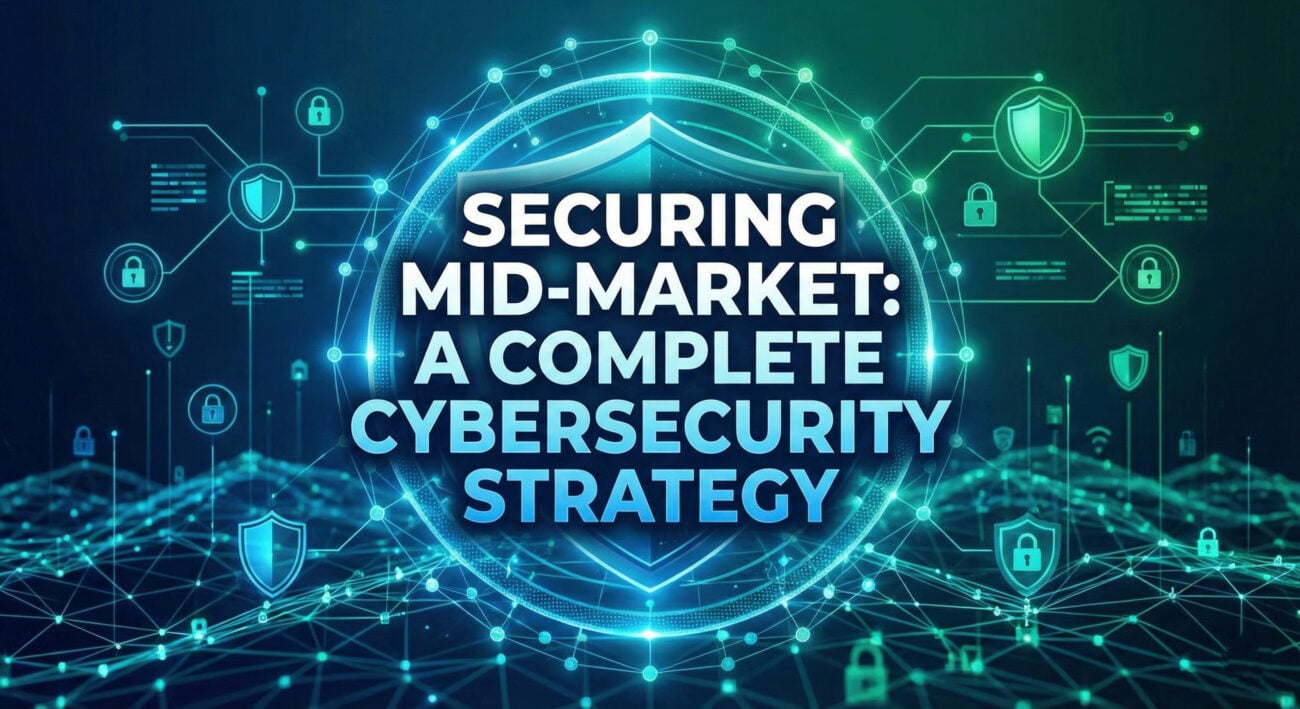
For mid-market organizations, cybersecurity is a constant tug-of-war. You need enterprise-grade defense, but you have lean teams and tighter budgets. The old model, buying point tools for prevention, detection, and response, often creates complexity that actually increases risk. This guide introduces mid-market threat lifecycle protection: an integrated approach that covers the entire attack chain, from initial reconnaissance to remediation. By understanding frameworks like MITRE ATT&CK and leveraging modern platforms (XDR, MDR), even small security teams can achieve robust defense without drowning in alerts. Let's transform security from a cost center into a business enabler.
Mid-market threat lifecycle protection isn't about buying more; it's about using smarter. We'll explore how to unify prevention, protection, detection, and response, exactly what the original article from The Hacker News highlighted, but with a fresh, beginner-focused lens.
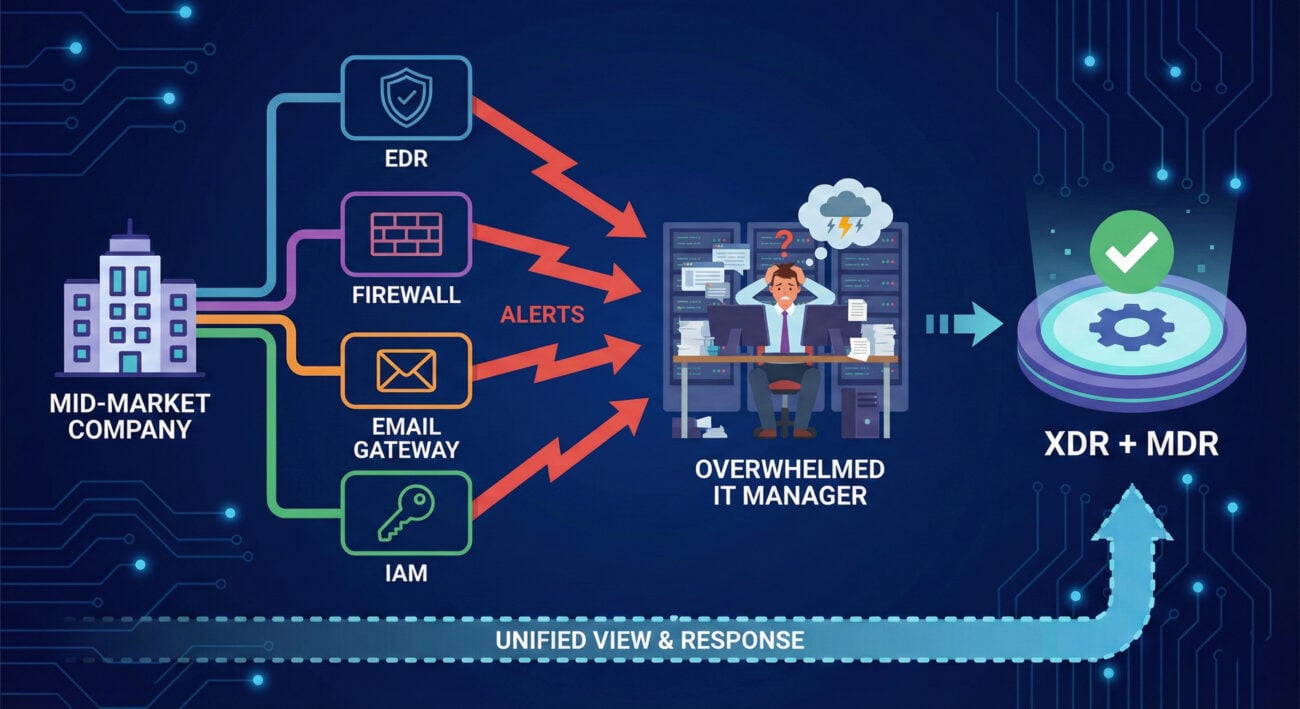
Meet NexGen Manufacturing, a 600-employee mid-market company. They have a lean IT team of four, plus one part-time security analyst. They invested in a top-tier EDR (Endpoint Detection and Response) solution because a breach at a competitor scared leadership. But six months later, they're overwhelmed.
This scenario is painfully common. The original article noted that EDR was designed for enterprises with dedicated SOC teams. Mid-market needs a different approach: mid-market threat lifecycle protection that consolidates capabilities and adds external support.
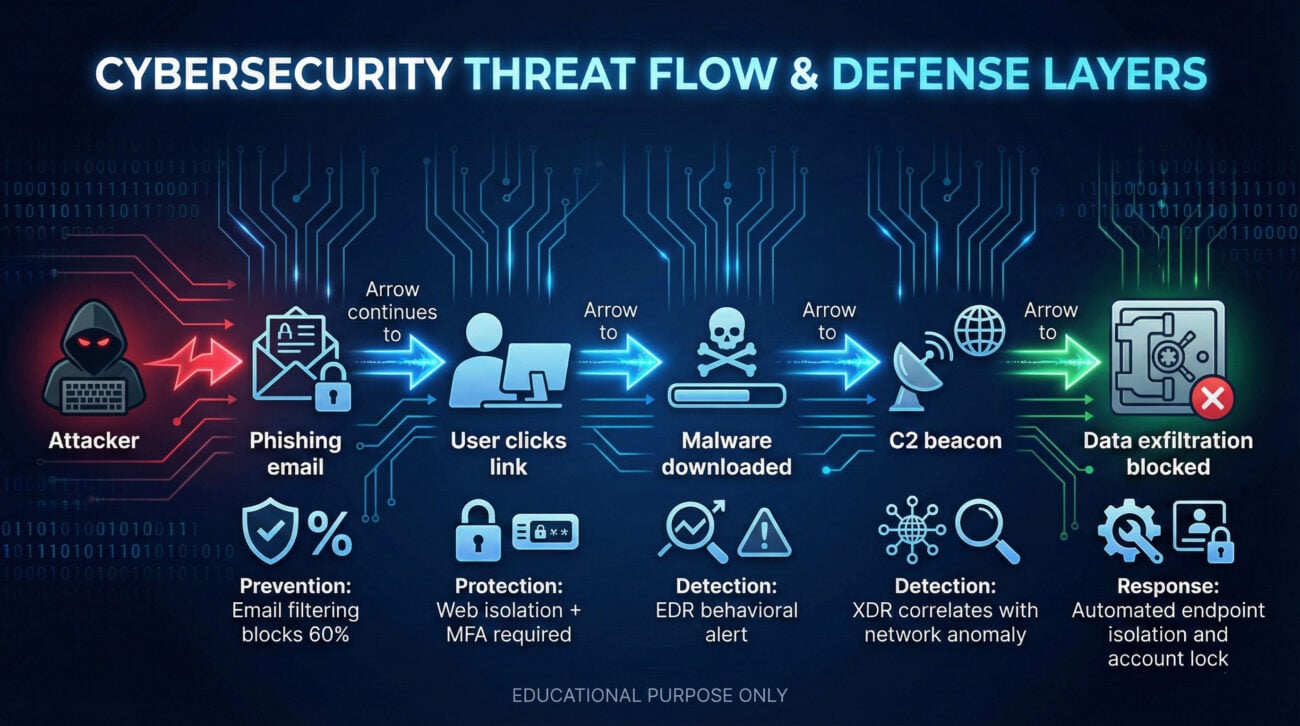
To truly secure the complete threat lifecycle, you must understand the adversary's playbook. MITRE ATT&CK® is a knowledge base of real-world tactics and techniques. Let's map each phase of the threat lifecycle to specific ATT&CK stages and show how integrated protection disrupts them.
| Threat Lifecycle Phase | MITRE ATT&CK Tactics | Example Techniques | How Mid-Market Protection Helps |
|---|---|---|---|
| Prevention | Reconnaissance, Resource Development | Gather victim info (T1590), Develop capabilities (T1587) | External attack surface management, email filtering, MFA to block initial access |
| Protection | Initial Access, Execution | Phishing (T1566), Drive-by compromise (T1189) | Next-gen AV, application control, patch management – stops known malware |
| Detection | Persistence, Privilege Escalation, Defense Evasion | Registry run keys (T1547.001), Process injection (T1055) | XDR correlation across endpoints, network, identity; behavioral analytics |
| Response | Collection, Command and Control, Exfiltration | Data staged (T1074), C2 via web (T1071.001) | Automated isolation, incident response runbooks, MDR hunting |
By aligning your defenses with ATT&CK, you ensure no gap is left open. The table above is a starting point for building your mid-market threat lifecycle protection program.
Moving from disjointed tools to a unified platform doesn't happen overnight. Follow these steps to evolve your security posture.
Inventory all security tools and map them to the threat lifecycle phases. Where are you blind? For example, you might have endpoint detection but no cloud workload protection. Use MITRE ATT&CK to identify missing techniques.
Select a vendor that provides integrated endpoint, network, email, and identity protection. Platforms like Bitdefender GravityZone (mentioned in the original article) unify prevention, detection, and response. Ensure it offers extended detection and response (XDR) to correlate signals.
Even with a great platform, your team may be too small for 24/7 monitoring. MDR services provide human analysts who hunt for threats and respond on your behalf. This closes the "specialist gap."
Use insights from detection/response to improve prevention. If you see repeated phishing attempts, update your email filters and train employees. This creates a continuous improvement cycle.
Understanding both perspectives helps you build resilient defenses. Here's how each side approaches the threat lifecycle.
Effective mid-market threat lifecycle protection makes the red team's job harder by removing silos and enabling blue team efficiency.
A phased approach prevents overwhelm. Use this framework to roll out complete lifecycle protection over 12–18 months.
| Phase | Timeline | Key Activities | Success Metric |
|---|---|---|---|
| Phase 1: Foundation | Months 1-3 | Asset inventory, enforce MFA, patch critical vulnerabilities, deploy EDR with basic configuration. | Reduction in unpatched critical CVEs by 80% |
| Phase 2: Consolidation | Months 4-9 | Replace point products with XDR platform, integrate email & network telemetry, enable automated responses for common alerts. | Alert volume down by 50% (due to correlation) |
| Phase 3: Augment & Optimize | Months 10-12 | Onboard MDR service, conduct purple team exercise, tune detection rules based on findings, implement threat hunting. | Mean time to respond (MTTR) < 1 hour |
No, when properly implemented, XDR breaks down silos. It's about correlated detection across multiple security layers. For mid-market, it's a game-changer because it reduces the number of consoles and manual work.
MDR typically costs a fraction of a full-time employee (often $2,000–$5,000/month). A security analyst in the US costs $90k–$120k/year plus benefits. MDR gives you a whole team for less than one salary.
Think of ATT&CK as a map of attacker behavior. You don't need to memorize it; use it to check your coverage. For example, if you have no visibility into "privilege escalation," you know where to improve.
Yes, many modern platforms can ingest data from existing tools via APIs. The key is to have a central data lake and correlation engine (the XDR platform).
Start with free resources: implement MFA on all accounts, enable automatic updates, and use open-source tools like Wazuh for basic SIEM. Then build a business case for a consolidated platform.
You don't have to figure it out alone. Begin your journey toward mid-market threat lifecycle protection today:
© Cyber Pulse Academy. This content is provided for educational purposes only.
Always consult with security professionals for organization-specific guidance.
Every contribution moves us closer to our goal: making world-class cybersecurity education accessible to ALL.
Choose the amount of donation by yourself.