






📩How a Spearphishing Attachment Attack Works
Watch this animated sequence: a targeted email arrives with a dangerous attachment. The victim opens it, a fake document appears with a credential form, and the attacker harvests sensitive data , all without traditional email security scanners catching the payload.
Common Malicious Attachment Types
📈Why Spearphishing Attachments Matter
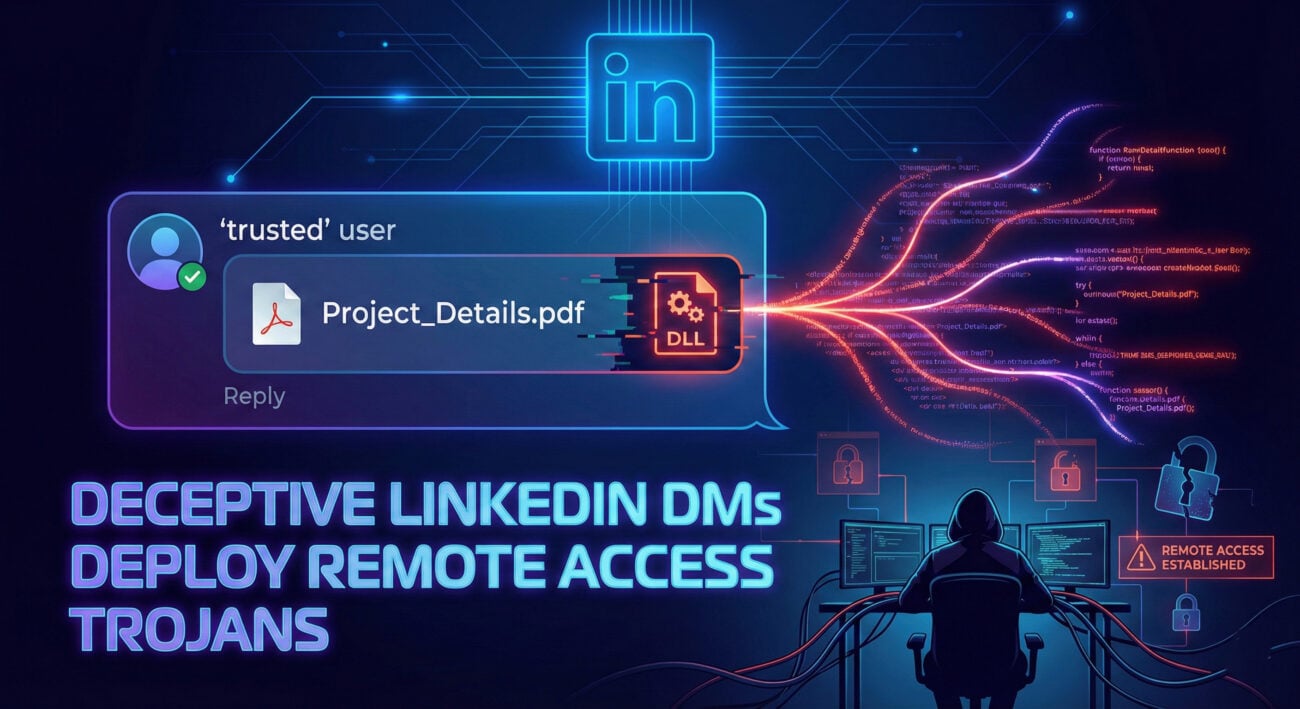
Spearphishing attachments represent one of the most effective initial access vectors used by adversaries worldwide. Unlike simple phishing, spearphishing attachments are highly targeted , crafted specifically for the intended victim using information gathered through prior reconnaissance. The attacker may know the victim's name, job title, manager, and current projects, making the email appear completely legitimate.
What makes attachments particularly dangerous is their ability to bypass email security scanners. Modern spearphishing attachments often don't contain executable malware at all. Instead, they use techniques like HTML-based credential harvesting , when the victim opens the attachment (which may look like a PDF or Word document), code within the file assembles a fake login portal locally in the browser. Because the form is rendered on the victim's machine, email gateway scanners see only a benign document, not a phishing page. This technique was extensively documented by Huntress Labs in 2024 as an increasingly common method for credential theft that evades traditional defenses.
In some variants, adversaries rely on a simpler but equally effective approach: sending a legitimate-looking document (such as a tax form or benefits enrollment sheet) with form fields that the victim is expected to fill in and return. The victim voluntarily populates sensitive information , Social Security numbers, bank account details, login credentials , and sends it back, completely unaware that the recipient is the attacker. This method requires no code execution whatsoever, making it nearly impossible for automated security tools to detect.
📚Key Terms & Concepts
🕵Real-World Scenario: Marcus and the Fake Invoice
Marcus Chen was a senior financial analyst at Meridian Holdings, a mid-size investment firm managing over $2 billion in assets. He had been with the company for seven years and was known for his efficiency in processing vendor invoices and wire transfer requests. It was that very reputation that made him the perfect target.
Invoice_4827_Final.pdf. The sender's domain , acmecorp-support.com , looked almost identical to ACME's real domain.
- No email attachment scanning beyond basic antivirus
- Staff had not received phishing awareness training in 14 months
- No multi-factor authentication (MFA) on client portal or VPN
- Single sign-on meant one compromised credential gave access to all systems
- No outbound transfer alerts for wire transfers over $50,000
- Deployed advanced email filtering with sandbox attachment analysis
- Monthly phishing simulations with immediate feedback for all employees
- MFA enforced across all external-facing applications and VPN
- Implemented zero-trust architecture with per-application access controls
- Dual authorization required for all wire transfers exceeding $10,000
🛡Step-by-Step Guide: Defeating Spearphishing Attachments
- Check the full email header , the "From" display name can be spoofed; inspect the actual email address and domain
- Look for misspelled domain names (e.g., "acmecorp-support.com" instead of "acmecorp.com")
- Call the sender using a phone number you already have on file , never use a number provided in the suspicious email
- Be suspicious of unexpected file types , a "quarterly report" should not arrive as a .zip, .iso, or .img file
- Check the file size , extremely small files claiming to be detailed documents are suspicious
- Use online file scanning tools (like VirusTotal) to check unknown attachments before opening them locally
- If a document claims to "require authentication," close it immediately and report it to your IT security team
- Legitimate organizations will never ask you to enter passwords through an email attachment
- Watch for forms that assemble dynamically in your browser , this is a hallmark of HTML smuggling attacks
- Use hardware security keys (FIDO2/WebAuthn) for the strongest protection , they are immune to phishing
- Authenticator apps are more secure than SMS-based codes, which can be intercepted
- Ensure MFA is enabled on all external-facing applications, email, VPN, and cloud services
- Configure email gateways to sandbox and detonate all executable attachments and macro-enabled documents
- Enable DMARC, DKIM, and SPF to verify that incoming emails actually originated from their claimed domains
- Block or quarantine attachments with double extensions, password-protected archives, and unusual file types (.iso, .img, .vhd)
- Never forward a suspicious email to colleagues or IT , use the official report button to avoid spreading the threat
- If you already opened an attachment and entered credentials, immediately change your password and report the incident
- Document what happened: what you clicked, what appeared, what information you may have exposed
- Run simulated phishing campaigns at least monthly, varying the scenarios to include attachment-based attacks
- Provide immediate, constructive feedback to employees who click on simulated phishing attachments
- Update training content regularly to cover the latest attack techniques, including HTML smuggling and credential harvesting
⚠❌ ✅Common Mistakes & Best Practices
- Opening attachments from unfamiliar senders Even if the subject line looks urgent or important, an attachment from someone you don't recognize should always be treated with suspicion. Attackers exploit urgency to bypass rational thinking.
- Trusting the "From" display name without verification Email clients show display names that can be easily forged. "John Smith" could actually be sending from [email protected]. Always inspect the actual email address.
- Entering credentials when prompted by an attachment No legitimate document should ever ask for your login information. If an attachment displays a login form, it is a credential harvesting attempt , close it and report it.
- Disabling macro warnings or security prompts Office applications warn you before enabling macros or active content for a reason. Disabling these warnings removes an important security layer that catches many attachment-based attacks.
- Failing to report suspicious emails Many employees see a suspicious email but don't report it, thinking "someone else probably already did." By the time security teams learn about the attack, the damage may already be done.
- Verify sender identity through a separate channel If you receive an unexpected attachment from a known contact, call them or message them on a different platform to confirm they actually sent it. Account compromises often send malicious attachments from hijacked accounts.
- Use browser-based document viewers instead of downloading Many email providers offer "preview" features that render attachments in a sandboxed environment. Use these instead of downloading and opening files directly on your computer.
- Enable MFA on all accounts without exception Multi-factor authentication makes stolen passwords far less valuable to attackers. Even if you fall for a phishing attachment, MFA prevents the attacker from accessing your account.
- Keep software updated and macros disabled by default Regular updates patch vulnerabilities that attachment-based malware exploits. Keep macros disabled in Office applications unless absolutely necessary for your work.
- Participate actively in phishing simulations Treat simulated phishing exercises as learning opportunities, not tests. If you click on a simulated attack, review the feedback carefully , it will help you recognize real attacks in the future.
⚔🛡Red Team vs Blue Team
- Targeted Reconnaissance: Before crafting the email, the attacker researches the target on LinkedIn, company websites, and social media. They learn the victim's name, role, recent projects, and frequently used vendors to create a convincing pretext.
- Domain Spoofing: The attacker registers a domain that looks nearly identical to a trusted vendor or internal department (e.g., "acmecorp-support.com" instead of "acmecorp.com"). This is called typosquatting or lookalike domain registration.
- HTML Smuggling: Instead of attaching actual malware, the attacker sends an HTML file that, when opened in a browser, assembles a credential harvesting form locally. The email scanner sees only HTML code, not the dangerous form it renders.
- Urgency and Authority: The email creates artificial urgency ("Payment overdue , account suspension in 24 hours") and impersonates authority figures (CFO, HR director, IT support) to pressure the victim into acting without careful analysis.
- Attachment Disguise: File icons and names are manipulated to look harmless. A .html attachment might display a PDF icon in the email client. An .exe file might be hidden inside a password-protected ZIP archive to evade scanning.
- Email Authentication Protocols: Deploy DMARC, DKIM, and SPF to verify that incoming emails actually originated from their claimed domains. These protocols can reject emails from spoofed domains before they reach the user's inbox.
- Attachment Sandboxing: Configure email security gateways to open all attachments in isolated sandbox environments before delivering them. The sandbox analyzes the file's behavior , if it attempts to open network connections or display login forms, it is quarantined.
- User Behavior Analytics (UBA): Monitor for signs of compromised accounts, such as logins from unusual geographic locations, access to sensitive files outside normal patterns, or bulk data downloads that deviate from the user's typical behavior.
- Conditional Access Policies: Implement policies that require MFA for logins from new devices or unusual locations, and restrict access based on risk scores. Even if credentials are stolen, conditional access can block the attacker from reaching sensitive systems.
- Threat Intelligence Integration: Subscribe to threat intelligence feeds that provide indicators of compromise (IOCs) for known spearphishing campaigns. Automated systems can block emails containing malicious attachments before they reach employees.
👁Threat Hunter's Eye: How Attackers Exploit Human Trust
Understanding how attackers abuse weaknesses in the email-and-attachment delivery chain helps both individuals and organizations build better defenses. Here's a safe, legal, and non-technical explanation of the vulnerabilities that make spearphishing attachments so effective , and what can be done about them.
💬Join the Conversation
Have You Encountered a Spearphishing Attachment?
Whether you're a security professional, an IT administrator, or someone who wants to protect themselves and their organization , your experience matters. Share your questions, insights, or stories about spearphishing attachment attacks. Together, we build a stronger human firewall.
💬 Discussion Questions
- Q1: Have you ever received a suspicious email with an attachment? What red flags did you notice (or miss)?
- Q2: Does your organization conduct regular phishing simulations? How effective have they been at improving awareness?
- Q3: What email security controls does your organization currently use? Are attachments sandboxed before delivery?
- Q4: Have you encountered an HTML smuggling attack? How did your team detect and respond to it?
- Q5: What additional training or tools would help you better identify and defend against spearphishing attachments?