
























Certification Courses
Hands-On Labs
Threat Intelligence
Latest Cyber News
MITRE ATT&CK Breakdown
All Cyber Keywords
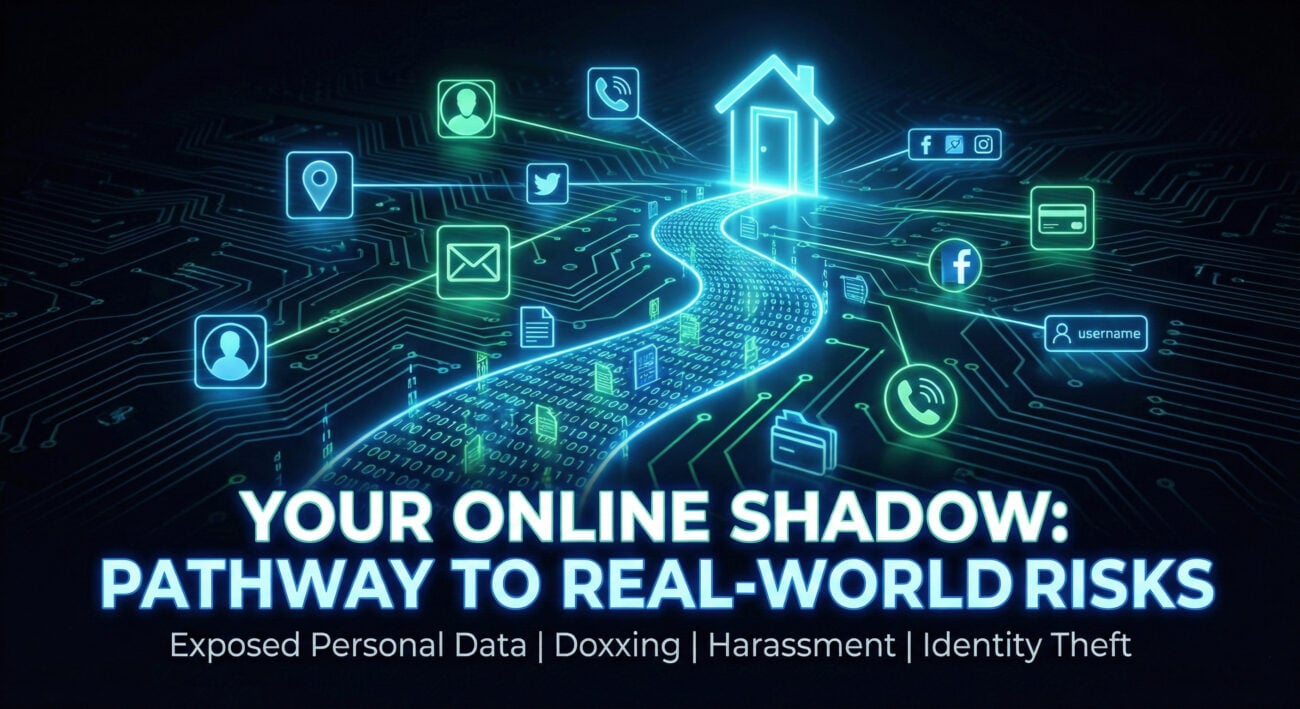
Social media platforms collectively hold more intelligence about organizations than any single database. Every LinkedIn job title, every tweet about a technology deployment, every Instagram geotagged photo, and every Facebook check-in creates a mosaic that threat actors use to reconstruct your entire organizational structure, identify high-value targets, and craft devastatingly personalized social engineering attacks.
The danger lies in the passive nature of this reconnaissance. Unlike phishing or scanning, social media harvesting leaves no trace on your network logs. There is no firewall alert, no intrusion detection signature, and no failed login attempt. The attacker simply reads what your employees have already made public, one profile at a time, building a comprehensive targeting dossier over weeks or months.
According to CSO Online, the convergence of publicly available social media data with AI-powered OSINT tools has reduced the time required to build a complete organizational profile from months to mere hours. This democratization of reconnaissance capabilities means even unsophisticated threat actors can conduct sophisticated targeting campaigns.
The National Institute of Standards and Technology (NIST) has identified social media intelligence (SOCMINT) as a critical vector in their cybersecurity frameworks, recommending that organizations establish formal social media awareness programs as part of their overall security posture.
Social media reconnaissance is the process by which adversaries systematically search, collect, and analyze information from publicly accessible social media platforms to build intelligence dossiers about target organizations and individuals. This is a form of Open Source Intelligence (OSINT) that exploits the vast amount of personal and professional data voluntarily published by employees, executives, and their professional networks. Unlike active reconnaissance techniques, social media intelligence gathering is entirely passive and leaves no digital footprint on the target's infrastructure.
Imagine your organization is a house. You have strong locks on every door, a security system, and guard dogs patrolling the perimeter. But every day, your employees open the windows to show their friends the inside: they post photos of their workstations, talk about what software they use, share their daily schedules, and announce when the house will be empty. A social media attacker never needs to pick a lock or disable an alarm. They simply walk past the house, look through all those open windows, and take notes about everything they see. Every LinkedIn post is an open window. Every tweet is a door left ajar. Every Instagram photo reveals what's on the kitchen table.
| Term | Definition | In Simple Terms |
|---|---|---|
| OSINT | Open Source Intelligence, intelligence gathered from publicly available sources including social media, websites, public records, and news articles. | Reading what people have already made public, like browsing a library where every book is a person's online life. |
| SOCMINT | Social Media Intelligence, a subset of OSINT specifically focused on information extracted from social media platforms. | Scrolling through someone's social feeds and collecting every useful detail about their work, life, and connections. |
| Social Engineering | Psychological manipulation of people into performing actions or divulging confidential information, often using intelligence gathered from social media. | A con artist who already knows your name, job, and boss before they even start talking to you. |
| Pretexting | Creating a fabricated scenario (pretext) to convince a target to divulge information or perform an action. | Pretending to be someone you're not, using real details from social media to make the lie convincing. |
| Passive Reconnaissance | Information gathering that does not directly interact with the target's systems, leaving no trace in logs. | Watching a building from across the street with binoculars instead of trying the doors. |
| Digital Footprint | The trail of data a person creates while using the internet, including social media posts, comments, shares, and profile information. | The footprints you leave behind everywhere you walk online, permanent, trackable, and revealing. |
| Geolocation Data | Metadata embedded in photos, posts, or check-ins that reveals the physical location where content was created. | A hidden GPS tag in every photo that says exactly where it was taken, even if you didn't mean to share that. |
| Target Profiling | The systematic compilation of intelligence about a specific individual or organization from multiple social media sources. | Building a complete dossier on someone by piecing together every fragment of their online presence. |
Rebecca Vasquez was the Director of Cloud Infrastructure at Pinnacle Financial Services, a mid-sized investment firm with 3,200 employees across offices in New York, Austin, and London. Rebecca was proud of her career and maintained an active LinkedIn presence. Her profile listed her exact title, tenure, technology certifications (AWS Solutions Architect, GCP Professional), and detailed descriptions of her team's projects. Her 800+ connections included colleagues, vendors, and industry peers.
What Rebecca didn't know was that her public LinkedIn profile, combined with her Twitter activity (@rebeccavcloud, where she frequently posted about Kubernetes challenges, Terraform configurations, and upcoming conference travel), provided a threat actor group operating from Eastern Europe with everything they needed. Over three months, APT-ShadowHarvest monitored her posts, identified her team members through her LinkedIn connections, and mapped the entire cloud infrastructure team's hierarchy, technology stack, and operational tempo.
The threat actor used automated OSINT tools to scrape all Pinnacle Financial Services employee LinkedIn profiles. They catalogued 180+ employees with IT, security, and finance roles. Rebecca's profile was flagged as a high-value target due to her director-level access and detailed technical postings. The attacker also identified her direct reports, her manager (CIO Thomas Gray), and her upcoming travel to the AWS re:Invent conference in Las Vegas.
Cross-referencing LinkedIn data with Twitter posts, the attacker learned that Rebecca's team was migrating from on-premises Exchange to Microsoft 365, that they used Duo for MFA, and that their Palo Alto firewalls were due for a firmware update next quarter. Her Instagram posts revealed photos of her office badge (visible in a selfie), her desk setup (dual monitors with what appeared to be a VPN client), and her Austin office building exterior. The attacker now had a complete operational picture.
While Rebecca was attending AWS re:Invent in Las Vegas, the attacker sent a highly targeted spear-phishing email to one of her junior engineers, appearing to come from Rebecca herself. The email referenced a specific AWS project they were working on (details pulled from Rebecca's LinkedIn), mentioned the upcoming firewall upgrade (from the IT lead's Twitter), and contained a fake SharePoint link with a malicious payload. The junior engineer clicked the link, believing it was a legitimate request from his director.
The initial compromise led to lateral movement across the cloud infrastructure team's segment. The attacker accessed production Kubernetes clusters, exfiltrated customer financial records, and deployed ransomware across the Austin data center. Total breach cost: $8.2 million, including $3.1M in incident response, $2.4M in regulatory fines, $1.8M in business interruption, and $900K in reputation damage. 47,000 customer records were compromised.
Following the breach, Pinnacle Financial Services completely overhauled their approach to social media security. Rebecca Vasquez herself became the company's first Social Media Security Champion, leading an organization-wide program that transformed how employees manage their digital footprints.
The company implemented mandatory social media awareness training that was refreshed quarterly, deployed a dedicated OSINT monitoring team that continuously scans for exposed organizational intelligence, established clear social media policies that defined what information employees could share publicly, and launched a "clean your footprint" campaign that helped over 2,000 employees audit and restrict their social media privacy settings.
Rebecca also created a "red team mirror" exercise where internal security testers attempted to profile the company using only public social media data each quarter. The results were shared in anonymized form with all employees to demonstrate the real-world impact of oversharing. Within six months, the amount of sensitive organizational intelligence publicly available dropped by 78%.
The breach wasn't caused by a technical vulnerability in Pinnacle's infrastructure. It was caused by the aggregate effect of dozens of employees innocently sharing professional details that, when combined, created a complete operational intelligence picture. No single post was catastrophic, but the mosaic was devastating. Every employee who posted their job title, technology stack, or office location contributed to the attacker's targeting dossier. The fix wasn't a firewall update or a software patch. It was a cultural change in how the organization thinks about public information.
Conduct a comprehensive audit of what information about your organization is publicly available across all major social media platforms. Map every employee profile that mentions your company name.
site:linkedin.com/in "Your Company" "job title"Create clear, actionable guidelines that define exactly what employees can and cannot share on social media platforms regarding work-related information.
Guide employees to lock down their social media privacy settings, ensuring that work-related details are only visible to approved connections, not the general public.
Continuously monitor social media platforms for leaked organizational intelligence, using both automated tools and manual review processes.
Test your organization's resilience by simulating social media-based attacks that mirror real-world adversary techniques documented under T1593.001.
Build a culture of security awareness where every employee understands how their individual social media presence contributes to the organization's overall attack surface.
Create a clear escalation path for when employees discover that sensitive organizational information has been exposed through social media channels.
The fundamental challenge in defending against T1593.001 is the intelligence asymmetry between attacker and defender. The attacker only needs to find one valuable piece of information among millions of social media posts, while the defender must protect every piece of sensitive information across every employee's public profile on every platform. An organization with 5,000 employees might have 25,000+ social media profiles across all platforms, each potentially leaking organizational intelligence. Defenders cannot monitor every post in real-time, so they must focus on reducing the overall exposure surface and building a culture where employees understand the stakes.
The most effective defense strategy combines technical monitoring tools with human awareness training. Automated OSINT platforms can detect bulk exposure and trending patterns, but only educated employees can prevent the initial publication of sensitive information. The goal is not to eliminate all social media presence (which is neither practical nor desirable), but to minimize the intelligence value available to adversaries while maximizing the professional benefits of social media engagement.
Threat hunters monitoring for social media reconnaissance activity focus on indicators that suggest an adversary is systematically collecting organizational intelligence from public sources. While passive social media harvesting generates no direct network logs, hunters can detect the downstream effects of successful social media profiling: highly targeted phishing emails that reference specific internal details, fake social media accounts being created to impersonate employees, and coordinated reconnaissance patterns across multiple platforms.
| Indicator | What It Suggests | Severity |
|---|---|---|
| New LinkedIn connection requests from profiles with minimal history, stock photos, or job titles matching your industry competitors | Adversary creating fake profiles to gain access to connection networks and view "Connections Only" information about your employees | HIGH |
| Sudden increase in company name mentions across Twitter/X, especially in contexts referencing technology, infrastructure, or hiring | OSINT collection activity aggregating social media mentions to build organizational intelligence profiles for targeting | MEDIUM |
| Fake social media profiles impersonating your executives or creating fraudulent company pages | Pre-texting preparation for BEC (Business Email Compromise) or social engineering campaigns targeting employees, customers, or partners | HIGH |
| Phishing emails containing specific details only available from social media (project names, colleague names, conference attendance) | Active exploitation of social media intelligence to craft highly personalized spear-phishing attacks indicating a mature reconnaissance phase | HIGH |
| GitHub accounts systematically following or starring repositories belonging to your organization's developers | Technical reconnaissance mapping your development practices, code quality, dependency vulnerabilities, and deployment workflows | MEDIUM |
| Multiple employee profiles viewed in rapid succession on LinkedIn (detectable through "Who Viewed Your Profile" notifications) | Automated profile scraping activity using tools that enumerate employee profiles systematically to build organizational dossiers | MEDIUM |
Threat hunters can use these safe, ethical queries to assess their organization's social media exposure without engaging in any intrusive activity. These queries only examine publicly available information:
LinkedIn Search: "Your Company Name" + "engineering" OR "security" OR "infrastructure" OR "cloud"
Assess: How many employees publicly list technology-specific roles and keywords?
Twitter/X Advanced Search: from:company_handle OR "company name" "AWS" OR "Azure" OR "Kubernetes" OR "firewall"
Assess: What technology deployments are publicly discussed by employees?
Google: site:instagram.com "company name" OR "#companyname", filter by location tags
Assess: What physical locations, office interiors, and events are visible in public photos?
GitHub: search users by company email domain, review public repositories and commit activity
Assess: What code, configuration files, and infrastructure-as-code are publicly visible?
Facebook: search company page, employee check-ins, and public group discussions mentioning your company
Assess: What personal information, travel plans, and workplace details are publicly visible?
It's important to understand that T1593.001 itself, the passive collection of publicly available social media information, is not a network-detectable activity. No firewall rule, IDS signature, or endpoint agent can alert you when someone reads your employees' LinkedIn profiles. Threat hunters must therefore focus on detecting the effects of successful social media reconnaissance: the resulting spear-phishing campaigns, the fake social media accounts, the credential harvesting attempts, and the social engineering operations that follow.
The most valuable hunting approach is proactive: regularly conduct your own social media reconnaissance against your organization (ethical OSINT), document what you find, and use those findings to drive awareness training, policy updates, and privacy configuration improvements. By understanding exactly what an adversary can learn about your organization from social media, you can prioritize remediation efforts and measure improvement over time. This is the essence of "hunting for your own exposure" and it is the most effective defense against T1593.001.
Every employee's social media profile is a data point in an adversary's targeting algorithm. The stronger your organization's collective awareness, the smaller your reconnaissance attack surface becomes.
Deepen your understanding of social media reconnaissance with these authoritative resources:
Every contribution moves us closer to our goal: making world-class cybersecurity education accessible to ALL.
Choose the amount of donation by yourself.