

























Cyber Pulse Academy

Attribute-Based Access Control

The Complete Guide Explained Simply

Learn what Attribute-Based Access Control (ABAC) is and why it's critical for modern cybersecurity. Our beginner's guide explains ABAC, step-by-step implementation, and best practices to secure your systems.


Why ABAC is Replacing Old Security Models

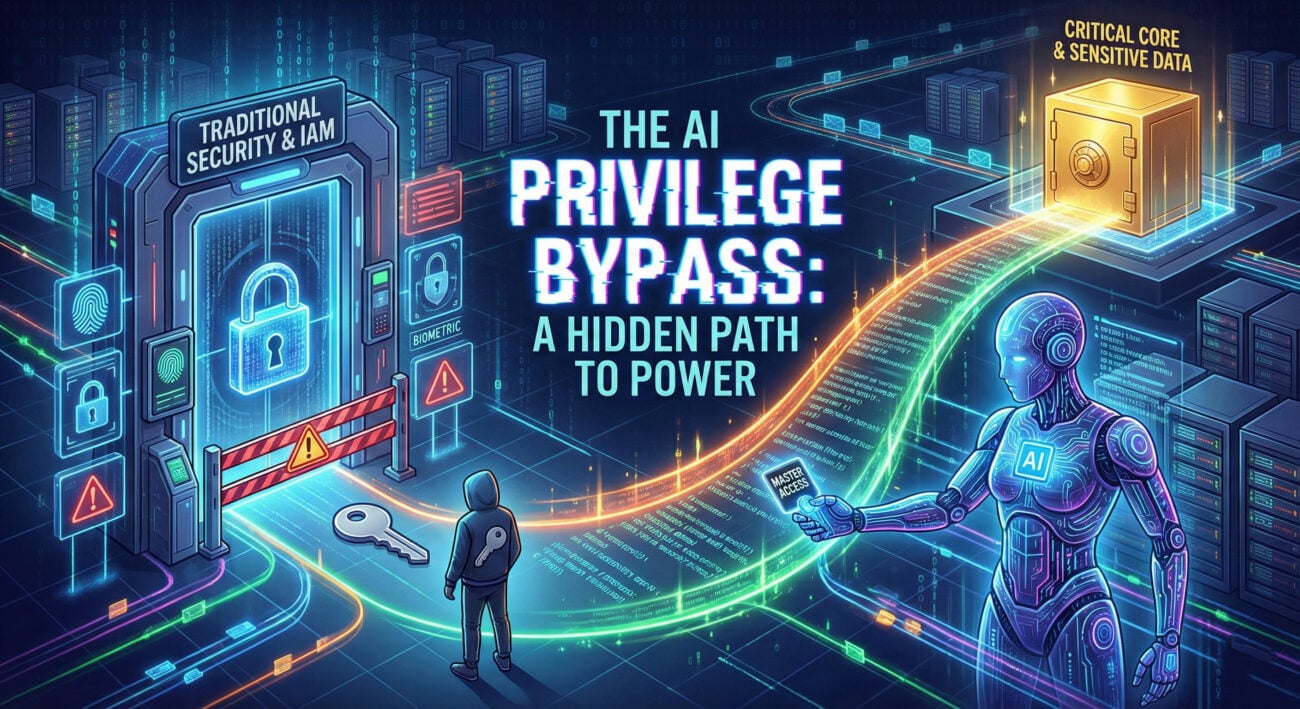
Imagine an office building where every door is locked with the same master key. If a key gets lost or stolen, the entire building is vulnerable. For decades, IT systems worked exactly like this with basic, role-based security. Today, that's no longer good enough.

Attribute-Based Access Control (ABAC) is a smart, dynamic security model that grants access based on a combination of user attributes, resource properties, and environmental conditions, not just a static role or title.

Think of it as a security checkpoint that doesn't just check your ID badge, but also verifies your department, the time of day, the sensitivity of the file you want, and whether your training is up-to-date, all in real-time.

In this guide, you'll learn: what ABAC is, why it's essential for cloud and hybrid environments, how it prevents data breaches, and the step-by-step process for implementing it in your organization.

Table of Contents

What is Attribute-Based Access Control (ABAC)?

Attribute-Based Access Control (ABAC) is a security framework that evaluates a set of attributes (characteristics) to determine if a user can access a specific resource under a particular set of conditions.

Unlike older models that ask "Are you a manager?" ABAC asks "Who are you, what are you trying to access, from where, and under what circumstances?" This creates a far more granular and adaptable security posture. It's the foundation of Zero Trust Architecture and is critical for securing modern cloud applications and sensitive data.

Whether you're logging into a work app from home or a contractor trying to access a project file, ABAC is the intelligent system working in the background to keep your data secure.

Key Terms & Concepts

Term Meaning Analogy
Subject The user or system requesting access (e.g., an employee, an application). "The person knocking on the door."
Resource The object being accessed (e.g., a file, database, server). "The room or file cabinet they want to enter."
Action The operation being requested (e.g., read, write, delete). "What they want to do (read a document, modify a file)."
Attributes Key-value pairs describing the Subject, Resource, Action, and Environment. "The ID badge details, the file's label, and the current time/date."
Policy A set of rules that defines which combinations of attributes are allowed. "The rulebook the security guard follows to make a decision."
Policy Decision Point (PDP) The brain of ABAC that evaluates attributes against policies to grant/deny access. "The security guard making the final yes/no call."

White Label 86db681e abac attribute based access control 1

Real-World Scenario: How ABAC Protects Financial Data

Let's follow Sarah, a financial analyst at "SecureCorp". She needs to access the Q4 earnings report, a file classified as "Highly Confidential."

Under a basic, role-based system, if Sarah's role is "Analyst," she might get blanket access to all financial files. This is dangerous, if her credentials were phished, an attacker could access everything.

With Attribute-Based Access Control, the system doesn't just see "Sarah = Analyst." It evaluates a dynamic set of facts: Subject: Sarah | Department: Finance | Clearance: Level 2 | Training: Completed. Resource: Q4_Earnings.pdf | Classification: Confidential | Owner: CFO. Environment: Time: 10:00 AM (Work Hours) | IP: Corporate Network | Device: Company Laptop (Encrypted).

The ABAC policy states: "Allow READ access to CONFIDENTIAL files only if: User's Department matches Resource Department, Clearance >= Resource Classification, Access is during work hours from a managed device on the corporate network."

The Policy Decision Point checks all these boxes and grants access. If Sarah tried to access the same file at 2 AM from a public WiFi cafe, ABAC would instantly block the request, logging the suspicious activity.

Timeline: Before & After ABAC

❌ With Static, Role-Based Access ✅ With Dynamic Attribute-Based Access Control
Broad, Over-Privileged Access - Users often have more permissions than needed for their job. Least Privilege - Access is granted only for specific tasks under specific conditions.
If a hacker steals a user's credentials, they inherit all that user's broad access rights. A stolen credential is less useful; the hacker likely lacks the required device, location, or time-based attributes.
Difficult to audit "who accessed what and why." Logs only show a user ID and role. Detailed audit trails record the full context (attributes) of every access decision for forensic analysis.
Rigid rules make it hard to support remote work, contractors, or cloud apps securely. Policies easily adapt to context, enabling secure remote and hybrid workforces.

This scenario demonstrates why Attribute-Based Access Control is essential for protecting sensitive data in a dynamic world.


White Label b3242ec7 abac attribute based access control 2

Step-by-Step: How to Implement ABAC

Follow these 5 critical steps to build and implement a basic ABAC framework:

Step 1: Identify & Inventory Your Critical Assets

You can't protect what you don't know. List your most sensitive resources: customer databases, financial records, intellectual property, and admin systems. For each, define its key resource attributes: Classification (Public, Internal, Confidential), Department, Data Owner, and Location.
Key Point: Start with a small, high-value pilot (e.g., your financial reporting folder) to prove the concept before scaling.

Step 2: Define User & Environmental Attributes

What defines your users and their context? Work with HR and IT to map out reliable sources for:

  • User Attributes: Department, Job Title, Security Clearance Level, Employment Status (Employee/Contractor).
  • Environmental Attributes: Network Zone (Corporate/Remote), Time of Day, Device Compliance Status (Encrypted, Patched), Geographic Location.

Step 3: Draft Your First ABAC Policies

Write simple, clear rules in plain language before coding. Use the "IF-THEN" format. Example: "IF User.Department == Resource.Department AND User.Clearance >= Resource.Classification AND Environment.Network == 'Corporate' THEN ALLOW read ELSE DENY." Focus on one business process at a time.

Step 4: Select & Configure an ABAC Engine (PDP)

You need software to enforce your policies. This could be a feature within your Cloud Provider (AWS IAM, Azure AD), a dedicated open-source tool like OpenPolicyAgent (OPA), or a commercial CIAM (Customer Identity and Access Management) platform. Configure it to pull attributes from your defined sources (Active Directory, HR system).

Step 5: Test, Monitor, and Iterate

Run exhaustive tests with dummy users and varied contexts. Can a contractor access the file from the right device at the right time? Is an employee correctly blocked after hours? Turn on detailed logging for every access decision. Use these logs to refine policies and catch anomalies.

💡 Pro Tip: Use the XACML (eXtensible Access Control Markup Language) standard as a blueprint for structuring your policies. While you don't need to code in XACML itself, its model of Subject, Resource, Action, and Environment is the industry best practice for designing robust ABAC rules.


White Label 56c16fe1 abac attribute based access control 3

Common Mistakes & Best Practices

❌ Top ABAC Implementation Mistakes

  • Attribute Sprawl: Defining hundreds of irrelevant attributes creates complexity and management nightmares. Start with 5-10 core attributes.
  • Poor Data Quality: ABAC is only as good as its attribute sources. If your HR system has outdated department info, your policies will fail.
  • Overly Complex Policies: Creating a single, giant policy with 50 conditions is unmaintainable. Break policies into small, reusable components.
  • Neglecting the "Deny" Case: Not explicitly defining what happens when no policy matches can lead to insecure default "allow" decisions.

✅ ABAC Best Practices for Success

  • Adopt a Phased Approach: Pilot ABAC on one application or dataset. Prove value, learn lessons, then expand gradually to other systems.
  • Centralize Policy Management: Use a single Policy Administration Point (PAP) to manage all rules. This ensures consistency and simplifies audits.
  • Implement Robust Logging: Log every access request with its full attribute context. This is invaluable for security investigations and compliance reports.
  • Regular Policy Reviews: Business needs change. Schedule quarterly reviews to ensure policies still align with job functions and compliance requirements.

⚠️ Critical Warning: Do not treat ABAC as a "set and forget" system. The most dangerous exploit is a policy that becomes outdated, granting legacy access to users who have changed roles or to resources that have increased in sensitivity. Continuous monitoring and review are non-negotiable.

Learn More About Attribute-Based Access Control

Want to deepen your knowledge? Check out these trusted resources:

These resources provide deeper technical documentation and practical examples for mastering Attribute-Based Access Control.

Conclusion: Master ABAC for Future-Proof Security

In a digital landscape defined by cloud computing, remote work, and sophisticated threats, static access controls are a relic of the past.

Attribute-Based Access Control (ABAC) provides the dynamic, contextual, and granular security model required to protect modern assets. By following the steps to identify attributes, craft smart policies, and implement a robust engine, you move from a vulnerable "trust by default" model to a secure "verify everything" posture.

Attribute-Based Access Control isn't just an IT upgrade, it's a strategic business enabler that allows for secure collaboration and innovation. By understanding and implementing what you've learned today, you're building a foundational pillar of a modern cybersecurity program.


Leave a Comment

Your email address will not be published. Required fields are marked *

Ask ChatGPT
Set ChatGPT API key
Find your Secret API key in your ChatGPT User settings and paste it here to connect ChatGPT with your Courses LMS website.
Certification Courses
Hands-On Labs
Threat Intelligence
Latest Cyber News
MITRE ATT&CK Breakdown
All Cyber Keywords

Every contribution moves us closer to our goal: making world-class cybersecurity education accessible to ALL.

Choose the amount of donation by yourself.