




















Certification Courses
Hands-On Labs
Threat Intelligence
Latest Cyber News
MITRE ATT&CK Breakdown
All Cyber Keywords
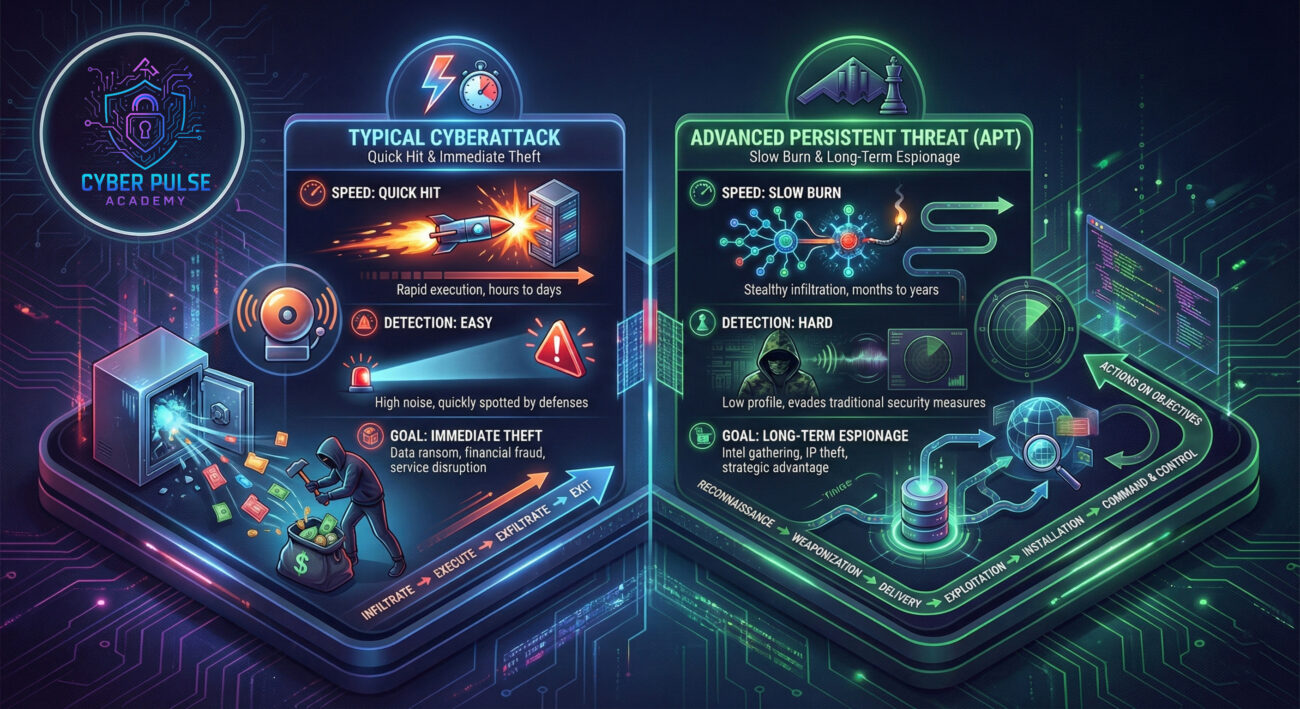
Imagine a thief who doesn't just break into your house, but moves in silently, lives in your attic for months, and steals your secrets slowly without you ever noticing. That's essentially what an Advanced Persistent Threat (APT) is in the digital world, a stealthy, long-term cyberattack that targets specific organizations to steal data or cause damage.
In this guide, you'll learn: what APTs are, why they're so dangerous, real-world examples, and practical steps to protect yourself. Whether you're a small business owner, a student, or just curious about cybersecurity, this post will break down complex concepts into simple, actionable insights.
Have you ever worried about hackers stealing your company's data or personal information? What if I told you that some cyberattacks aren't quick hits but sophisticated campaigns that can last for years, lurking in your systems undetected? This is the reality of Advanced Persistent Threats (APTs), one of the most dangerous cyber risks today.
An Advanced Persistent Threat is a targeted, prolonged cyberattack where hackers gain unauthorized access to a network and remain hidden to steal sensitive data over time. Think of it like a spy movie: instead of a loud robbery, it's a silent infiltration where the attacker blends in to gather intelligence. In this post, we'll explore how APTs work, why they matter to everyone, not just big corporations, and how you can build defenses against them.
Advanced Persistent Threats are not just theoretical; they impact real businesses and governments worldwide. According to recent reports, APT groups have targeted sectors like healthcare, finance, and critical infrastructure, causing billions in damages. For example, in 2023, the Cybersecurity and Infrastructure Security Agency (CISA) highlighted a rise in state-sponsored APT attacks aiming to disrupt supply chains. You can read more about this on CISA.gov.
Why should you care? Even if you're not a large organization, APTs can trickle down: they often use smaller businesses as stepping stones to reach bigger targets. By understanding Advanced Persistent Threats, you can better protect your data and contribute to a safer digital ecosystem. Statistics show that over 70% of breaches involve advanced techniques like those in APTs, making awareness crucial. Check out resources from NIST for frameworks on managing such risks.
Before diving deeper, let's clarify some essential terms. This table breaks down jargon into simple language.
| Term | Simple Definition | Everyday Analogy |
|---|---|---|
| Advanced Persistent Threat (APT) | A long-term cyberattack where hackers secretly access a network to steal data. | Like a burglar who hides in your house for months, taking photos of your documents. |
| Exploit | A piece of code or method that takes advantage of a vulnerability in software. | Using a fake key to open a locked door because the lock has a weak design. |
| Multi-Factor Authentication (MFA) | A security method that requires two or more proofs of identity to access an account. | Like needing both a key and a fingerprint to enter a high-security building. |
| Phishing | A trick where attackers send fake emails to steal login credentials. | Receiving a letter that looks like it's from your bank, but it's actually from a scammer. |
| Encryption | Scrambling data so only authorized people can read it. | Writing a message in a secret code that only you and your friend understand. |
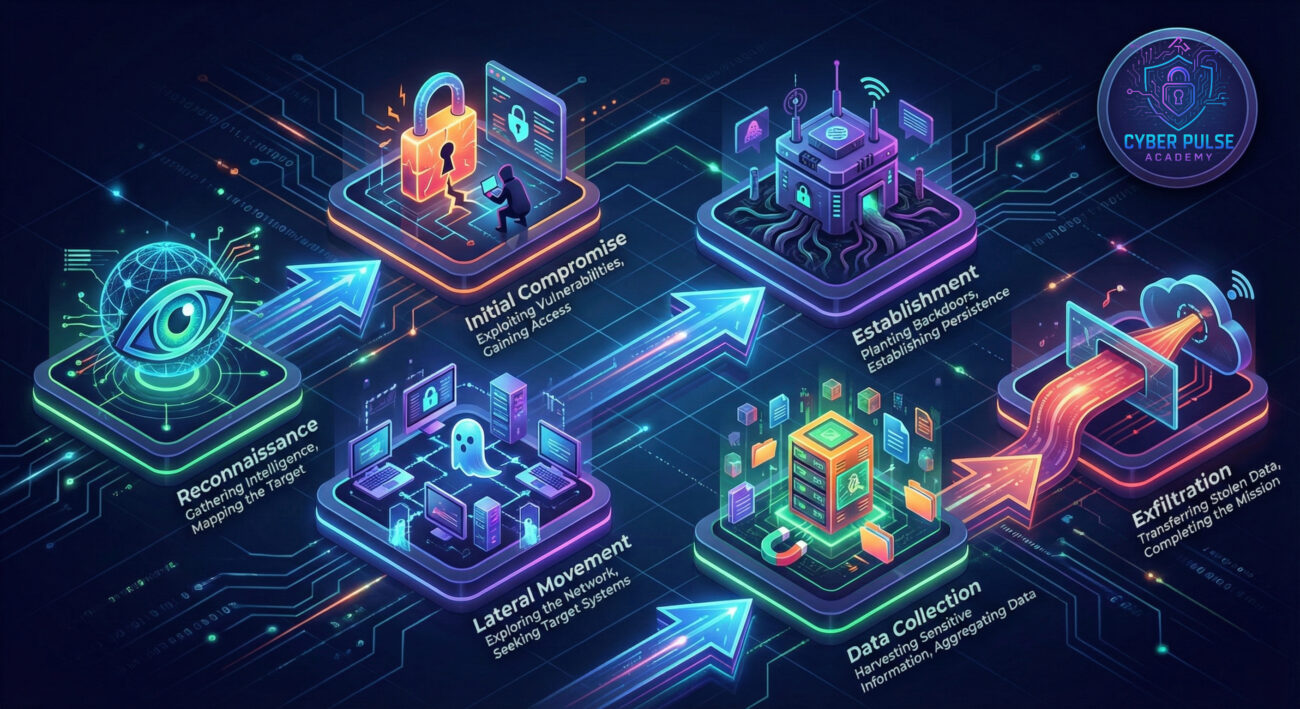
Let's follow Sarah, a manager at a mid-sized tech company called TechFlow Inc., to see how an Advanced Persistent Threat unfolds. TechFlow develops software for logistics, and they thought their firewall was enough protection. But one day, an employee clicked on a phishing email that seemed to come from a trusted partner.
This email contained a malicious attachment that installed malware, giving hackers a foothold in TechFlow's network. Over weeks, the attackers moved silently, accessing sensitive client data and project files. Sarah only noticed when unusual network activity triggered an alert, but by then, financial records had been leaked. The aftermath involved legal fees, reputation damage, and lost contracts.
| Time/Stage | What Happened | Impact |
|---|---|---|
| Day 1 | Phishing email sent to an employee; malware installed. | Initial breach; hackers gained access. |
| Week 1-2 | Hackers explored the network, avoiding detection. | Silent escalation; more systems compromised. |
| Month 1 | Data collection from financial servers and client databases. | Sensitive information stolen, but no one noticed yet. |
| Month 2 | Unusual activity detected by a security tool. | Alert raised; incident response initiated. |
| Month 3 | Full investigation revealed data exfiltration. | Legal and financial losses estimated at $500,000. |
Protecting against APTs requires layers of security. Here’s a step-by-step guide to bolster your defenses.
Human error is a common entry point for APTs. Train everyone to recognize threats.
Limit who can access what in your network to reduce attack surfaces.
Outdated software has vulnerabilities that APTs exploit.
Detect unusual activity early to stop APTs before they cause damage.
If an APT steals or corrupts data, backups can save you.
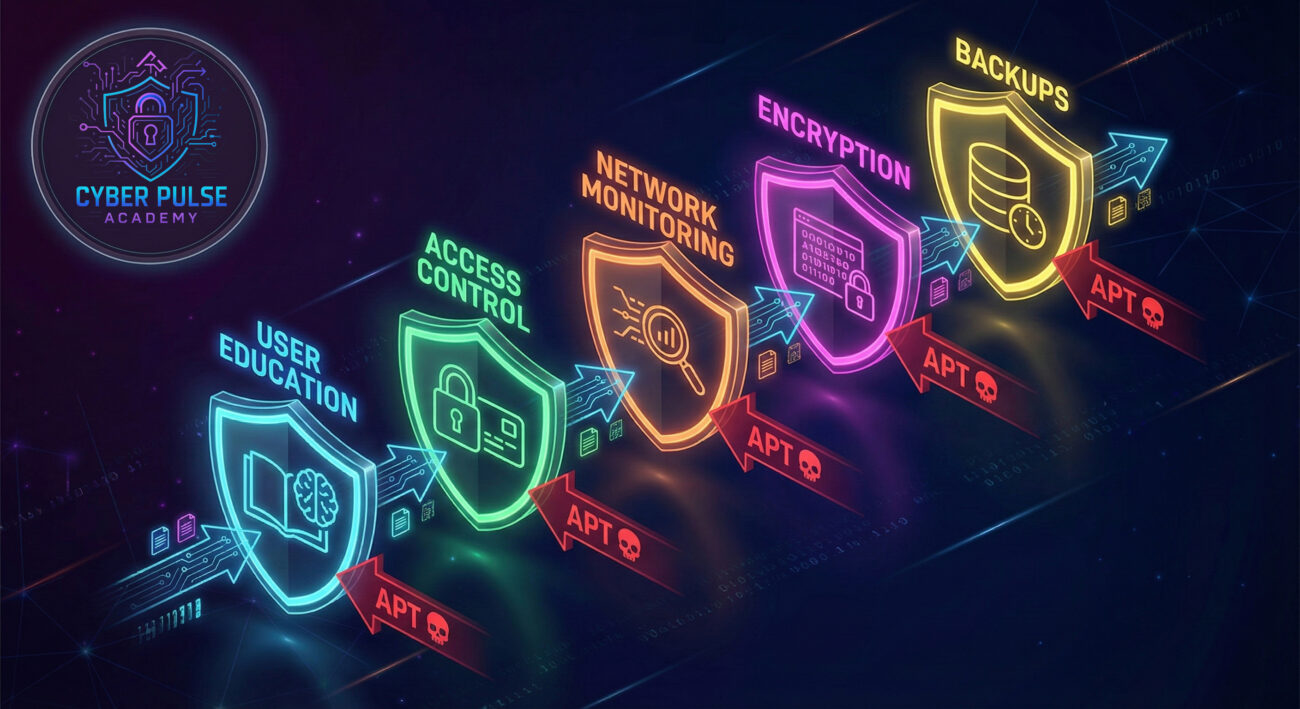
Let's peek into how an attacker might exploit weaknesses related to Advanced Persistent Threats, from a defender's perspective.
Simple Attack Path: An attacker starts by researching your company on social media to find employee emails. They craft a tailored phishing email pretending to be from a vendor, tricking an employee into downloading malware. Once inside, they use stolen credentials to move laterally, accessing servers with client data. Over months, they slowly copy files, hiding in normal traffic to avoid detection.
Defender’s Counter-Move: A savvy defender sets up email filtering to block suspicious senders and uses network segmentation to limit lateral movement. By monitoring for unusual data transfers, like large files sent at odd hours, they can spot the exfiltration early. Regular user training reduces the chance of that initial phishing success. The key is proactive hunting: don't wait for alarms; actively look for anomalies in logs and behaviors.
For a red teamer simulating an Advanced Persistent Threat, patience is key. They care about stealth and persistence: getting in quietly, maintaining access without triggering alerts, and achieving long-term goals like intellectual property theft. They'll exploit human weaknesses first, like social engineering, because it's often easier than technical hacks. Their mindset is about blending in, using legitimate tools to avoid suspicion, and adapting to defenses over time.
For a blue team defender, the focus is on detection and response. They care about minimizing the attack surface and building resilience. This means implementing layers of security, monitoring for subtle signs of compromise, and having plans to eject attackers quickly. Their mindset is proactive: assuming a breach will happen, so they prepare with backups, incident drills, and continuous learning from threat intelligence feeds.
Advanced Persistent Threats are sophisticated, long-term cyberattacks that target organizations for data theft or disruption. Here’s what to remember:
By understanding Advanced Persistent Threats, you can take steps to safeguard your digital assets and contribute to a more secure online world. Stay vigilant and keep learning, cybersecurity is an ongoing journey.
Have questions about Advanced Persistent Threats or want to share your experiences? Leave a comment below or reach out on social media. Let's build a community of cybersecurity learners together! For more tips, check out our posts on two-factor authentication and network security basics.
Every contribution moves us closer to our goal: making world-class cybersecurity education accessible to ALL.
Choose the amount of donation by yourself.