


















































Certification Courses
Hands-On Labs
Threat Intelligence
Latest Cyber News
MITRE ATT&CK Breakdown
All Cyber Keywords
Have you ever felt overwhelmed by the dozens of passwords you need to remember for work, banking, social media, and shopping? You're not alone. In our digital world, managing who gets access to what has become the cornerstone of cybersecurity. This is where Identity as a Service (IDaaS) comes in – your digital gatekeeper in the cloud.
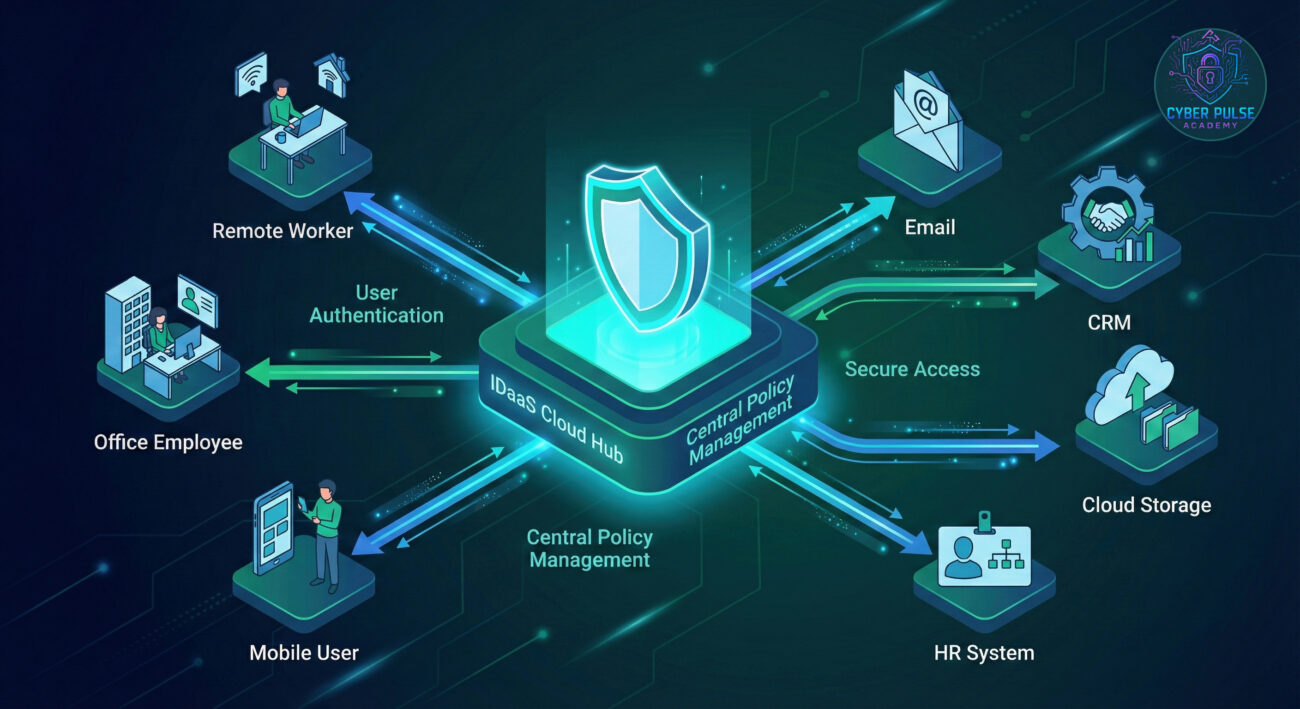
Think of Identity as a Service as a highly secure, digital concierge service for your online identity. Instead of having a different key (password) for every door (app or website), you have one master keycard managed by a professional security team. This concierge verifies it's really you before granting access to any service you're authorized to use.
In this guide, you'll learn: what IDaaS really means, why it's replacing old password books, how it protects you from modern threats, and the simple steps to leverage its power for your security.
Imagine trying to enter a high-security office building. You wouldn't expect a different, unconnected security guard at every single door, each requiring a separate ID they've never seen before. Yet, that's exactly how we've managed our digital lives, until now. Identity as a Service (IDaaS) is the revolutionary shift centralizing and securing that process.
At its core, Identity as a Service is a cloud-based solution that manages user identities and controls access to applications and data. Instead of every company building its own complex, expensive identity system, they can subscribe to a specialized service that does it better, more securely, and from anywhere.
In the next sections, we'll break down this powerful concept, show you its real-world impact, and guide you on how it can make your digital life both simpler and far more secure.
The digital landscape has exploded. The average employee uses over 30 cloud services at work, while individuals juggle countless personal accounts. This sprawl creates a massive attack surface for cybercriminals. A breach at one service can lead to compromised accounts everywhere if passwords are reused, a common and dangerous mistake.
Identity as a Service matters because it directly tackles this modern vulnerability. By centralizing identity management, it enforces consistent security policies like Multi-Factor Authentication (MFA) across all connected applications. According to a recent report by CISA, implementing strong identity management is one of the most effective shields against ransomware and phishing campaigns. Organizations using a robust IDaaS platform can significantly reduce their risk of a catastrophic data breach.
For you, this means the apps you use for work (like email, project tools, and HR systems) become inherently more protected. Your employer can ensure that only the right people have access to sensitive information, and if your device is lost or an employee leaves, access can be revoked instantly across the board. Identity as a Service isn't just an IT trend; it's the foundation of trust in our digital economy.
Let's decode the essential jargon around Identity as a Service with simple definitions and relatable analogies.
| Term | Simple Definition | Everyday Analogy |
|---|---|---|
| Identity as a Service (IDaaS) | A cloud-based subscription service that manages digital identities and controls access to online applications. | Like a property management company that handles keys, entry codes, and guest lists for all apartments in a complex, instead of each tenant managing their own lock. |
| Single Sign-On (SSO) | A feature of IDaaS that lets you use one set of login credentials to access multiple applications. | Your employee badge that gets you into the office building, the parking garage, and the cafeteria, without needing separate keys for each. |
| Multi-Factor Authentication (MFA) | A security method that requires two or more proofs of identity to grant access. | Like using both a bank card (something you have) and a PIN (something you know) to withdraw cash from an ATM. |
| Privilege Escalation | A cyber attack where a user or program gains higher access permissions than they are entitled to. | A hotel guest figuring out a way to get a master keycard that opens every room, not just their own. |
| Zero Trust Security | A security model that assumes no user or device inside or outside the network is trustworthy by default. | A high-security museum that checks your ID and purpose at every new exhibit hall, even after you've passed the main entrance. |
Meet Sarah, a project manager at "InnovateTech," a mid-sized software company. Before IDaaS, her digital work life was frustrating and insecure.
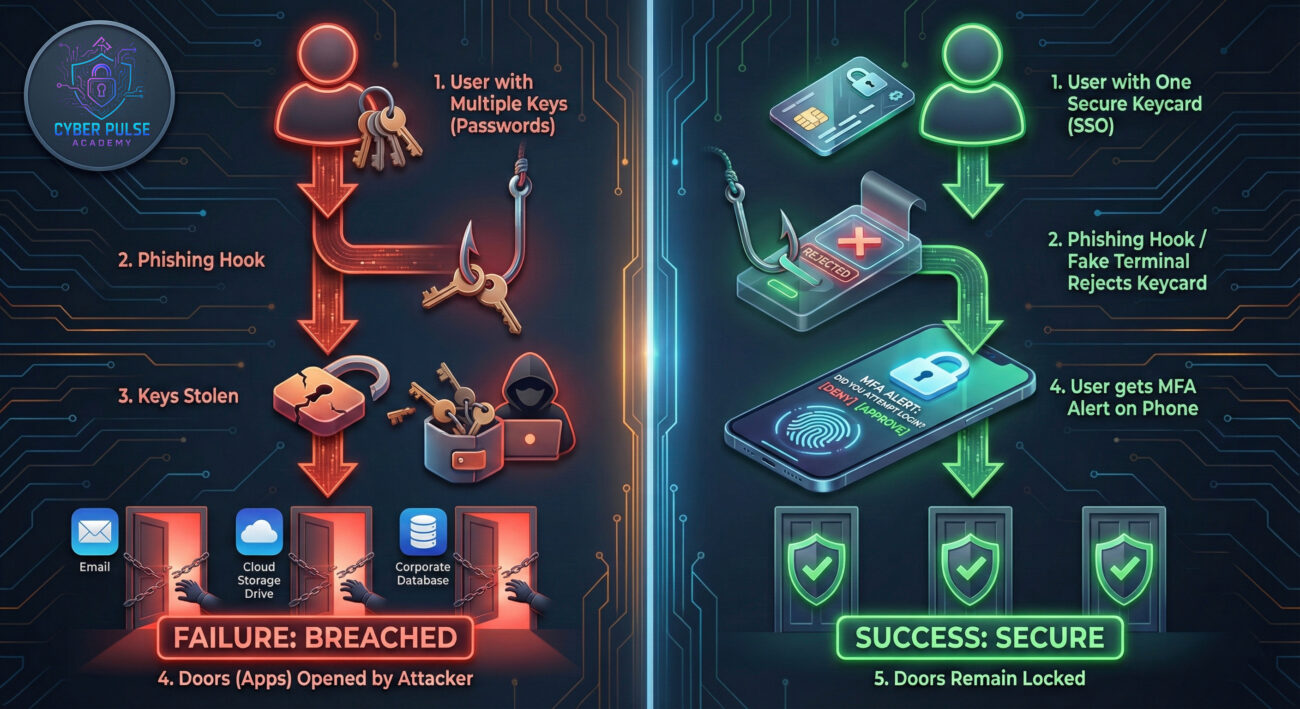
THE BEFORE (The Chaos): Sarah had to remember eight different passwords for her work tools: email, project management, design software, customer database, HR portal, expense reports, time tracking, and the company wiki. Overwhelmed, she reused a variation of one weak password everywhere. When a phishing email tricked her into logging into a fake version of the company wiki, the attackers stole her credentials. Because she reused passwords, they gained access to the customer database, leading to a significant data breach.
THE AFTER (The Control): InnovateTech implemented an Identity as a Service solution. Now, Sarah has one secure login portal. She accesses all her apps with one click via Single Sign-On (SSO), backed by Multi-Factor Authentication (MFA) on her phone. When the same phishing attempt happened again, the fake site couldn't steal her true credentials, and the MFA prompt never appeared on her legitimate app, alerting her to the fraud. When a contractor's project ended, IT instantly revoked his access to all systems simultaneously.
| Time/Stage | What Happened | Impact |
|---|---|---|
| Week 1 (Before IDaaS) | Sarah receives a convincing phishing email mimicking the company wiki. | She enters her reused credentials, which are stolen by attackers. |
| Week 1, 2 hours later | Attackers use her stolen password to log into the customer database. | Data breach: 5,000 customer records are exfiltrated. |
| Month 2 (After IDaaS) | Same phishing attack is attempted. Sarah clicks the link. | The fake site cannot capture valid SSO tokens. No MFA prompt appears on Sarah's phone, raising her suspicion. She reports the email. |
| Month 3 | A contractor's project ends. IT admin uses the IDaaS dashboard. | With one click, the contractor's access to all 8 systems is revoked, eliminating "orphaned" accounts. |
Before anything else, take stock. Are you an individual trying to secure personal accounts, or are you evaluating solutions for a team or business?
Not all IDaaS platforms are the same. Focus on core security features.
Start with a non-critical but frequently used application to test the process.
Roll out the new system to your team with clear communication and training.
Security is ongoing. Use the tools your IDaaS provider offers.
Let's see how an attacker thinks about Identity as a Service and how a defender counters them.
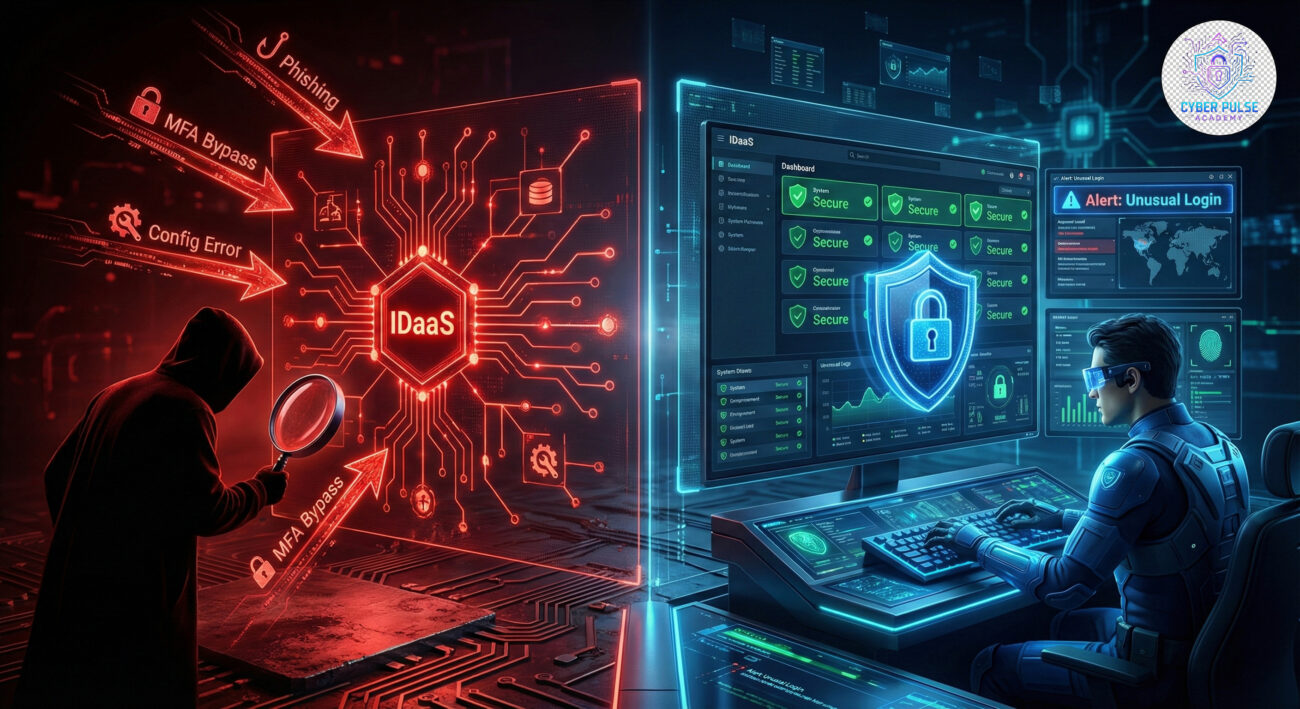
The Simple Attack Path – Credential Stuffing: An attacker obtains a list of email and password pairs from a breach of a popular gaming site. They know people reuse passwords. They use automated tools to "stuff" these credentials into the login portals of hundreds of companies using a popular IDaaS provider, hoping some employees used their gaming password for work. If the company doesn't have MFA enforced, the attacker gets in.
The Defender's Counter-Move – MFA & Anomaly Detection: The defender's IDaaS is configured with a key policy: MFA is required for all logins from unrecognized devices. When the attacker's script tries the stolen password, the login attempt is flagged as coming from a new device/IP in a different country. The system prompts for an MFA code, which the attacker doesn't have. Furthermore, the IDaaS system detects the rapid-fire login attempts from a single IP address across multiple accounts, classic bot behavior, and temporarily blocks the IP while alerting the security team.
"Identity as a Service centralizes the crown jewels, user credentials and access tokens. My goal is to find a flaw in that central system or trick a user into giving me their one set of keys. A successful phishing attack against the IDaaS login page is a goldmine; it gives me a foothold into every connected application. I look for weak MFA implementations (like SMS fallback), misconfigured access policies, or inactive accounts that haven't been deleted. I'm hunting for the single point of failure that lets me become anyone I want."
"Identity as a Service is my centralized command center for security policy. It lets me enforce consistent, strong authentication (MFA) everywhere and see all login activity from one dashboard. My job is to configure it with a Zero Trust posture: verify explicitly, use least-privilege access, and assume breach. I set up conditional access policies as virtual checkpoints and monitor logs for anomalies. By controlling identity tightly here, I shrink the entire attack surface. My mantra is: 'One door, many strong locks, and I have the master log of everyone who knocks.'"
Identity as a Service (IDaaS) represents a fundamental upgrade in how we protect our digital selves and assets. It moves us away from the fragile, scattered world of individual passwords to a centralized, robust, and intelligent model of access control.
Let's recap the key takeaways:
In an era where our digital identity is as valuable as our physical one, managing it through a dedicated, secure service is no longer a luxury, it's a necessity. Identity as a Service provides that essential layer of protection, clarity, and control.
Has your company adopted an Identity as a Service solution? What challenges or benefits have you seen? Do you have questions about getting started with MFA or SSO?
Share your thoughts, experiences, or questions in the comments below! Let's build a more secure digital world together.
Every contribution moves us closer to our goal: making world-class cybersecurity education accessible to ALL.
Choose the amount of donation by yourself.