


















































Certification Courses
Hands-On Labs
Threat Intelligence
Latest Cyber News
MITRE ATT&CK Breakdown
All Cyber Keywords
Have you ever worried that a software update you trust could actually be a secret doorway for hackers? What if the very tools designed to protect you become the source of the attack? This is the chilling reality of a supply chain attacker, one of the most insidious and powerful threats in the digital world today.
In simple terms, a supply chain attacker is a hacker who doesn't target you directly. Instead, they sneak into a company that creates software or hardware you use. By poisoning the source, they can breach thousands or millions of users at once, like contaminating a city's water supply instead of individual glasses.
In this guide, you'll learn exactly what a supply chain attack is through simple analogies, see a real-world story of how it unfolds, and discover actionable steps to shield yourself and your organization from this pervasive threat.
Imagine buying a certified, brand-new lock for your front door, only to discover the locksmith sold a master key to burglars. That's the core danger of a supply chain attacker. In our interconnected world, we don't build software from scratch; we use libraries, plugins, and services from third parties. This creates a "chain" of trust, and a weakness in any link can compromise everyone downstream.
The impact is staggering. According to a report by CISA (Cybersecurity & Infrastructure Security Agency), supply chain attacks increased by over 300% in recent years. The infamous SolarWinds attack in 2020, attributed to a sophisticated supply chain attacker, compromised multiple U.S. government agencies and thousands of private companies through a trusted software update.
This matters to you, even as a beginner, because you rely on this digital supply chain daily. Every app update, every installed plugin for your website, every piece of open-source code in a project is a potential entry point. Understanding this threat is the first step toward a more secure digital life.
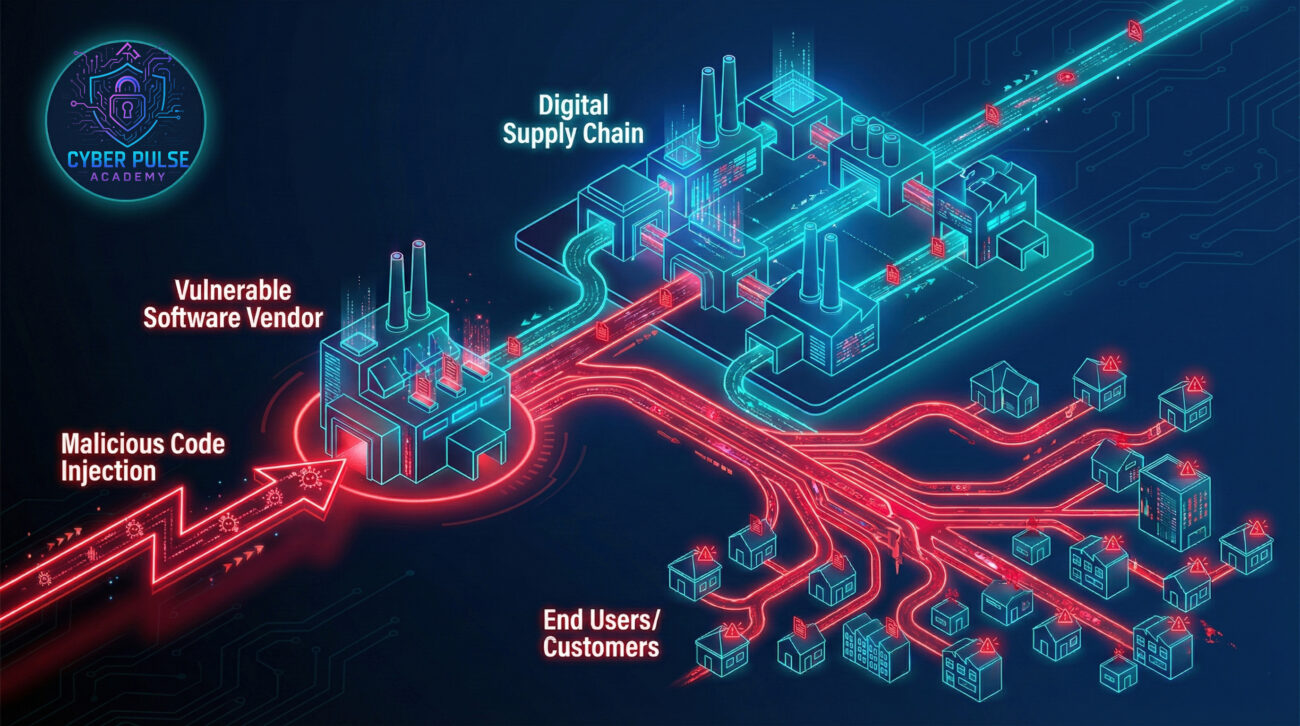
Let's break down the jargon into simple, relatable ideas.
| Term | Simple Definition | Everyday Analogy |
|---|---|---|
| Supply Chain Attacker | A hacker who targets the makers of software/hardware to indirectly compromise all their customers. | A criminal who tampers with a popular brand of door locks at the factory, making every house using that lock vulnerable. |
| Third-Party Dependency | An external piece of code, library, or service that your project or software relies on to function. | Using a pre-made cake mix (the dependency) instead of sourcing flour, sugar, and eggs yourself to bake. |
| Code Compromise | The moment malicious code is secretly inserted into a legitimate software update or component. | A restaurant employee secretly adding a harmful ingredient to a large batch of sauce that gets served to every customer. |
| Trust Boundary | The assumed level of safety between you and your suppliers. A supply chain attacker exploits this trust. | You trust that the water from your municipal supply is clean. You don't test every glass you drink. |
| Software Bill of Materials (SBOM) | A list of all ingredients (dependencies) in a piece of software. A key tool for protection. | A food ingredient label that lists everything in the product, helping you avoid allergens or harmful substances. |
Let's follow Sarah, the IT manager at "BrightStart Innovations," a mid-sized tech company. She prioritizes security: she enforces strong passwords, uses MFA, and keeps systems updated. Her team uses a popular network monitoring tool called "NetSight Pro," trusted by thousands.
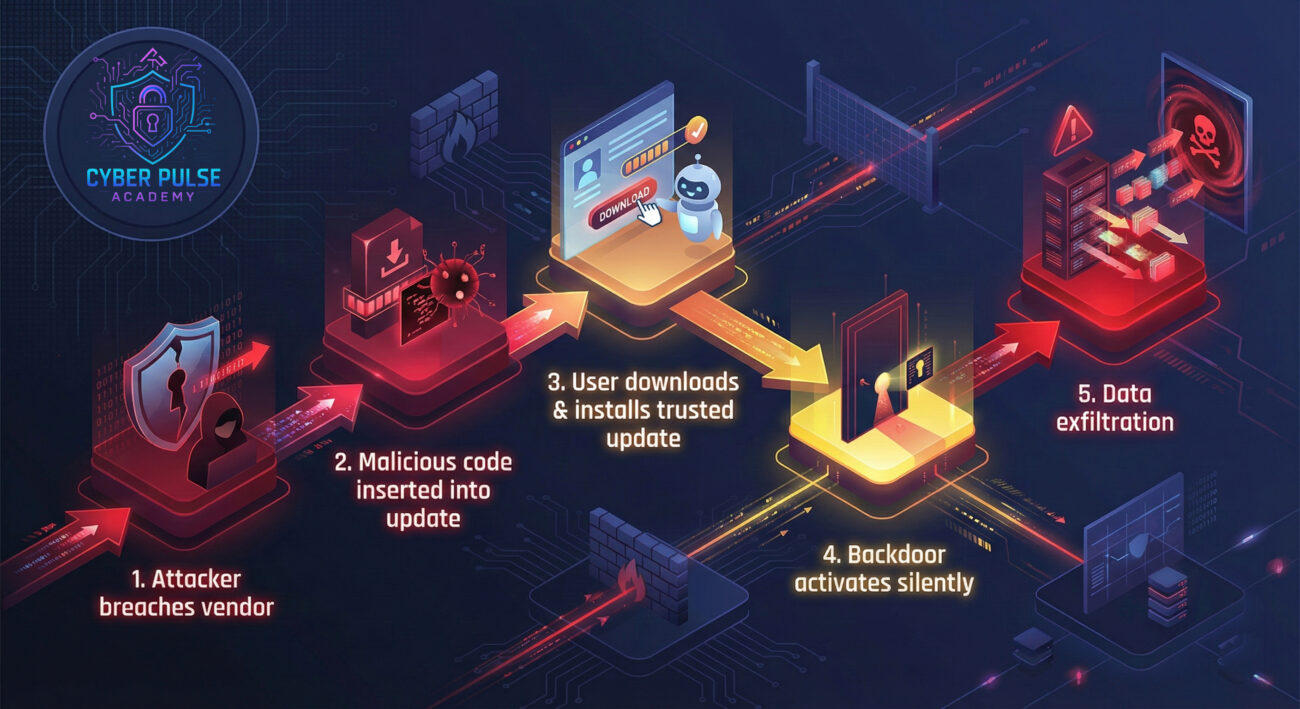
One Tuesday, NetSight Pro releases a routine performance update. Sarah's system is set to auto-update from the official vendor. She approves it, believing it's verified and safe. Unbeknownst to her, a supply chain attacker had breached NetSight Pro's development systems months prior, planting a sophisticated backdoor into this very update.
The malicious code was encrypted and hidden within legitimate functions. Once installed at BrightStart, it lay dormant for two weeks, then quietly established a connection to a hacker-controlled server. The attackers now had a foothold inside the secure network, bypassing all perimeter defenses because the traffic came from a trusted, internal tool.
| Time / Stage | What Happened | Impact |
|---|---|---|
| Months Prior | Attackers breach NetSight Pro's developer network using stolen credentials. | The software supply chain is poisoned at the source. |
| Update Day | Sarah approves the automatic, compromised update, believing it's legitimate. | Backdoor is deployed on all BrightStart's servers. |
| +2 Weeks | Dormant malware activates, creates a stealthy connection to hacker server. | Attackers have persistent, trusted access inside the network. |
| +1 Month | Attackers move laterally, steal sensitive R&D data and customer information. | Major data breach, financial loss, and reputational damage for BrightStart. |
Protection isn't about paranoia; it's about intelligent caution. You can't eliminate risk, but you can manage it effectively by shifting your mindset from "trust everything" to "verify continuously."
You can't protect what you don't know you have. For organizations, this means maintaining a Software Bill of Materials (SBOM). For individuals, it means being aware of the major software and plugins you rely on.
Not all software providers have equal security practices. Do some basic due diligence before deep integration.
Limit the damage a compromised component can do. No single piece of software should have access to everything.
Trust, but verify. Look for unusual behavior that might indicate a compromised component.
Assume a critical component will be compromised eventually. A plan turns panic into procedure.
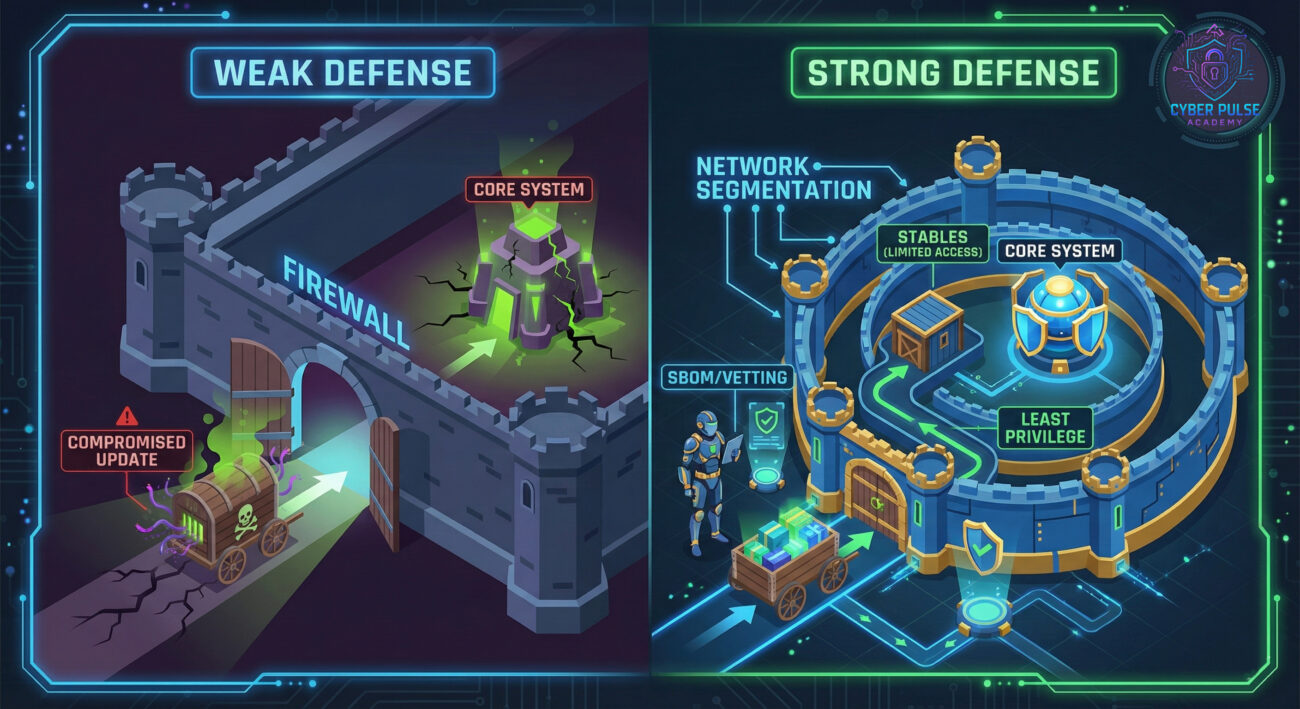
Let's briefly peek into the mindset behind the threat, and the counter-mindset needed to stop it.
The Simple Attack Path: A supply chain attacker thinks like a strategist, not a brute-force hacker. They first identify a software company with many high-value customers but potentially weaker internal security. They might use phishing to steal a developer's credentials or exploit an unpatched server in the vendor's network. Once inside, they study the build and update process, looking for a way to inject their code so it gets distributed automatically and signed with the vendor's legitimate digital certificate. Their goal is persistence and stealth, not immediate destruction.
The Defender’s Counter-Move: The defender shifts focus from just guarding their own perimeter to also understanding and monitoring their suppliers' health. They implement tools that can detect anomalies in their software's behavior, like a network monitoring tool suddenly trying to connect to an unknown server in a foreign country. They use threat intelligence feeds to get early warnings about compromised vendors. The core defensive mindset is assumption of breach, acting as if a trusted component is already malicious and limiting what it can do.
The supply chain attacker (Red Team) sees a target organization's trusted vendors as a "force multiplier" and a "trust bypass." Their primary objective is efficiency and scale. Why spend months trying to hack one fortified company when you can spend weeks hacking their smaller, less-secure software vendor and gain access to hundreds? They care about the vendor's development lifecycle, code signing certificates, and update distribution mechanisms. Their success is measured by how silently and widely their backdoor can spread before detection.
The defender (Blue Team) sees the supply chain as an extended and often unmonitored part of their own attack surface. Their primary objective is resilience and containment. They care about visibility (SBOM), vendor risk management, and behavioral monitoring inside their own network. They assume trust is a vulnerability and implement controls like least privilege and network segmentation to limit "blast radius." Their success is measured by their ability to quickly detect, isolate, and eradicate a compromised component before significant damage occurs.
The threat of a supply chain attacker redefines cybersecurity. It's no longer just about building higher walls around your own digital castle. It's about ensuring the stones and mortar you import aren't already hollowed out and filled with listening devices.
Let's recap the essential truths:
By understanding the methods of a supply chain attacker, you move from being a passive consumer in the digital ecosystem to an informed and vigilant participant. Start by applying the steps in this guide: audit what you use, choose dependencies wisely, and always plan for the possibility that a trusted source could be compromised.
Has this guide changed how you view software updates or the apps you use? Do you have questions about a specific scenario or tool? The best defense is a community of informed individuals.
Share your thoughts, questions, or experiences in the comments below. Let's build a more secure digital world together, one layer of understanding at a time.
Every contribution moves us closer to our goal: making world-class cybersecurity education accessible to ALL.
Choose the amount of donation by yourself.