














Certification Courses
Hands-On Labs
Threat Intelligence
Latest Cyber News
MITRE ATT&CK Breakdown
All Cyber Keywords
The 2016 Bitfinex hack remains one of the most instructive breaches in cryptocurrency history. While the recent early release of convict Ilya Lichtenstein under the First Step Act brings the story back into the news, for cybersecurity professionals, the real headline is the timeless security lessons it teaches. This analysis moves beyond the headlines to dissect the technical attack vectors, the procedural failures, and extracts a clear, actionable defense framework you can apply today. Understanding these Bitfinex hack lessons is crucial for anyone responsible for safeguarding digital assets.
In August 2016, attackers exploited a critical vulnerability in the Bitfinex cryptocurrency exchange's multi-signature wallet system, leading to the theft of 119,754 Bitcoin (worth ~$71 million then, over $3.6 billion at 2022's peak). The perpetrators, Ilya Lichtenstein and Heather Morgan, laundered the funds for years before a secure forensic investigation by the FBI and blockchain analysts led to their 2022 arrest. The majority of the funds were recovered, a rare success story. This case is a masterclass in both exploitation of technical flaws and the power of persistent defense.
For beginners, this story underscores a core principle: security is a layered process, not a single tool. The breach occurred not because Bitcoin was insecure, but because a specific implementation of its security protocol was flawed. The subsequent investigation highlights how strong logging, transaction analysis, and cross-agency collaboration can turn the tide against even sophisticated adversaries.
Let's break down the timeline and mechanics to understand the depth of the attack:
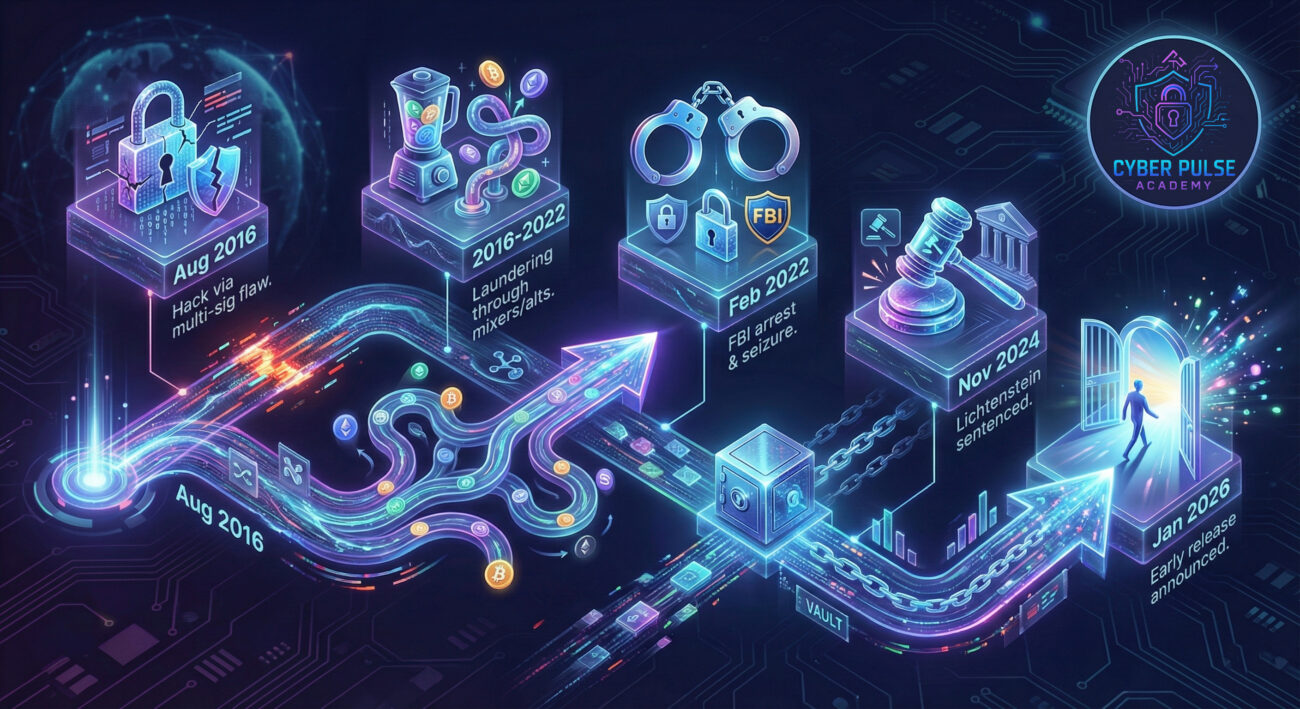
Bitfinex used a multi-signature (multi-sig) setup with BitGo, requiring approvals from both parties for withdrawals. The fatal flaw was in Bitfinex's server configuration. As analyzed by TRM Labs, Lichtenstein managed to exploit this setup, potentially by gaining unauthorized access to Bitfinex's signing keys or manipulating the transaction approval logic. This allowed him to initiate and authorize withdrawals unilaterally, completely bypassing the intended security checkpoint provided by BitGo.
After the theft, the couple engaged in sophisticated money laundering: converting Bitcoin to other cryptocurrencies (like Monero for its privacy features) and using mixing services (tumblers) like Bitcoin Fog to obscure the trail. Their operation unraveled due to a surprisingly basic error: they used stolen Bitcoin to purchase Walmart gift cards at another exchange. These cards were redeemed via an iPhone app under an account in Heather Morgan's name, creating a direct, non-cryptographic link between the laundered funds and their real identities, a goldmine for investigators.
By analyzing the failures in this case, we can derive a clear list of what to avoid and what to implement.
This section contrasts the mindsets of the attackers (Red Team) and the defenders (Blue Team) during the hack and its aftermath.
Objective: Steal and anonymously liquidate a massive amount of cryptocurrency.
Their Critical Failure: Poor OpSec during the cash-out phase, linking the funds to real identities.
Objective: Detect the breach, contain the damage, recover assets, and prevent recurrence.
Key Insight: Proactive blockchain monitoring could have detected the abnormal transaction pattern during exfiltration, not after.
Based on the Bitfinex hack lessons, here is a practical framework to bolster your cryptocurrency or high-value digital asset security.
| Step | Action | Tool/Resource Example |
|---|---|---|
| 1. Assess & Audit | Conduct a thorough audit of all key storage and transaction signing processes. Assume your multi-sig or cold storage is compromised and test it. | Engage a third-party security firm for a penetration test. Use the CISA Cyber Hygiene checklist. |
| 2. Monitor & Detect | Implement 24/7 transaction monitoring with behavioral analytics. Set alerts for volume, frequency, and destination anomalies. | Blockchain intelligence platforms (TRM Labs, Chainalysis Elliptic). Custom scripts using node APIs. |
| 3. Enforce Least Privilege | Apply zero-trust principles. No single person or system should have unilateral control over assets. Require MFA and hardware keys for all admin access. | Hardware Security Modules (HSMs), YubiKeys for MFA, and robust Identity and Access Management (IAM) policies. |
| 4. Prepare to Respond | Develop a detailed incident response plan specific to digital asset theft. Include steps for blockchain tracing, legal injunctions, and public disclosure. | Incident response plan template from SANS Institute. Pre-vetted legal contacts. |
| 5. Educate Continuously | Train all staff (not just tech teams) on social engineering threats and operational security. Human error remains the biggest risk. | Regular phishing simulations and secure coding workshops. |
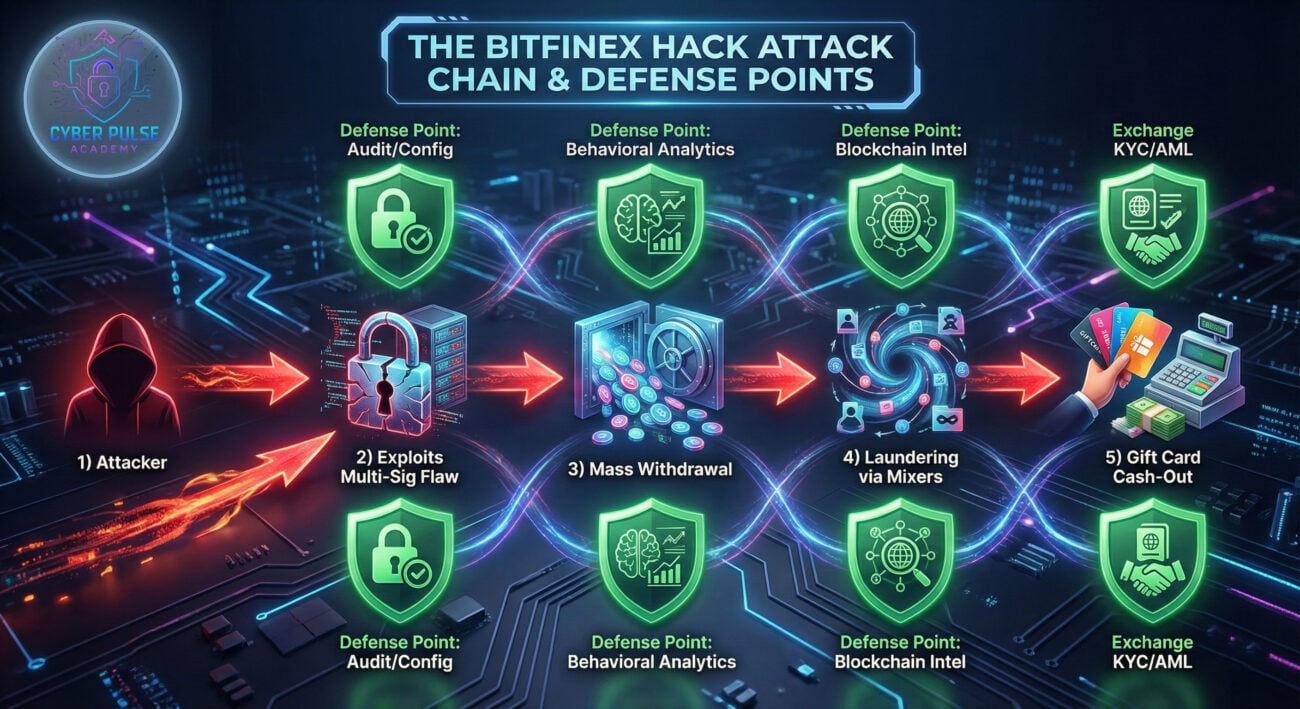
This diagram illustrates the kill chain of the attack and, more importantly, the multiple opportunities where a robust defense could have detected, prevented, or stopped the theft. The key takeaway is that security is about creating multiple layers of friction for the adversary.
No. The Bitcoin protocol itself was not compromised. The exploit targeted a specific implementation flaw in how Bitfinex used Bitcoin's multi-signature capabilities on their servers. This underscores that third-party service security is paramount.
The First Step Act is a 2018 U.S. law allowing early release for certain non-violent offenders. Lichtenstein's release highlights that the legal consequences for cybercrime, while significant, can have nuances. For professionals, it reinforces that the primary goal is prevention and resilience, as justice systems can be unpredictable.
Yes, as this case proves. While crypto is pseudonymous, it's not anonymous. With sophisticated blockchain analysis and traditional investigative work (following the money to fiat off-ramps like exchanges with KYC rules), recovery is possible. This is a powerful deterrent and a critical argument for comprehensive secure logging and cooperation with authorities.
Security is a process, not a product. Buying a "secure" wallet or using multi-sig is just the start. You must continuously update, audit, monitor, and test your systems. Complacency is the enemy.
The story of the Bitfinex hack isn't just history; it's a warning and a guide. To move from passive understanding to active defense:
Remember: In cybersecurity, we study the past to defend the future. Let the Bitfinex hack lessons fortify your present.
© 2026 Cyber Pulse Academy. This content is provided for educational purposes only.
Always consult with security professionals for organization-specific guidance.
Every contribution moves us closer to our goal: making world-class cybersecurity education accessible to ALL.
Choose the amount of donation by yourself.