





















WHY IT MATTERS
Botnets represent one of the most powerful weapons in the cybercriminal arsenal, transforming thousands or millions of compromised devices into coordinated attack platforms. These "zombie armies" operate invisibly on infected devices, from personal computers and smartphones to IoT devices like security cameras and smart thermostats, waiting silently for commands from criminal operators. When activated, botnets can launch devastating distributed denial-of-service (DDoS) attacks that overwhelm even the largest organizations, spread malware at unprecedented scale, steal sensitive data, or conduct massive credential stuffing campaigns. Understanding botnets is crucial because every connected device is a potential recruit, and the collective power of these compromised networks can disrupt global internet infrastructure.
Source: IoT Tech News
Source: MDPI Sensors
Source: Akamai
Source: CISA
The Mirai botnet demonstrated the devastating potential of IoT-based botnets when it took down major websites including Twitter, Netflix, and Reddit in a 2016 attack that disrupted internet access for millions. According to Trend Micro research, modern botnet variants derived from Mirai continue to evolve, exploiting vulnerabilities in IoT devices with weak credentials. The NIST SP 800-189 guidelines emphasize that DDoS mitigation requires understanding botnet architectures, while NIST's IoT security framework provides specific recommendations for preventing devices from being conscripted into botnets.
KEY TERMS & CONCEPTS
📖 Simple Definition
A Botnet is a network of compromised computers, smartphones, IoT devices, or other internet-connected systems that have been infected with malware and are remotely controlled by a malicious actor. Each infected device, called a "bot" or "zombie", operates normally from the user's perspective while secretly receiving and executing commands from the botnet operator (the "bot herder"). These commands are issued through Command and Control (C2) servers that act as central coordination points. Botnets are primarily used for distributed denial-of-service (DDoS) attacks, spam campaigns, credential theft, cryptocurrency mining, and spreading malware to additional victims. The power of a botnet comes from numbers: while one compromised device is a minor threat, thousands or millions working in coordination can overwhelm even well-defended targets.
🏠 Everyday Analogy
Imagine you're at a huge concert with 50,000 people. One person with a megaphone couldn't disrupt the event, their voice would simply be lost in the crowd. But imagine if a criminal secretly distributed earpieces to 10,000 concert-goers, each connected to a central controller. When the criminal presses a button, all 10,000 people simultaneously start screaming at maximum volume, drowning out the music and making communication impossible.
This is exactly how a botnet works. Each infected device is like one of those concert-goers with an earpiece, functioning normally most of the time, but instantly responsive to commands from the central controller. The individual "bots" might be ordinary computers in homes, smart thermostats, security cameras, or gaming consoles. Their owners have no idea their devices are part of an army. But when the bot herder issues a command, thousands of devices act in perfect coordination, creating a force far more powerful than any single device could achieve alone.
REAL-WORLD SCENARIO
🏢 The Setup: GreenField Hosting Services
GreenField Hosting Services was a mid-sized web hosting provider serving over 2,000 business clients, including several e-commerce platforms and a regional news website. Operations Director Lisa Park had invested heavily in redundancy, multiple data centers, load balancers, and bandwidth capacity that she believed could handle any traffic spike. On a typical day, GreenField's servers processed about 500 megabits per second of traffic, with capacity for 5 gigabits per second. What Lisa didn't know was that a criminal group had been building a massive IoT botnet for months, and GreenField was about to become their next target for an extortion scheme.
🦠 The Attack: Tsunami of Traffic
The attack began at 2:47 AM on a Tuesday. Within seconds, traffic to GreenField's primary data center surged from 500 Mbps to over 80 Gbps, sixteen times their maximum capacity. The traffic didn't come from a few sources but from hundreds of thousands of IP addresses simultaneously: compromised security cameras, smart thermostats, routers, and IoT devices from around the world. Each was sending garbage data as fast as its connection allowed, coordinated by a Mirai-variant botnet with over 200,000 infected devices. Lisa's monitoring systems triggered alerts, but the sheer volume of traffic had already overwhelmed their edge routers. Every service GreenField hosted went offline simultaneously.
📉 The Extortion: Pay or Stay Down
Thirty minutes into the attack, Lisa received an email from the attackers: "Pay 50 Bitcoin or the attack continues for a week." The ransom was worth approximately $2 million. Lisa's security team worked frantically to implement mitigation, blocking IP ranges, implementing rate limiting, and contacting their upstream provider for help. But the botnet was sophisticated: blocked IPs were quickly replaced by new ones from the massive pool of infected devices. The attack continued for 72 hours, during which GreenField's clients experienced complete outages. Several major clients, unable to tolerate the downtime, terminated their contracts and moved to competitors. The estimated cost: $500,000 in lost revenue, client departures worth $1.2 million in annual contracts, and immeasurable reputation damage.
🛡️ The Recovery: Hardening Defenses
GreenField ultimately recovered by engaging a specialized DDoS mitigation service that could scrub traffic at scale before it reached their network. The service filtered legitimate traffic from attack traffic, allowing GreenField to restore operations gradually over 48 hours. In the aftermath, Lisa implemented comprehensive protections: always-on DDoS mitigation through a cloud provider, Anycast routing for automatic traffic distribution, and real-time traffic analysis to detect attack patterns earlier. She also established incident response procedures specifically for DDoS attacks and created communication templates for keeping clients informed during outages. The experience transformed GreenField's security posture, but the financial impact and client trust erosion served as painful lessons about the reality of botnet-powered attacks.
STEP-BY-STEP GUIDE
Identify Botnet Infection Indicators
- Monitor for devices showing unexplained network traffic, especially outbound connections to unknown destinations
- Watch for systems with unusually high CPU or memory usage during idle periods, indicating hidden processes
- Investigate devices attempting connections to known malicious IPs or domains from threat intelligence feeds
Isolate and Contain Infected Devices
- Immediately disconnect suspected infected devices from the network to prevent spread and command reception
- Segment networks to limit botnet propagation between critical systems and vulnerable IoT devices
- Document all infected devices, their network activity, and any observed command-and-control communications
Clean Infected Devices Thoroughly
- Run comprehensive malware scans with multiple anti-malware tools to identify and remove botnet infections
- For IoT devices, perform factory resets and immediately apply all firmware updates before reconnecting
- Change all credentials on cleaned devices, as botnets often harvest and exfiltrate passwords
Implement Network-Level Protections
- Deploy DDoS mitigation services that can absorb and filter attack traffic before it reaches your infrastructure
- Configure firewalls to block traffic from known botnet command-and-control servers using threat intelligence
- Implement rate limiting and traffic analysis to detect and block coordinated botnet activity patterns
Secure IoT and Edge Devices
- Change default credentials on all IoT devices immediately, this is the primary vector for Mirai-style botnet recruitment
- Disable unnecessary services and ports on IoT devices, and isolate them on separate network segments
- Keep all device firmware updated and disable remote administration features when not required
Deploy Behavioral Detection Systems
- Implement network behavior analysis tools that can identify devices communicating anomalously with external servers
- Use machine learning-based detection to identify botnet traffic patterns that signature-based systems miss
- Configure alerts for devices attempting to contact newly registered domains, common for botnet C2 infrastructure
Establish Ongoing Monitoring and Response
- Monitor traffic patterns continuously for signs of botnet recruitment or command-and-control activity
- Maintain updated incident response playbooks specifically for botnet infections and DDoS attacks
- Participate in threat intelligence sharing communities to receive early warnings about emerging botnet campaigns
COMMON MISTAKES & BEST PRACTICES
❌ Common Mistakes
- Ignoring IoT device security – Most botnets recruit through insecure IoT devices with default passwords; neglecting these devices provides an open door for botnet operators.
- Assuming small networks aren't targets – Botnets don't discriminate by size; every device is valuable for adding to the army, and small networks often lack adequate protections.
- Relying solely on perimeter defenses – Botnets can be activated from within if devices are already infected; internal monitoring is essential for detection.
- Not planning for DDoS attacks – Organizations without DDoS mitigation plans suffer longer outages and greater damage when botnets target them.
- Delaying firmware and software updates – Botnets actively exploit known vulnerabilities; unpatched devices are prime recruitment targets.
✓ Best Practices
- Segment IoT devices on separate networks – Isolating IoT devices prevents botnets from using them as launching points to attack critical systems.
- Change all default credentials immediately – Default usernames and passwords are publicly documented and actively scanned by botnet recruitment tools.
- Deploy always-on DDoS mitigation – Cloud-based DDoS protection services can absorb attacks before they overwhelm your infrastructure.
- Monitor outbound traffic patterns – Botnets must communicate with C2 servers; unusual outbound connections often reveal infections before attacks occur.
- Implement device inventory management – You can't protect devices you don't know about; maintain comprehensive inventories of all connected systems.
RED TEAM vs BLUE TEAM VIEW
🔴 Red Team Perspective (Attacker)
- Automated vulnerability scanning – Deploying scanners that continuously search the internet for IoT devices with default credentials or known vulnerabilities to recruit into botnets.
- P2P botnet architectures – Designing botnets without central C2 servers, making them resilient to takedown attempts and law enforcement action.
- Polymorphic malware – Creating botnet malware that changes its code signature with each infection, evading traditional antivirus detection.
- Amplification attack techniques – Using botnets to launch DNS amplification, NTP amplification, and other reflection attacks that multiply attack traffic.
- Multi-vector attack campaigns – Combining volumetric DDoS, application-layer attacks, and credential stuffing simultaneously to overwhelm defenders.
🔵 Blue Team Perspective (Defender)
- Network traffic analysis – Implementing deep packet inspection and behavioral analysis to identify botnet communication patterns and infected devices.
- Threat intelligence integration – Using real-time feeds of known botnet C2 servers and malicious IPs to block communications before attacks occur.
- IoT device hardening – Enforcing security policies for IoT devices including credential changes, firmware updates, and network isolation.
- DDoS drill exercises – Regularly testing DDoS response procedures and mitigation systems to ensure readiness when real attacks occur.
- Sinkhole operations – Redirecting botnet traffic to analysis systems to gather intelligence and disrupt C2 communications at scale.
THREAT HUNTER'S EYE
🔍 How Attackers Exploit Botnet Vulnerabilities
From a threat hunting perspective, botnets present both a formidable attack tool and a target-rich environment for disruption. Understanding how botnet operators think and operate reveals opportunities for early detection and proactive defense.
- Recruitment automation and scanning – Botnet operators deploy automated scanners that continuously probe the internet for devices with default credentials, unpatched vulnerabilities, or open management ports. These scanners can identify millions of potential recruits within hours. Threat hunters monitor for aggressive scanning patterns targeting their IP ranges and deploy honeypots that appear as vulnerable devices, capturing attack techniques and identifying scanner sources for blocking.
- Command-and-control infrastructure diversity – Sophisticated botnet operators use multiple layers of C2 infrastructure, including domain generation algorithms that create thousands of potential C2 domains daily. This makes simple domain blocking ineffective. Threat hunters analyze DNS query patterns to identify DGA-generated domains, correlate connection timing across multiple devices to identify coordinated behavior, and map C2 infrastructure for coordinated takedowns.
- Persistence mechanisms in consumer devices – Botnets targeting IoT devices often install persistence that survives factory resets, hiding in firmware or using cloud services to reinfect cleaned devices. Threat hunters work with device manufacturers to identify compromised firmware, develop detection signatures for persistent botnet variants, and advocate for secure boot mechanisms in consumer devices.
- Monetization and botnet-as-a-service – Many criminal groups operate botnets as services, renting attack capacity to other criminals for DDoS campaigns, spam operations, or credential stuffing. This "booter" economy means attacks can come from unexpected directions. Threat hunters track booter service advertisements on criminal forums, monitor for attack traffic patterns consistent with different services, and coordinate with law enforcement for service disruption.
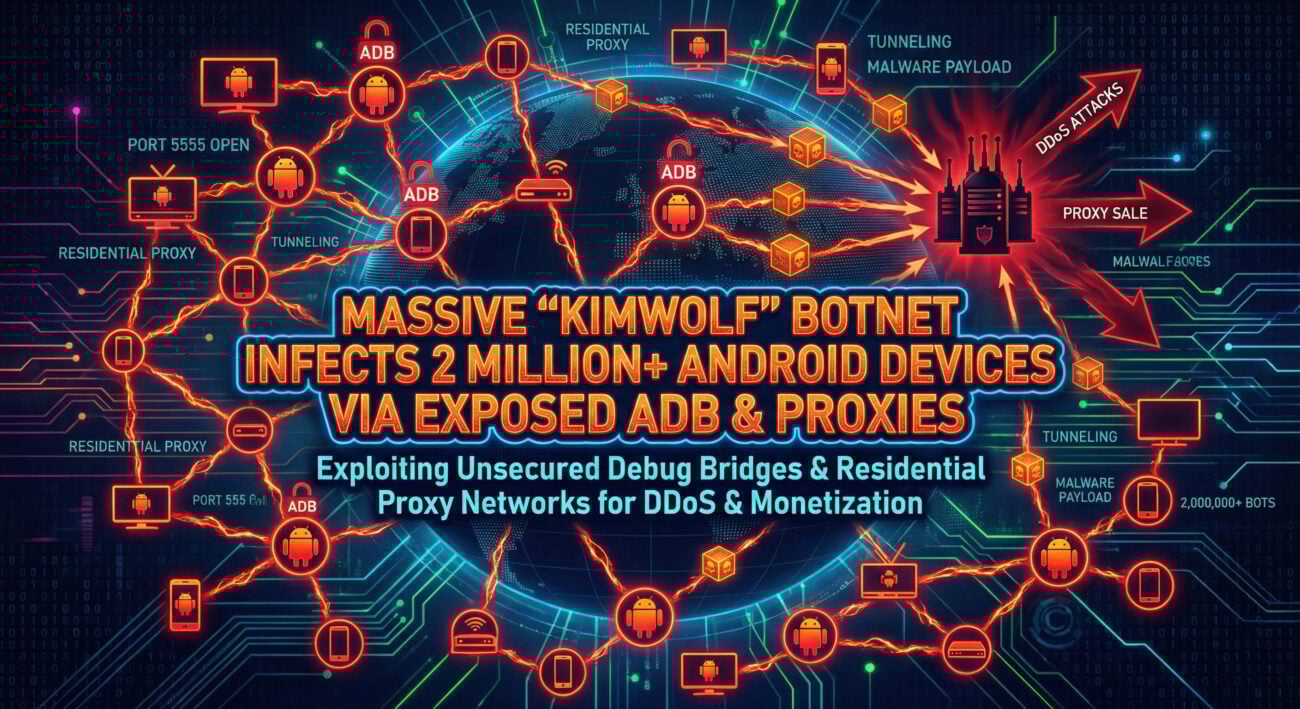
- Cross-platform botnet expansion – Modern botnets target diverse platforms, Windows, Linux, Android, and embedded systems, using the same C2 infrastructure but different malware variants. This diversity complicates detection as each platform requires different security tools. Threat hunters deploy cross-platform detection strategies, analyze malware samples across platforms to identify common C2 patterns, and implement unified threat intelligence that correlates activity across heterogeneous environments.
🛡️ Protect Your Network from Botnet Threats
Have questions about botnet detection, prevention, or incident response? Share your experiences or ask our cybersecurity experts for guidance on protecting your infrastructure.