








































Critical FortiSIEM Vulnerability Patched After Remote Code Execution Discovery

On January 14, 2026, Fortinet issued a critical security bulletin that sent ripples through the cybersecurity community. The vulnerability, CVE-2025-64155, represents a severe OS command injection flaw in FortiSIEM, the company’s widely-used Security Information and Event Management (SIEM) solution. With a near-maximum CVSS score of 9.4, this flaw allows an unauthenticated attacker to execute arbitrary code remotely, potentially leading to a complete compromise of the monitoring system itself. For cybersecurity professionals, students, and beginners, understanding this attack vector is not just academic, it’s a live-fire lesson in how foundational security tools can become single points of failure and how defenders must respond.
Study Finds 64% of Third-Party Apps Access Sensitive Data Without Clear Reason

Imagine your website as a high-security office building. You control the front door, but what about the dozens of delivery people, maintenance workers, and consultants who come in every day? New 2026 research reveals a shocking reality: 64% of these digital “third-party visitors”, applications like analytics tools and social media pixels, are accessing sensitive data inside your organization without a legitimate reason. This represents a 25% year-over-year increase and creates a massive, often invisible, attack surface.
Microsoft’s January 2026 Update Patches 114 Windows Vulnerabilities, One Under Active Exploitation
Welcome, cybersecurity professionals and learners. The first Windows Patch Tuesday of 2026 has arrived with monumental significance, addressing a staggering 114 security vulnerabilities across Microsoft’s ecosystem. This isn’t just another update; it’s a critical response to active threats targeting enterprises and individuals worldwide. Within these flaws lie exploits that could lead to total system compromise, data breaches, and ransomware attacks. Understanding this Patch Tuesday release is not optional for anyone responsible for IT security.
Critical Node.js async_hooks Bug Triggers Server-Crashing Stack Overflows

In January 2026, the cybersecurity community was alerted to a critical vulnerability within the Node.js ecosystem. Designated as CVE-2025-24357, this flaw in the require() function’s resolution mechanism opens a door for attackers to perform a path traversal, potentially leading to devastating Remote Code Execution (RCE). This breach vector allows a threat actor to load and execute arbitrary JavaScript code from outside the intended module directory, fundamentally breaking the application’s security boundaries.
PLUGGYAPE Malware Targets Ukrainian Military via Signal and WhatsApp in Espionage Campaign
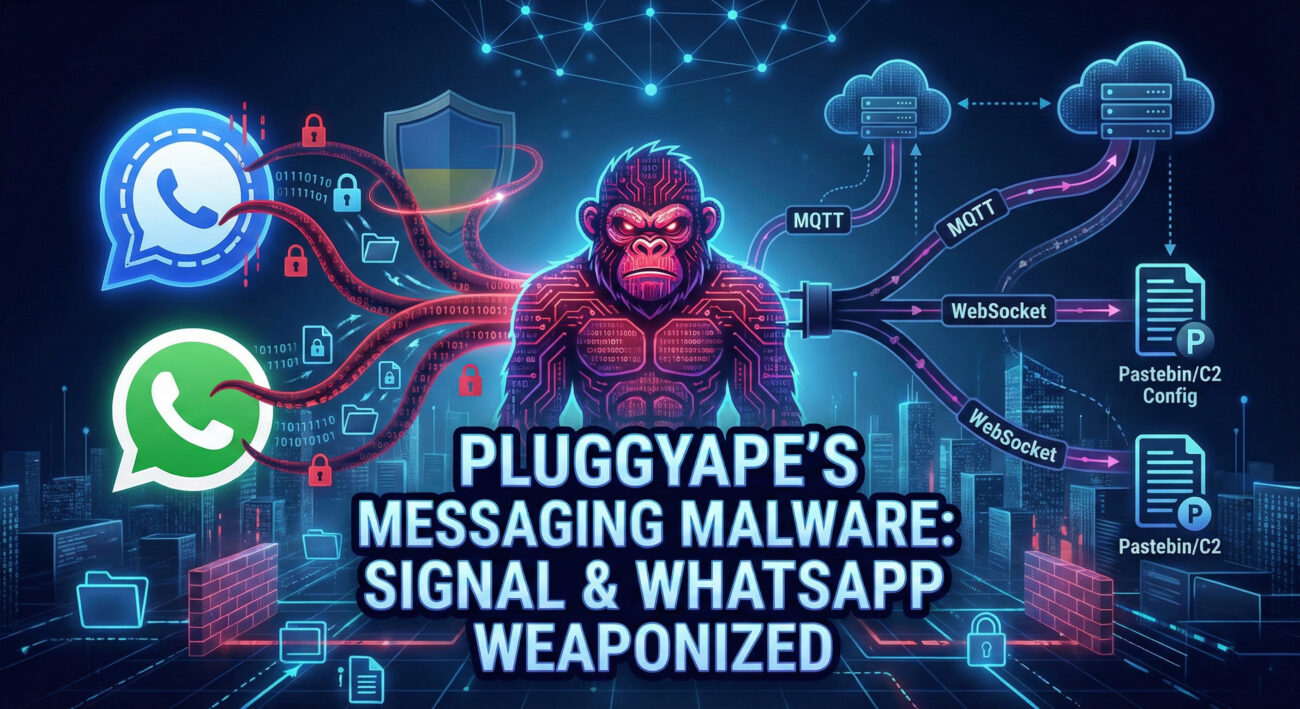
In the ever-evolving landscape of cyber threats, a new sophisticated malware named PluggyApe has emerged, showcasing a dangerous trend: the abuse of legitimate, encrypted communication services for command and control (C2). Unlike traditional malware that uses easily blocked domains or IP addresses, PluggyApe covertly leverages apps like Signal and Telegram to receive instructions and exfiltrate data, slipping past conventional network defenses. This post provides a comprehensive, beginner-friendly breakdown of the PluggyApe malware, its operational mechanics mapped to the MITRE ATT&CK framework, and actionable steps for defenders.
Long-Running Web Skimming Campaign Steals Credit Cards From Online Checkout Pages

Imagine a digital pickpocket operating invisibly on legitimate shopping websites, stealing credit card details right as customers click “pay now.” This isn’t a hypothetical scenario, it’s the reality of a sophisticated, long-running web skimming campaign that has been actively compromising major payment networks since 2022. For cybersecurity professionals, students, and anyone responsible for an online storefront, understanding this threat is no longer optional; it’s critical for digital survival.
Malicious Chrome Extension Steals MEXC API Keys by Masquerading as Trading Tool

Imagine installing a simple tool to help with your crypto trading, only to find it’s a digital pickpocket that silently empties your wallet. This is the reality of a sophisticated attack recently uncovered by cybersecurity researchers. A malicious Chrome extension, masquerading as a helpful trading automator for the MEXC exchange, was caught programmatically stealing users’ API keys with full withdrawal permissions. This incident is a masterclass in supply-chain attack vectors and highlights critical flaws in how we trust browser ecosystems. For cybersecurity professionals and crypto enthusiasts alike, understanding this threat is the first step in building effective defenses.
New Advanced Linux VoidLink Malware Targets Cloud and container Environments

In the ever-evolving landscape of cyber threats, a new sophisticated adversary has emerged targeting the backbone of modern IT: Linux servers. Dubbed VoidLink, this advanced malware represents a significant leap in the attack capabilities of threat actors focusing on high-value, critical infrastructure and corporate networks. This guide provides a comprehensive, beginner-friendly breakdown of the VoidLink Linux malware, explaining its inner workings, mapping its techniques to the MITRE ATT&CK framework, and delivering actionable defense strategies for cybersecurity professionals and students alike.
What Should We Learn From How Attackers Leveraged AI in 2025?

The most effective cybersecurity strategy doesn’t just build walls; it studies the attackers trying to climb them. To truly learn from attacker techniques is to undergo a fundamental mindshift, from reactive patching to proactive anticipation. This approach is crystallized in frameworks like MITRE ATT&CK, which provides a standardized encyclopedia of adversary behavior. By understanding how threat actors operate, from initial access to data exfiltration, defenders can transform their security posture from fragile to resilient.
ServiceNow Patches Critical AI Platform Flaw Allowing Unauthenticated User Impersonation

In January 2026, ServiceNow disclosed a critical vulnerability in its AI Platform that sent shockwaves through the cybersecurity community. This vulnerability, if exploited, could allow attackers to execute arbitrary code remotely on affected systems, potentially compromising enterprise data and operations. For cybersecurity professionals and beginners alike, understanding this ServiceNow AI Platform vulnerability is crucial for protecting organizational assets in an increasingly AI-integrated world.