



























Certification Courses
Hands-On Labs
Threat Intelligence
Latest Cyber News
MITRE ATT&CK Breakdown
All Cyber Keywords
Have you ever received a suspicious email and wondered, "Who sent this, and what do they want from me?" In cybersecurity, answering that "who" question is called attribution – and it's one of the most fascinating and challenging puzzles in digital defense. Imagine trying to solve a crime where the criminal wears a mask, uses fake fingerprints, and leaves false clues deliberately. That's exactly what cybersecurity professionals face every day.
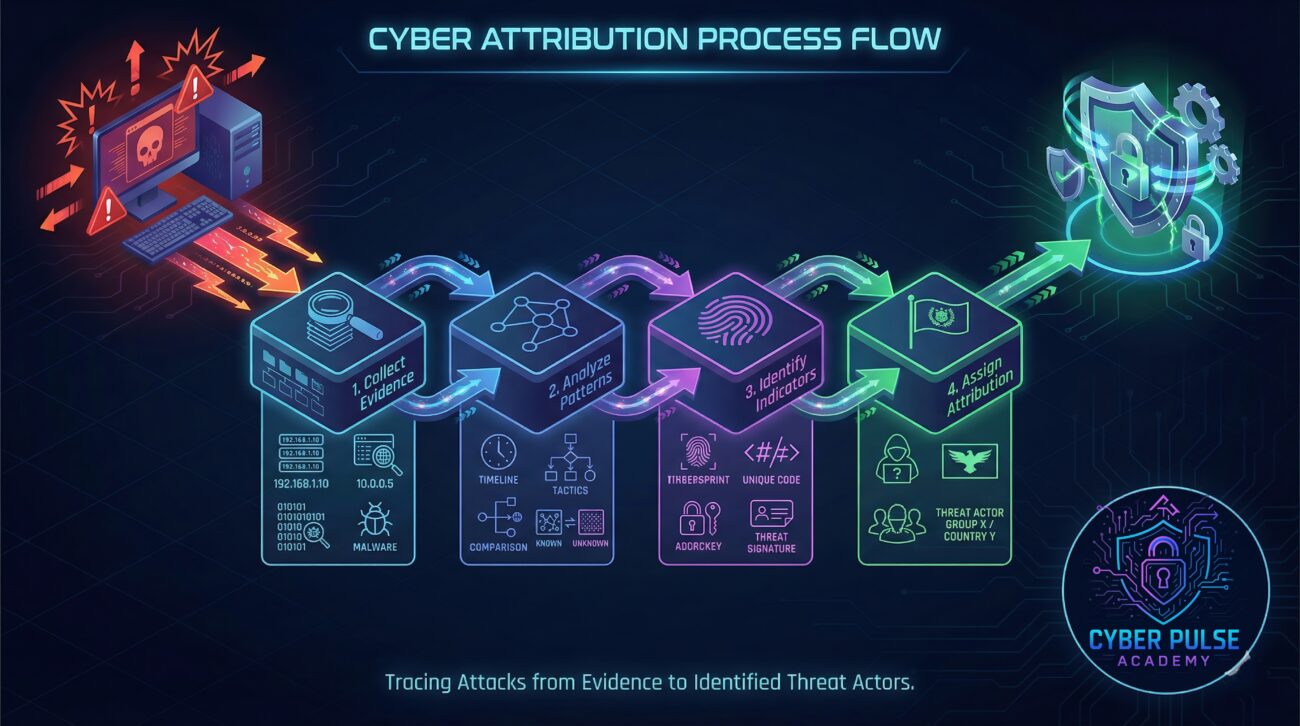
In simple terms, attribution is the process of identifying who is behind a cyber attack and understanding their motives. It's not just about naming names; it's about understanding patterns, techniques, and intentions to build better defenses.
In this guide, you'll learn: how attribution works, why it matters more than ever in today's connected world, the common mistakes beginners make when trying to understand it, and practical steps you can take to think like a cyber detective.
When a cyber attack hits the news, the first questions everyone asks are: "Who did this?" and "Why?" These aren't just questions of curiosity, they're essential for security. Proper attribution helps organizations understand whether they're dealing with a random hacker, a criminal group seeking money, or a state-sponsored team with political goals. This knowledge directly shapes the defense strategy.
Consider this: In 2023, the Cybersecurity and Infrastructure Security Agency (CISA) reported that ransomware attacks increased by nearly 50% from the previous year. Without attribution, each attack would be treated as an isolated incident. But when security researchers connect the dots and attribute multiple attacks to the same group (like LockBit or Clop), they can develop specific countermeasures and share intelligence that protects thousands of organizations.
For you as an individual, understanding attribution matters because it changes how you should respond to threats. A phishing email from a sophisticated nation-state actor requires different caution than one from a amateur scammer. Attribution helps prioritize risks and allocate resources where they're needed most, whether you're protecting a multinational corporation or just your personal email account.
| Term | Simple Definition | Everyday Analogy |
|---|---|---|
| Attribution | The process of identifying who is behind a cyber attack and why they did it. | Like a detective figuring out who committed a crime based on evidence left at the scene. |
| Advanced Persistent Threat (APT) | A sophisticated, long-term cyber attack usually linked to nation-states or well-funded groups. | A burglar who doesn't just break in but lives in your attic for months, learning your habits. |
| Indicators of Compromise (IOCs) | Pieces of evidence that suggest a system has been attacked or breached. | Like finding muddy footprints, a broken window, and missing jewelry after a burglary. |
| False Flag | A deceptive tactic where attackers leave false clues to blame someone else. | A thief wearing a rival company's uniform to make it look like they did the crime. |
| Threat Intelligence | Information about existing or emerging threats that helps organizations defend themselves. | A weather forecast that tells you a storm is coming so you can prepare. |
Let's follow the story of "Alex," a security analyst at a mid-sized tech company. In December 2020, Alex's company used SolarWinds software, just like 18,000 other organizations. When news broke about the SolarWinds supply chain attack, Alex's team had to act fast.
Initially, they didn't know who was behind it. Was it cyber criminals looking for ransom? Competitors stealing secrets? Or something more serious? The attribution process began with cybersecurity firms and government agencies worldwide collecting evidence: malicious code patterns, network traffic going to suspicious servers, and the attack's sophisticated nature.
Through months of analysis, researchers found connections to a group known as "APT29" or "Cozy Bear," which multiple intelligence agencies attributed to Russian foreign intelligence. This attribution wasn't just about naming a country, it revealed the attackers' goals (espionage rather than destruction) and their methods (exceptional patience and stealth).
| Time/Stage | What Happened | Impact |
|---|---|---|
| Early 2020 | Attackers secretly inserted malicious code into SolarWinds software updates | 18,000 organizations unknowingly installed compromised software |
| December 2020 | FireEye discovers the breach and alerts the world | Global security teams scramble to check their systems |
| January 2021 | Multiple cybersecurity firms trace attack patterns to known APT29 tactics | Attribution begins to take shape with high confidence |
| April 2021 | U.S. government formally attributes attack to Russian SVR intelligence | Diplomatic and economic sanctions are imposed; defense strategies adjusted globally |
For Alex's company, this attribution meant they could focus their defense on detecting espionage activities rather than preparing for ransomware. They implemented additional monitoring for data exfiltration and reviewed access controls more rigorously. The correct attribution saved them time and resources by targeting their defense appropriately.
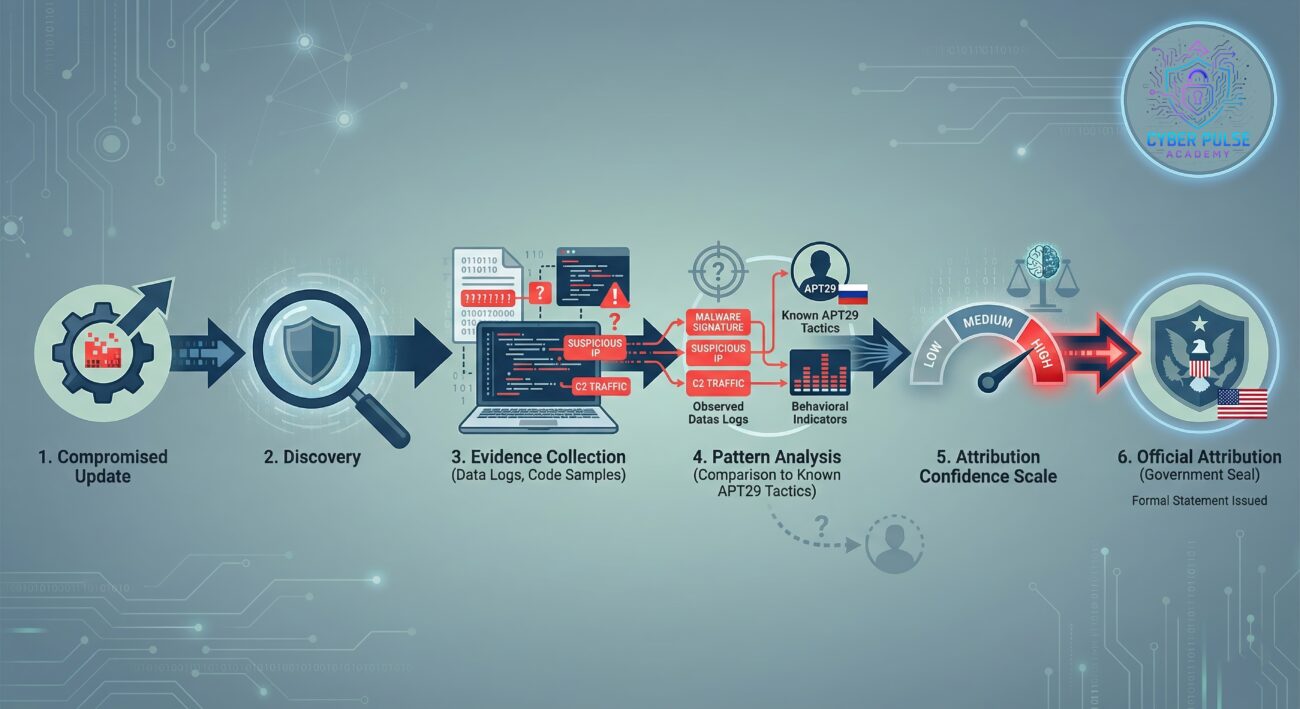
When reading about attribution, check what evidence is presented. Reputable sources will mention specific Indicators of Compromise (IOCs) like:
If a report says "we believe Country X did this" without showing evidence, be skeptical. Check sources like our threat intelligence guide for more on evaluating evidence.
Professional attribution often comes with confidence ratings (Low, Medium, High). These indicate how sure analysts are:
Just like weather forecasts, cybersecurity attribution gets more reliable as evidence accumulates.
Not all attribution claims are equal. Consider the source's reputation, expertise, and potential biases:
Bookmark reliable sources like NIST cybersecurity framework for objective information.
Ask "Why would they do this?" Understanding motives helps validate attribution:
If an attack pattern matches both the capability and motivation of a known group, attribution becomes more reliable.
Regardless of perfect attribution, every report contains defensive insights:
Use attribution reports as learning tools, not just blame assignments.
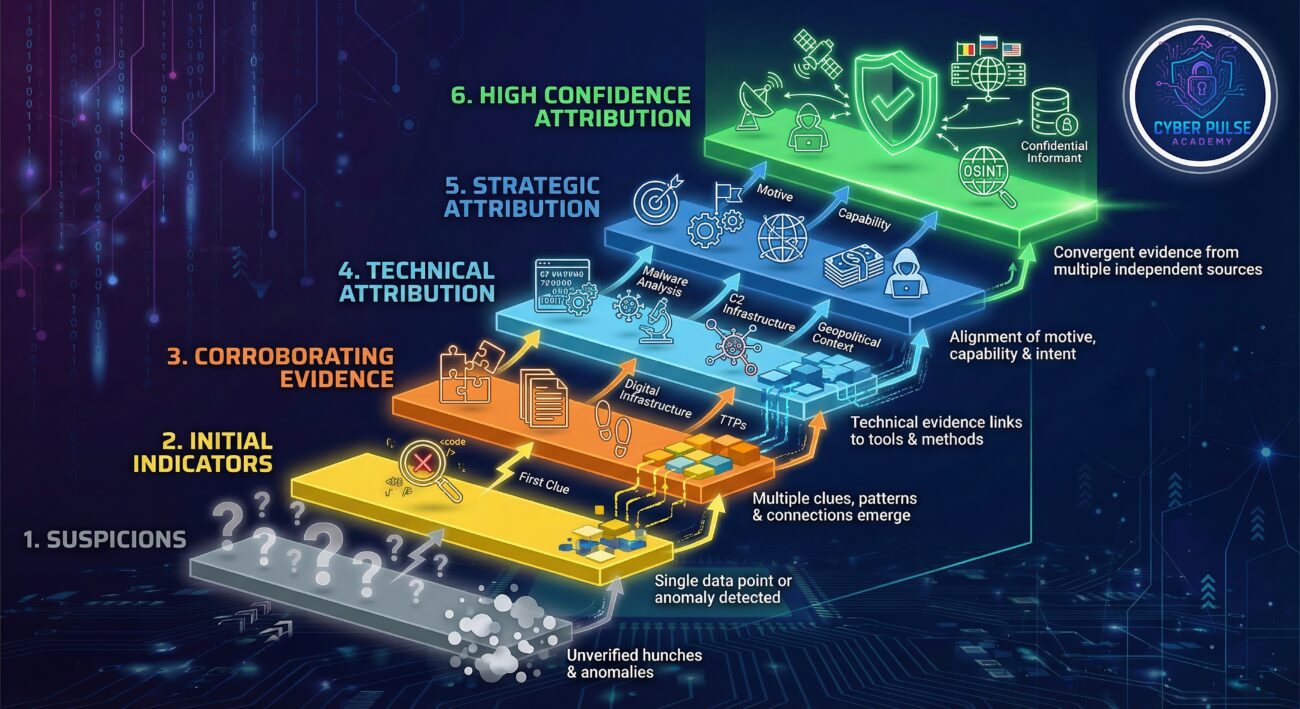
Imagine you're tracking a sophisticated attacker who knows about attribution techniques. They might use a false flag operation: deliberately using tools, language, or infrastructure previously associated with another group. For example, they might deploy malware containing code snippets known to be used by Chinese groups while actually being based elsewhere entirely.
The defender's counter-move? Look for inconsistencies. A truly sophisticated Chinese APT wouldn't make basic operational security mistakes that this attacker is making. The defender focuses on behavioral patterns rather than just technical artifacts. They ask: "Does the operational security level match the sophistication of the tools?" "Does the attack timing align with known patterns?" This holistic view often reveals the truth behind the deception.
For attackers, attribution is something to avoid or manipulate. They ask: "How can I achieve my goals without being identified?" This means using proxy servers, stolen credentials, malware with no known signatures, and infrastructure in countries that don't cooperate with investigations. Sophisticated attackers study defenders' attribution methods and deliberately create "noise" and false trails. Their success isn't just about breaking in, it's about breaking in and remaining anonymous.
For defenders, attribution is about understanding the adversary to build better defenses. They ask: "Who is this, what do they want, and how do they operate?" Even partial attribution helps: knowing whether you're facing a financially-motivated criminal versus a state-sponsored actor changes your defense priorities. Defenders use attribution to connect isolated incidents into broader campaigns, share intelligence with peers, and advocate for appropriate resources. For them, attribution isn't about blame, it's about actionable intelligence.
Attribution might seem like an advanced topic, but at its core, it's about answering a fundamental human question: "Who did this, and why?" In cybersecurity, this isn't just curiosity, it's a critical component of effective defense.
Remember these key points:
Whether you're protecting a multinational corporation or just your personal devices, understanding the basics of attribution helps you make smarter security decisions. It transforms random, scary incidents into understandable patterns that can be systematically defended against.
Ready to dive deeper? Attribution connects directly to other essential topics like threat intelligence, incident response, and security operations.
Question for you: Have you ever encountered a situation where knowing "who" behind an attack would have changed your response? Share your thoughts or questions in the comments below, let's continue the conversation about this fascinating aspect of cybersecurity!
Every contribution moves us closer to our goal: making world-class cybersecurity education accessible to ALL.
Choose the amount of donation by yourself.