


















Certification Courses
Hands-On Labs
Threat Intelligence
Latest Cyber News
MITRE ATT&CK Breakdown
All Cyber Keywords
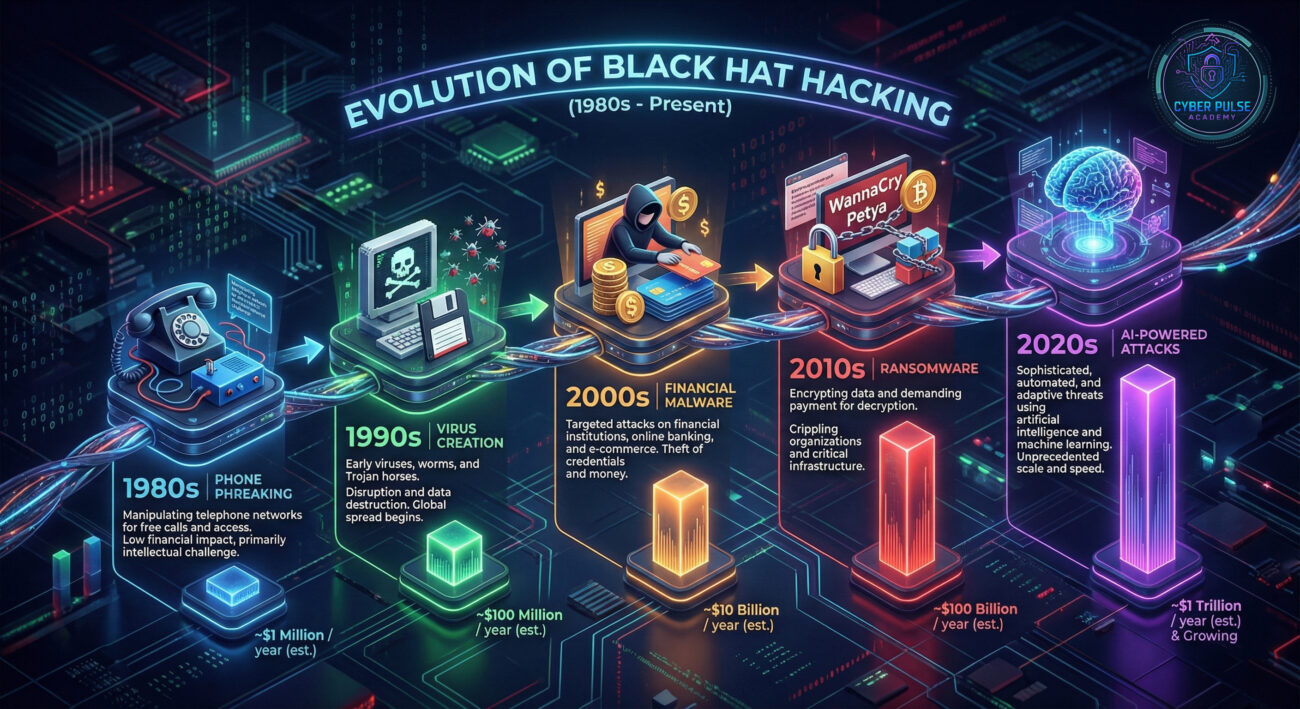
Have you ever wondered who's behind those scary news stories about data breaches, stolen identities, or frozen computer systems? Welcome to the shadowy world of Black Hat hackers – the digital criminals who exploit technology for personal gain, sabotage, or chaos.
In simple terms, a Black Hat hacker is someone who breaks into computer systems with malicious intent. Think of them as digital burglars, but instead of stealing physical goods, they steal data, money, or control of your devices.
Imagine your home security system. A Black Hat hacker doesn't ring the doorbell – they find unlocked windows, pick locks, or trick you into opening the door. They operate in the digital shadows, and understanding them is your first step toward true cybersecurity protection.
In this guide, you'll learn: what Black Hat hackers actually do, how they think, real-world examples of their attacks, and most importantly, 7 practical steps to protect yourself from becoming their next victim.
When you hear "hacker," what comes to mind? A shadowy figure in a dark room, typing furiously on a keyboard with green text scrolling endlessly? Hollywood has dramatized the image, but the reality of Black Hat hacking is both more mundane and more dangerous.
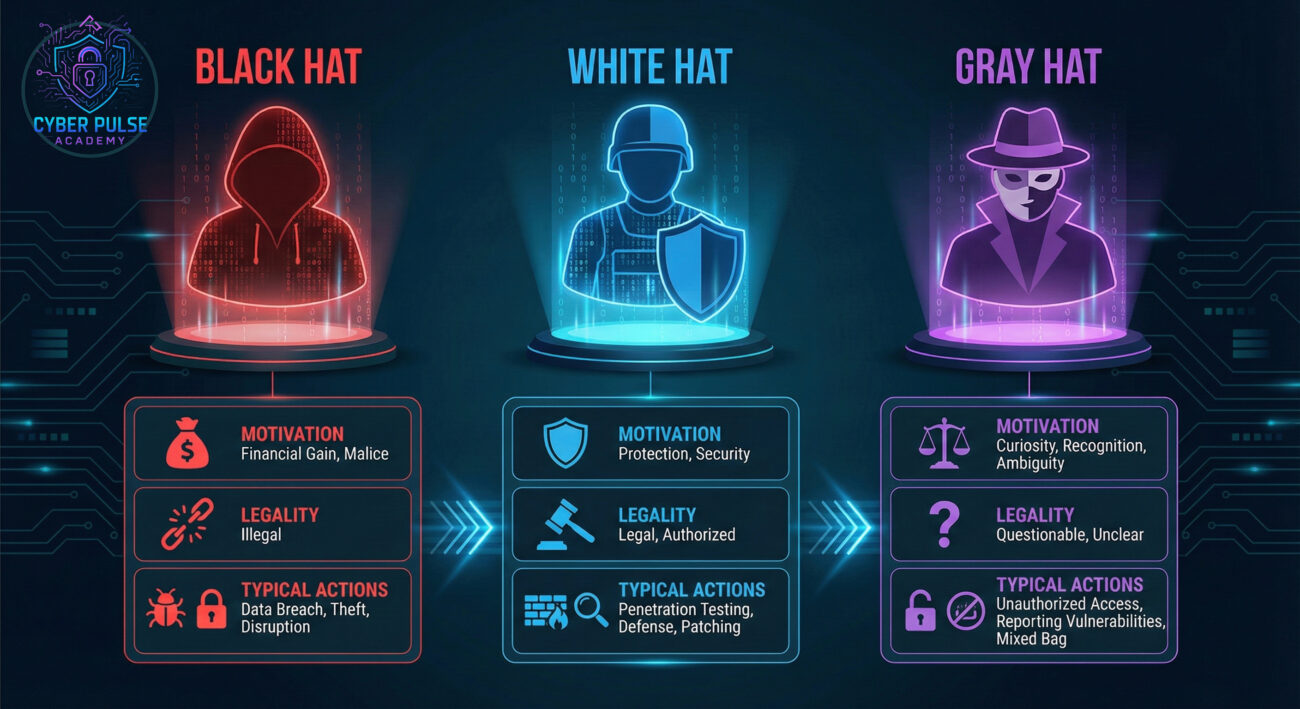
At their core, Black Hat hackers are motivated by specific goals: financial gain, corporate espionage, political agendas, or sometimes just the thrill of causing disruption. Unlike their ethical counterparts (White Hat hackers), they operate without permission and with malicious intent.
Consider this analogy: If the internet is a vast city, Black Hat hackers are the pickpockets, burglars, and con artists who exploit weaknesses in the city's design and the trust of its citizens. They don't create the digital world – they exploit its vulnerabilities.
The threat from Black Hat hackers has evolved from isolated pranks to organized digital crime rings. According to a 2023 IBM report, the average cost of a data breach reached $4.45 million – a 15% increase over three years. These aren't just numbers; they represent real businesses damaged and real people harmed.
What makes modern Black Hat hacking particularly dangerous is its accessibility. Just as you can learn to code legitimate websites online, malicious actors can find hacking tools and tutorials on the dark web. Some attacks are even available "as a service" – you can rent hacking capabilities without technical skills.
Consider your daily digital life: online banking, social media, smart home devices, work emails. Each represents a potential vulnerability that a determined Black Hat hacker could exploit. The Cybersecurity and Infrastructure Security Agency (CISA) warns that individuals and small businesses are increasingly targeted because they often have weaker defenses than large corporations.
Understanding Black Hat hackers isn't about fear-mongering – it's about empowerment. By knowing their methods, you can build effective digital protection and navigate the online world with confidence.
| Term | Simple Definition | Everyday Analogy |
|---|---|---|
| Black Hat Hacker | A person who breaks into computer systems with malicious intent, often for personal gain, without authorization. | A burglar who breaks into houses to steal valuables instead of earning money honestly. |
| Malware | Malicious software designed to damage, disrupt, or gain unauthorized access to computer systems. | A contaminated syringe that makes you sick when injected – but for your computer. |
| Encryption | The process of scrambling data so only authorized parties can read it, using a special key. | A secret language that only you and your trusted friend understand, even if others hear you speaking. |
| Phishing | A social engineering attack where hackers pretend to be legitimate entities to trick victims into revealing sensitive information. | A con artist dressed as a police officer asking for your bank details "for an investigation." |
| Multi-Factor Authentication (MFA) | A security method that requires two or more proofs of identity to grant access to an account. | Needing both a key and a fingerprint scan to enter a high-security building instead of just a key. |
Let's follow Sarah, a small business owner, to see how a Black Hat attack unfolds in real life. Sarah runs a successful online boutique with five employees. She's tech-savvy but not a cybersecurity expert – making her a prime target.
It started with a seemingly innocent email from "FedEx" about a delayed package. The email looked perfect, complete with logos and professional language. Sarah clicked the tracking link, which downloaded invisible malware onto her computer. This gave the Black Hat hacker a foothold in her network.
Over the next week, the hacker quietly explored Sarah's systems, eventually finding access to customer databases and financial records. The breach wasn't detected until customers began reporting fraudulent credit card charges traced back to purchases from Sarah's store.
| Time/Stage | What Happened | Impact |
|---|---|---|
| Day 1-3 | Phishing email sent → Employee clicks link → Malware installed | Hacker gains initial access; begins network reconnaissance |
| Day 4-7 | Hacker moves laterally through network → Discovers customer database → Extracts sensitive data | 2,500 customer records compromised including names, emails, payment info |
| Day 8 | Hacker installs ransomware on main server → Demands 5 Bitcoin ($150,000) to restore data | Website offline; operations frozen; recovery costs begin accumulating |
| Week 2+ | Breach discovered → Law enforcement notified → Recovery process begins | Total cost: $285,000 (ransom + recovery + lost business + legal fees) |
Sarah's story isn't unusual. According to Verizon's Data Breach Investigations Report, 74% of breaches involve the human element (social engineering, errors, or misuse). The Black Hat hacker in this scenario exploited both technical vulnerabilities (outdated software) and human psychology (the convincing phishing email).
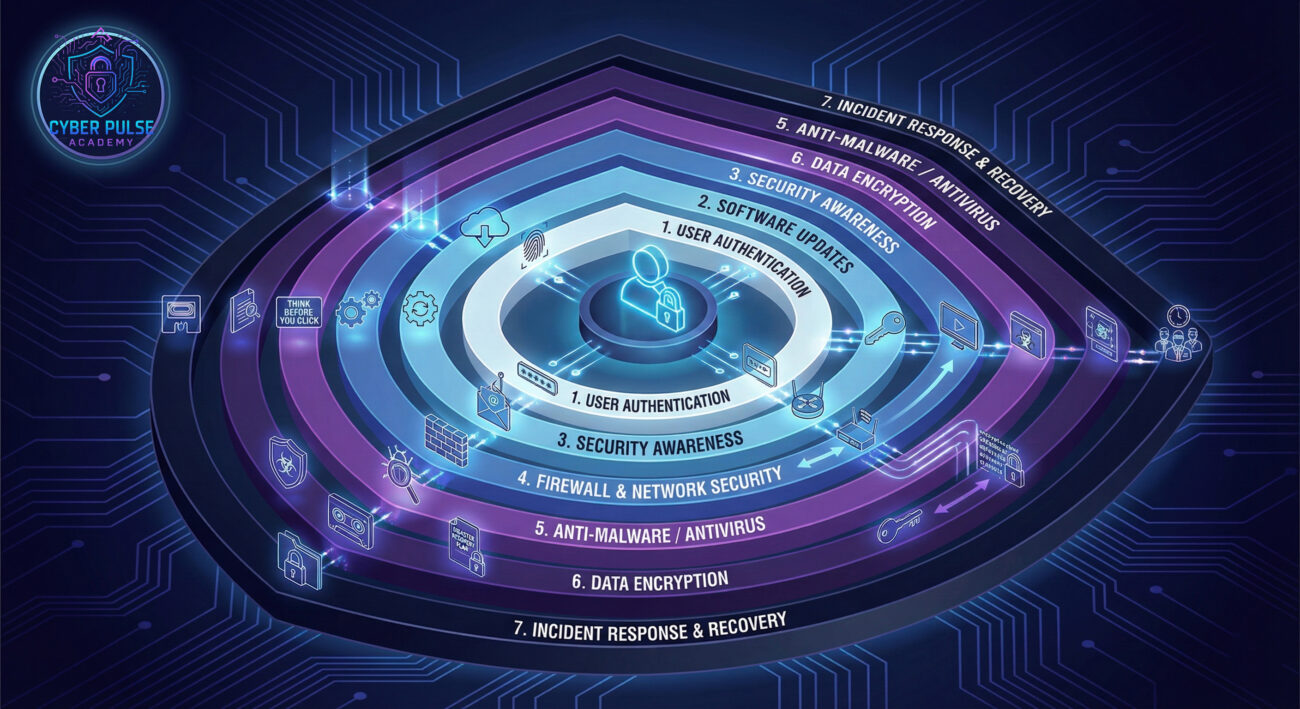
Now for the empowering part: protection. You don't need to be a cybersecurity expert to implement these seven layers of defense against Black Hat threats.
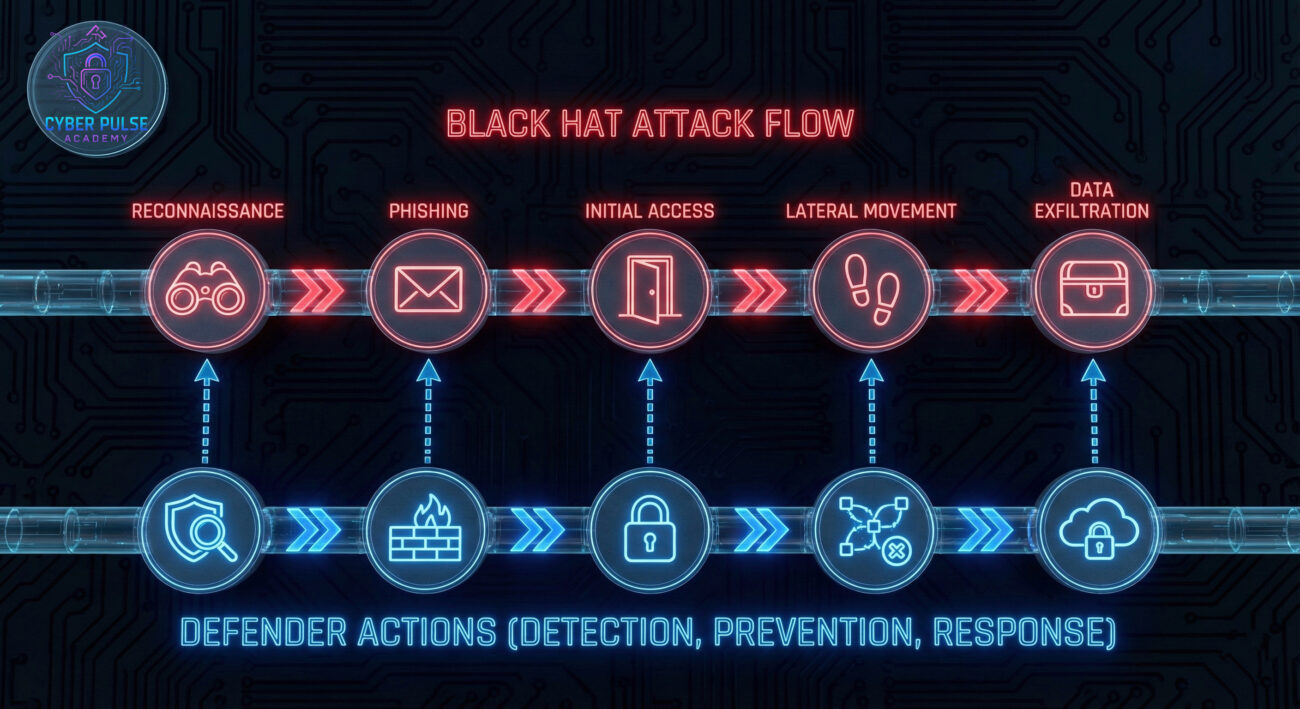
Let's briefly put on a "threat hunter" hat – a cybersecurity professional who thinks like an attacker to defend better. How might a Black Hat hacker approach a target, and how would a defender counter?
Attack Path (Simplified): A Black Hat hacker doesn't start with complex code-breaking. They begin with reconnaissance – scanning for easy targets. They might search for employees on LinkedIn, then guess their work email format. Next, they'd look for publicly known vulnerabilities in the company's software. Their first attempt might be a tailored phishing email referencing a recent industry conference the employee attended. If that fails, they might try exploiting an unpatched vulnerability in the company's VPN software.
Defender's Counter-Move: A savvy defender assumes breaches will happen and focuses on containment and detection. They segment the network so access to one area doesn't grant access to all. They monitor for unusual login times or locations. They implement application allowlisting so only approved software can run. Most importantly, they educate employees through regular, engaging security awareness training that goes beyond checkbox compliance.
A Black Hat hacker thinks in terms of efficiency and opportunity. They want maximum reward for minimum effort and risk. They're constantly asking: "What's the weakest link?" They don't try to break through fortified walls; they look for open windows, distracted guards, or convince someone to open the door.
Their toolkit includes both technical exploits and psychological manipulation. They care about vulnerabilities that are exploitable now, not theoretical weaknesses. Time is a factor – the longer an attack takes, the higher the chance of detection. They often follow the path of least resistance, which is why human error remains their primary entry point.
Defenders think in terms of layers and resilience. They assume breaches will occur and focus on minimizing damage and recovering quickly. Their mantra: "Prevent, detect, respond, recover." They implement MFA, network segmentation, and least-privilege access not as individual solutions but as interlocking layers.
They care about protection that works while allowing business functionality. Unlike attackers who need only one success, defenders must succeed every time. They balance security with usability, knowing that overly restrictive measures lead to workarounds that create new vulnerabilities.
Understanding Black Hat hackers transforms cybersecurity from an abstract, technical concern to a concrete, manageable aspect of digital life. These actors aren't omnipotent digital wizards – they're opportunists exploiting predictable vulnerabilities.
Let's recap the essential truths about Black Hat hacking:
The most dangerous misconception is that "I'm not important enough to be targeted." Modern Black Hat attacks are often automated, casting wide nets to catch anyone with weak defenses. Your value isn't just your data – it's your computing resources, your identity, and your connections.
By implementing even a few of the protective measures outlined here, you move from being an easy target to a resilient digital citizen. Remember: the goal isn't perfect, unbreakable security (which doesn't exist), but making yourself a harder target than the next person.
Now that you understand Black Hat hackers, what cybersecurity topic would you like us to explain next? Have questions about implementing any of these protective measures? Share your thoughts, experiences, or questions below – let's build a more secure digital world together.
Remember: Every expert was once a beginner. Your awareness today is your protection tomorrow.
Every contribution moves us closer to our goal: making world-class cybersecurity education accessible to ALL.
Choose the amount of donation by yourself.