















Certification Courses
Hands-On Labs
Threat Intelligence
Latest Cyber News
MITRE ATT&CK Breakdown
All Cyber Keywords
Imagine your home has an advanced security system, motion sensors, cameras, and a 24/7 monitoring service. Now picture that same level of protection for your company's digital assets, that's essentially what a Blue Team does in cybersecurity. In our increasingly digital world where hackers launch sophisticated attacks every 39 seconds, having a dedicated defense team isn't just luxury, it's essential survival.
A Blue Team is the defensive security force within an organization, responsible for protecting systems, detecting threats, and responding to incidents. They're the digital equivalent of firefighters, police, and security guards combined, constantly monitoring, analyzing, and fortifying digital perimeters against cyber attacks.
In this guide, you'll learn: exactly what Blue Teams do, how they differ from Red Teams, real-world scenarios of their work, and 7 actionable steps to start thinking like a defender. Whether you're considering a cybersecurity career or just want to better protect your own digital life, understanding Blue Team principles is your first line of defense.
What if your bank had no security guards, no alarms, and left the vault door unlocked? That's essentially what happens when organizations operate without a Blue Team mindset. Every day, businesses face thousands of digital threats, from automated malware to targeted phishing campaigns, and the defenders standing between these threats and your data are the Blue Team.
Think of the Blue Team as your organization's immune system. Just as white blood cells constantly patrol your body for pathogens, Blue Team members monitor networks for anomalies. They don't just wait for attacks to happen; they proactively build defenses, educate users, and create layers of protection that make breaches significantly harder to accomplish.
This guide will walk you through the fascinating world of cybersecurity defense. You'll discover how Blue Teams operate, the tools they use, and why their work is becoming increasingly critical in our connected world. By the end, you'll understand not just what they do, but how their defensive mindset can be applied to protect your own digital presence.
The numbers tell a sobering story: according to Cybersecurity Ventures, cybercrime will cost the world $10.5 trillion annually by 2025. Meanwhile, the average data breach now costs companies $4.35 million. In this landscape, Blue Teams aren't just technical teams, they're business continuity protectors, reputation guardians, and financial safeguards rolled into one.
Consider recent headlines: major ransomware attacks on hospitals, supply chain compromises affecting thousands of businesses, and state-sponsored espionage targeting critical infrastructure. Each of these incidents represents a failure of defense that a well-resourced, skilled Blue Team might have prevented or mitigated.
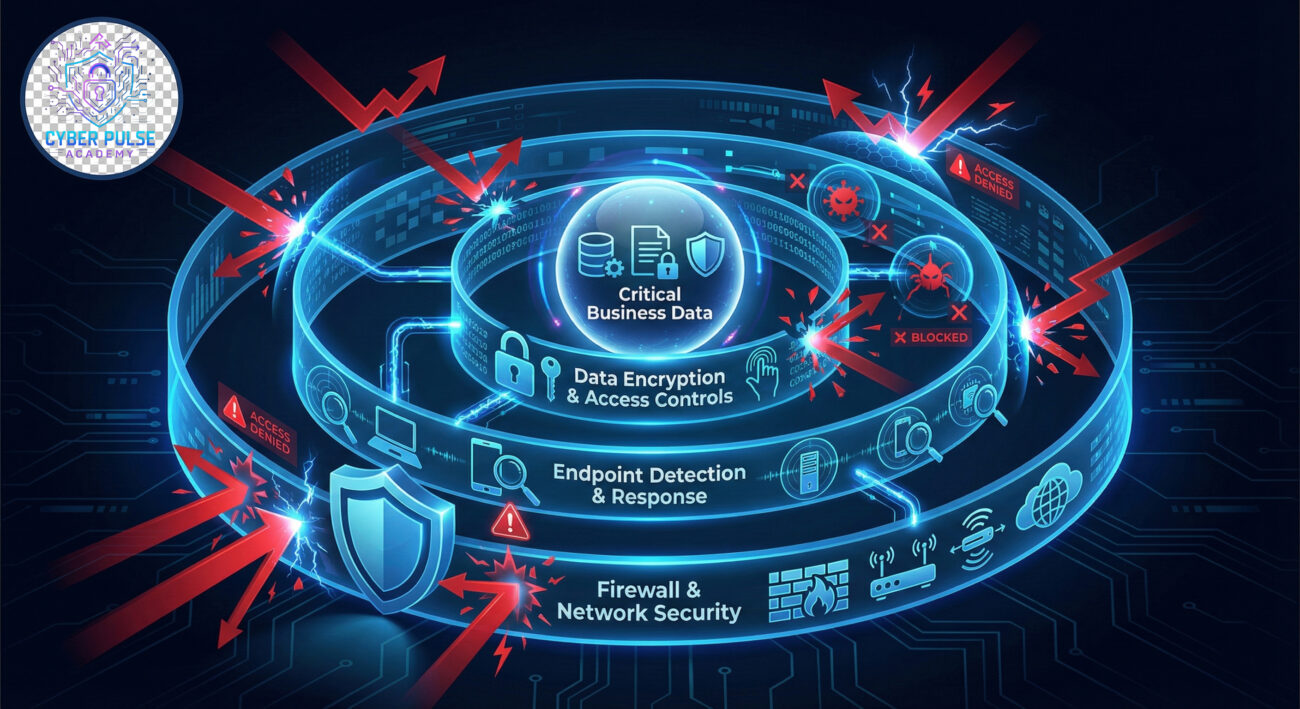
The Cybersecurity & Infrastructure Security Agency (CISA) emphasizes that defense isn't just about technology, it's about people and processes. A Blue Team implements the "defense in depth" strategy, creating multiple layers of security so that if one fails, others stand ready. They ensure systems are updated, employees are trained, and incident response plans are tested and ready.
For individuals, understanding Blue Team principles means better protecting your personal data. For businesses, it means survival in an increasingly hostile digital environment. As NIST's Cybersecurity Framework outlines, proper defense involves identifying, protecting, detecting, responding, and recovering, all core Blue Team functions.
| Term | Simple Definition | Everyday Analogy |
|---|---|---|
| Blue Team | The defensive security team responsible for protecting an organization's systems and data | Like a building's security guards, surveillance team, and alarm system combined |
| Red Team | The offensive security team that simulates attacks to test defenses | Like hired professionals who try to break into your building to find security weaknesses |
| SIEM (Security Information & Event Management) | A system that collects and analyzes security data from across an organization | Like a security control room with monitors showing all camera feeds and sensor data |
| EDR (Endpoint Detection & Response) | Tools that monitor endpoints (computers, devices) for suspicious activity | Like having a security sensor on every door and window that alerts to unusual activity |
| Incident Response | The process of handling a security breach or attack | Like a fire department's procedure for responding to different types of fires |
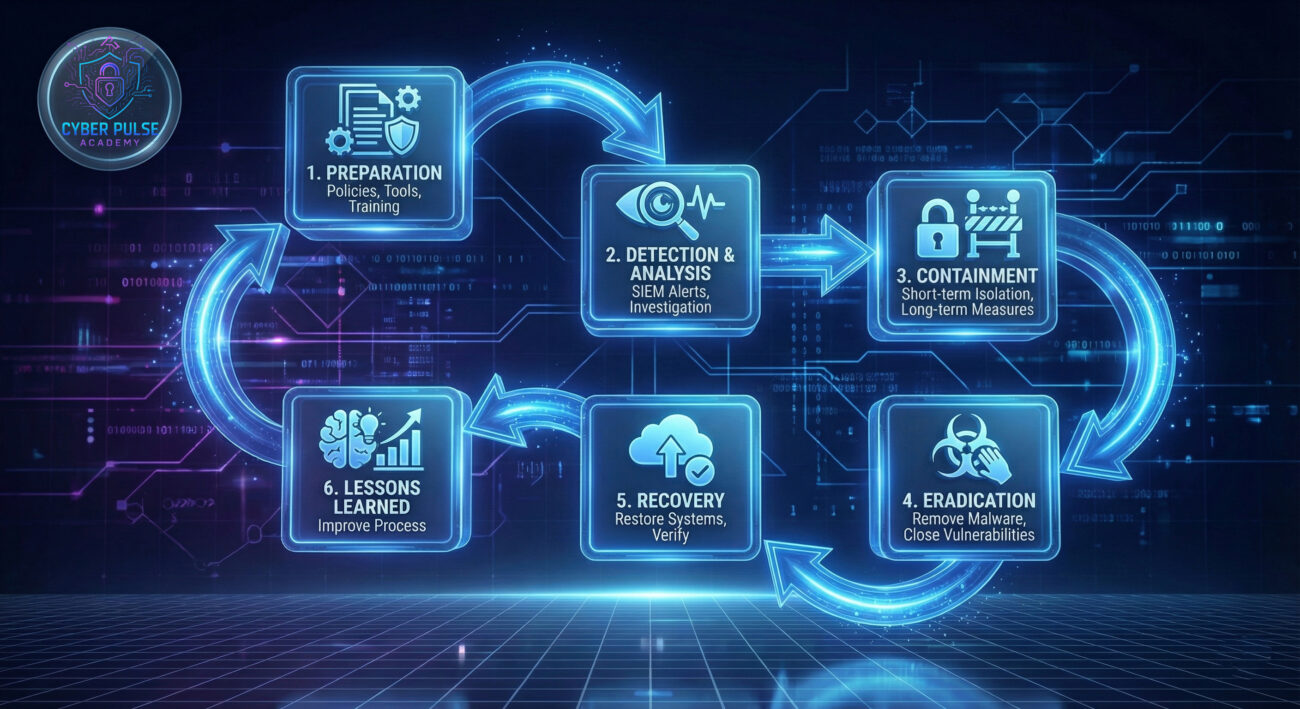
Meet Sarah, a Blue Team analyst at "SecureCorp," a mid-sized financial services company. Her morning starts like any other, reviewing alerts from their SIEM system. Then she spots something unusual: multiple failed login attempts from an overseas IP address, followed by a successful login from that same location to a marketing employee's account.
This is what happens next in Sarah's Blue Team response:
| Time/Stage | What Happened | Impact & Blue Team Action |
|---|---|---|
| 09:15 - Detection | SIEM alerts show anomalous login pattern from unusual geography | Sarah investigates immediately, recognizing this matches known credential stuffing attack patterns |
| 09:25 - Investigation | EDR tools show the compromised account is attempting to access sensitive financial folders | Sarah isolates the affected workstation from the network to prevent lateral movement |
| 09:40 - Containment | The attacker tries to escalate privileges using a known vulnerability | Privilege escalation is blocked by previously configured security policies Sarah's team implemented |
| 10:00 - Eradication | Forensic analysis reveals the initial entry point: a phishing email with malicious link | Password reset enforced, MFA re-enabled, malicious email blocked company-wide |
| 10:30 - Recovery | Affected systems are cleaned and returned to normal operation | Employee receives targeted security training, incident report documented for improvement |
| Next Day - Lessons | Post-incident review identifies areas for improvement | Security controls strengthened, new detection rules added to SIEM, training program updated |
This scenario demonstrates the Blue Team's value: they didn't prevent the initial phishing attack (no defense is perfect), but their detection capabilities, rapid response, and layered defenses prevented what could have been a catastrophic data breach. The attacker gained initial access but was stopped before reaching sensitive data, thanks to Sarah's Blue Team efforts.
Start thinking like a protector rather than just a user. Ask yourself: "What valuable data do I have? Who might want it? How are they likely to try getting it?" This mental shift is foundational to Blue Team thinking.
You can't protect what you can't see. Basic monitoring is the cornerstone of Blue Team operations, even at a personal level.
Blue Teams work to reduce the "attack surface", the number of ways attackers can get in. Apply this principle to your own systems.
MFA is one of the most effective security controls available. It adds a critical second layer beyond passwords.
Even with perfect defenses, incidents happen. A Blue Team has procedures ready. Create your personal incident response plan.
Blue Teams constantly learn about new threats and defenses. Make security education a regular habit.
Documentation is crucial for effective defense and continuous improvement, a core Blue Team practice.
Understanding how attackers think is crucial for effective defense, this is the essence of threat hunting. Let's examine a simple attack path and how a Blue Team defender would counter it.
Attack Path (Attacker's View): A hacker targeting a company might start with phishing emails to gain initial access. Once they have a foothold, they'll try to move laterally through the network, escalate privileges, and eventually reach sensitive data. They rely on staying undetected, often using legitimate tools already present in the environment to avoid triggering alarms.
Defender's Counter-Move (Blue Team View): A skilled Blue Team analyst uses threat intelligence to know common attacker techniques. They might deploy canary tokens, fake credentials or files that alert when accessed. They monitor for unusual patterns, like a marketing employee's account accessing financial systems at 3 AM. By understanding attacker tradecraft, they can set traps and detect anomalous behavior earlier in the attack chain.
"Our goal is to find vulnerabilities before real attackers do. We think creatively, using any means a real hacker would use, to bypass defenses. We're not trying to 'win', we're trying to help the organization understand its weaknesses. A successful engagement for us means finding security gaps that the Blue Team can then fix."
Focus: Exploitation, creativity, emulating real adversaries, penetration testing, social engineering.
"Our mission is to protect the organization's assets 24/7/365. We build layers of defense, monitor for threats, and respond to incidents. We appreciate Red Teams because they help us improve, but our real adversaries don't play by rules or report their findings. We must be prepared for everything, all the time."
Focus: Protection, detection, response, resilience, security operations, compliance.
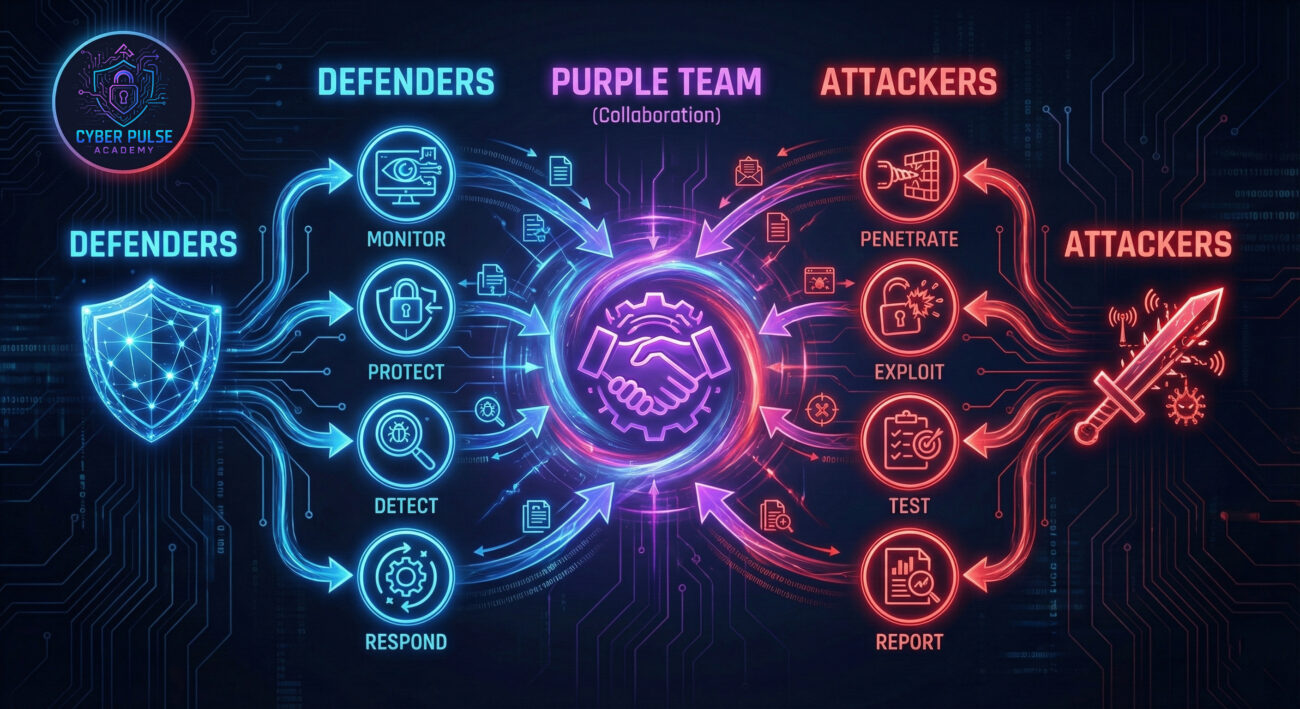
The most effective organizations create Purple Teams, collaborative efforts where Red and Blue Teams work together. The Red Team shares attack techniques so the Blue Team can build better detections, while the Blue Team provides context about defensive capabilities to make Red Team assessments more realistic.
Understanding the Blue Team's role is fundamental to grasping modern cybersecurity. They're not just IT staff with security tools, they're strategic defenders applying systematic thinking to protect against increasingly sophisticated threats.
Whether you're pursuing a cybersecurity career or simply want to better protect your digital life, adopting a Blue Team mindset, thinking like a defender, will make you more secure. Start with the 7 steps outlined earlier, focus on visibility and layered defenses, and remember that security is a journey, not a destination.
Have questions about Blue Teams or cybersecurity defense? Share your thoughts in the comments below! What security practices have you found most effective? Are you considering a career in Blue Team operations? Let's discuss how we can all become better digital defenders.
Want to dive deeper? Check out our guides on Incident Response Planning and Security Monitoring for Beginners.
Every contribution moves us closer to our goal: making world-class cybersecurity education accessible to ALL.
Choose the amount of donation by yourself.