





























Have you ever wondered why your computer sometimes runs slow for no apparent reason, or why you receive so much spam email? There's a hidden digital world where millions of devices are controlled without their owners' knowledge, welcome to the world of botnets. Imagine your smart TV, laptop, and even your security camera secretly working together for a criminal's benefit. That's exactly what a botnet enables.
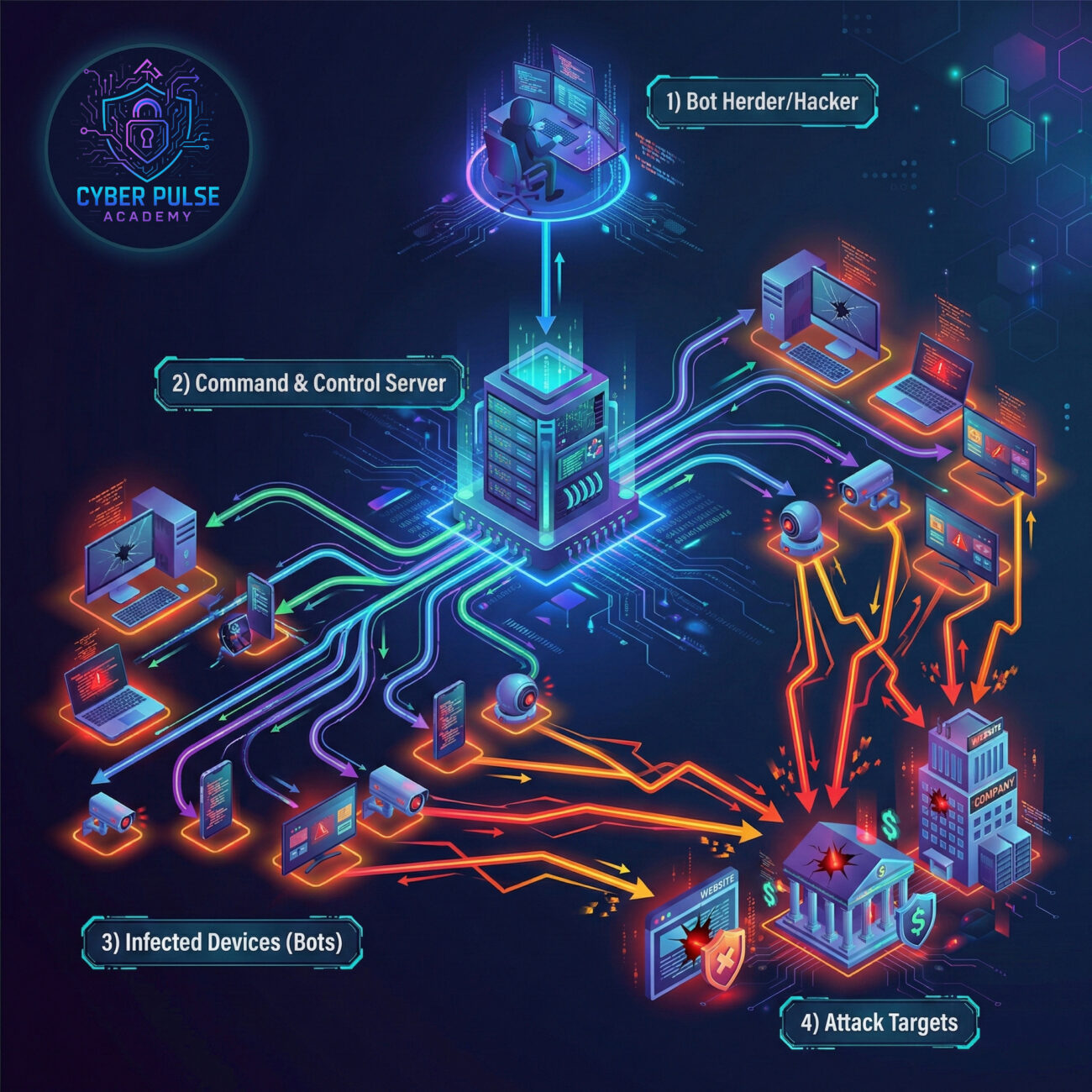
A botnet is a network of internet-connected devices infected with malware and controlled remotely by a hacker, known as a "bot herder." Think of it as a digital zombie army, each infected device (a "bot") follows commands without the owner's knowledge. These networks can range from a few hundred to millions of devices, creating unprecedented computing power for malicious activities.
What You'll Learn in This Guide:
The Growing Threat: Why Botnets Concern Everyone
The botnet threat is expanding exponentially with our growing number of connected devices. According to the Cybersecurity and Infrastructure Security Agency (CISA), botnets contribute to over 30% of global internet traffic during major attacks. The NIST Cybersecurity Framework specifically addresses botnet risks in critical infrastructure protection.
Everyday internet users face botnet threats without realizing it. Your device could be contributing to:
- Massive spam campaigns sending millions of emails
- Distributed Denial of Service (DDoS) attacks taking down websites
- Password theft from thousands of users simultaneously
- Cryptocurrency mining using your electricity and hardware
The 2016 Mirai botnet attack demonstrated how vulnerable our connected world is. It infected over 600,000 IoT devices like cameras and routers, causing major internet outages across Europe and North America. This wasn't an attack on corporate servers, it was an attack on ordinary household devices.
Key Terms & Concepts Demystified
Understanding these five essential terms will help you grasp how botnets operate:
| Term | Simple Definition | Everyday Analogy |
|---|---|---|
| Bot | An individual infected device under remote control | A remote-controlled toy car, you control it without being inside |
| Bot Herder | The hacker controlling the botnet | A puppet master pulling all the strings |
| Command & Control (C&C) | The server sending instructions to bots | A military headquarters issuing orders to soldiers |
| Zombie Computer | Another term for an infected bot | A person sleepwalking, active but not in control |
| DDoS Attack | Flooding a target with traffic from many bots | 1000 people trying to enter one small door simultaneously |
Real-World Scenario: The Coffee Shop Botnet
Meet Sarah, a freelance graphic designer who works daily from her local coffee shop's free WiFi. She uses her laptop, tablet, and phone simultaneously. Unbeknownst to her, the coffee shop's router has a security vulnerability from outdated firmware.
Here's how Sarah's ordinary Tuesday turns into a cybersecurity incident:
| Time/Stage | What Happened | Impact |
|---|---|---|
| 9:00 AM | Sarah connects all devices to coffee shop WiFi | Devices become visible on vulnerable network |
| 9:15 AM | Bot herder scans network, finds vulnerable router | Router infected with botnet malware |
| 10:30 AM | Malware spreads to Sarah's devices through network | Laptop, tablet, phone become zombie bots |
| 2:00 PM | Bot herder launches DDoS attack on gaming website | Sarah's devices contribute traffic without her knowledge |
| 4:00 PM | Sarah notices slow performance and overheating | Devices mining cryptocurrency for attacker |
Sarah's experience demonstrates how ordinary situations can make anyone part of a botnet. The infection chain started with one weak point (the router) and spread to all connected devices. According to CSO Online, public WiFi networks are common infection vectors for mobile botnets.
How to Protect Yourself from Botnet Infections
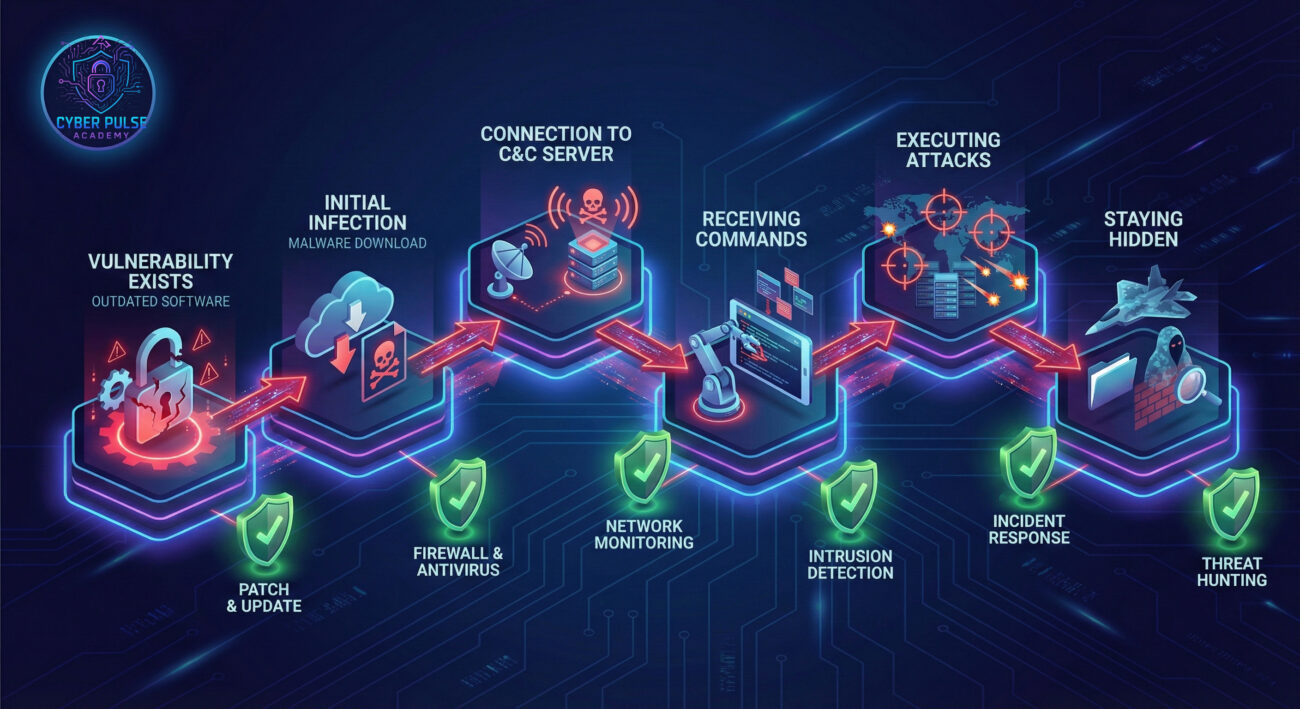
Step 1: Maintain Regular Software Updates
Cybercriminals exploit known vulnerabilities in outdated software. Regular updates patch these security holes.
- Enable automatic updates on all devices
- Update routers and IoT devices monthly
- Don't ignore "restart to update" notifications
Step 2: Implement Strong Authentication
Weak passwords are botnet entry points. Strengthen your authentication across all accounts.
- Use a password manager for unique, complex passwords
- Enable Multi-Factor Authentication (MFA) everywhere possible
- Change default passwords on routers and smart devices immediately
Step 3: Install & Update Security Software
Quality security software can detect and block botnet malware before it takes hold.
- Use reputable antivirus on all devices
- Consider network-level protection like firewall routers
- Enable real-time scanning features
Step 4: Practice Safe Browsing Habits
Many botnet infections come from malicious websites or downloads.
- Avoid suspicious links and downloads
- Use browser security extensions
- Be cautious with email attachments
Step 5: Secure Your IoT Devices
Smart devices are particularly vulnerable to botnet recruitment.
- Change default credentials immediately
- Disable remote access if not needed
- Regularly check for firmware updates
Step 6: Monitor Network Activity
Unusual network traffic can indicate botnet activity.
- Check router logs for strange connections
- Monitor data usage for unexpected spikes
- Use network monitoring tools for advanced detection
Step 7: Educate Yourself Continuously
Cybersecurity knowledge is your best defense.
- Follow trusted cybersecurity news sources
- Learn about new botnet threats and tactics
- Share knowledge with family and colleagues
Common Mistakes & Best Practices
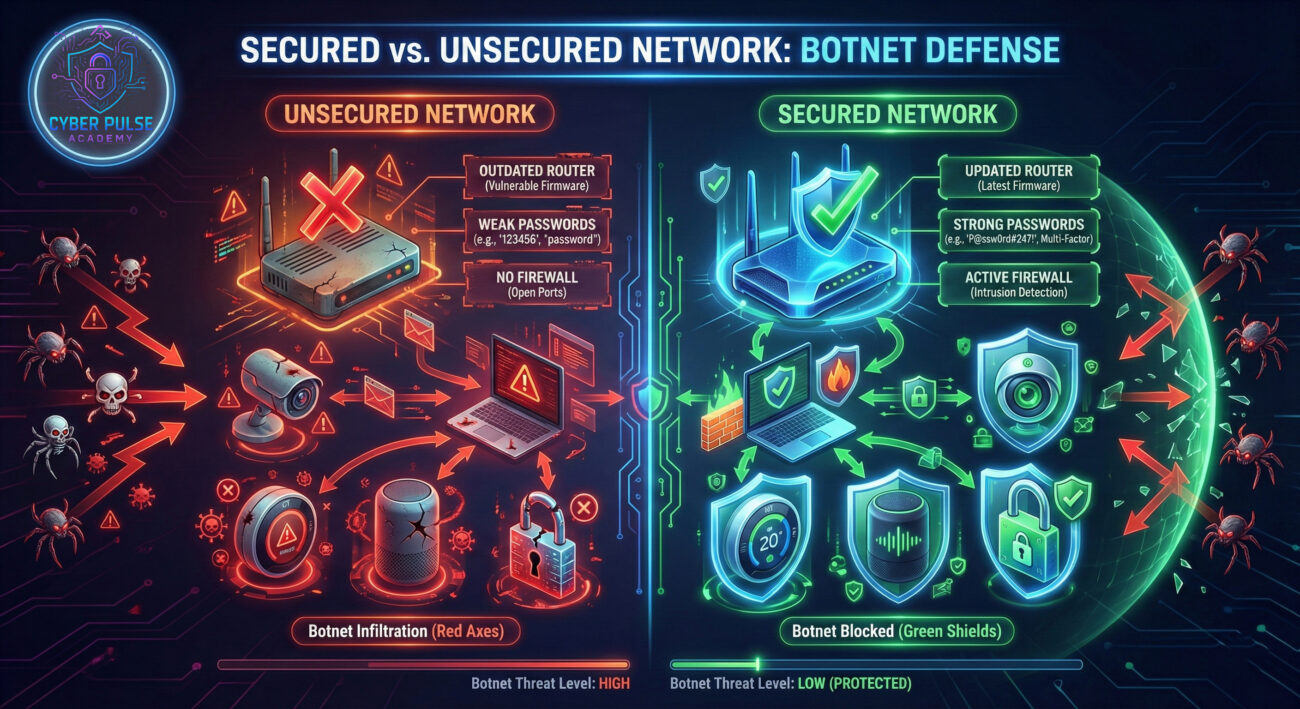
❌ Mistakes to Avoid
- Using default passwords on routers and IoT devices
- Ignoring software updates and security patches
- Connecting to unsecured public WiFi without VPN protection
- Downloading software from untrusted sources
- Disabling security features for "better performance"
✅ Best Practices
- Implement network segmentation to isolate IoT devices
- Use a VPN on public networks
- Regularly back up important data offline
- Enable firewalls on all devices and network gateways
- Conduct security audits of connected devices quarterly
Red Team vs Blue Team: Botnet Perspectives
From the Attacker's Eyes
A botnet operator sees the internet as a hunting ground for vulnerable devices. They automate scans for outdated software, default credentials, and unpatched vulnerabilities. Their goal isn't to attack individual users but to build an army of bots they can rent or use for large-scale attacks. They value stealth, keeping infections hidden for as long as possible. The economics are simple: more bots equals more power equals higher profit, either through direct attacks or selling access to the botnet.
From the Defender's Eyes
Security professionals view botnets as persistent threats requiring layered defense. They focus on prevention through patching and hardening, detection through network monitoring and anomaly detection, and response through isolation and remediation. Their goal is to reduce the "attack surface" by eliminating vulnerabilities and to contain any infections that occur. They think in terms of resilience, assuming some devices will get infected and planning how to limit the damage.
Threat Hunter's Eye: Understanding the Attack Chain
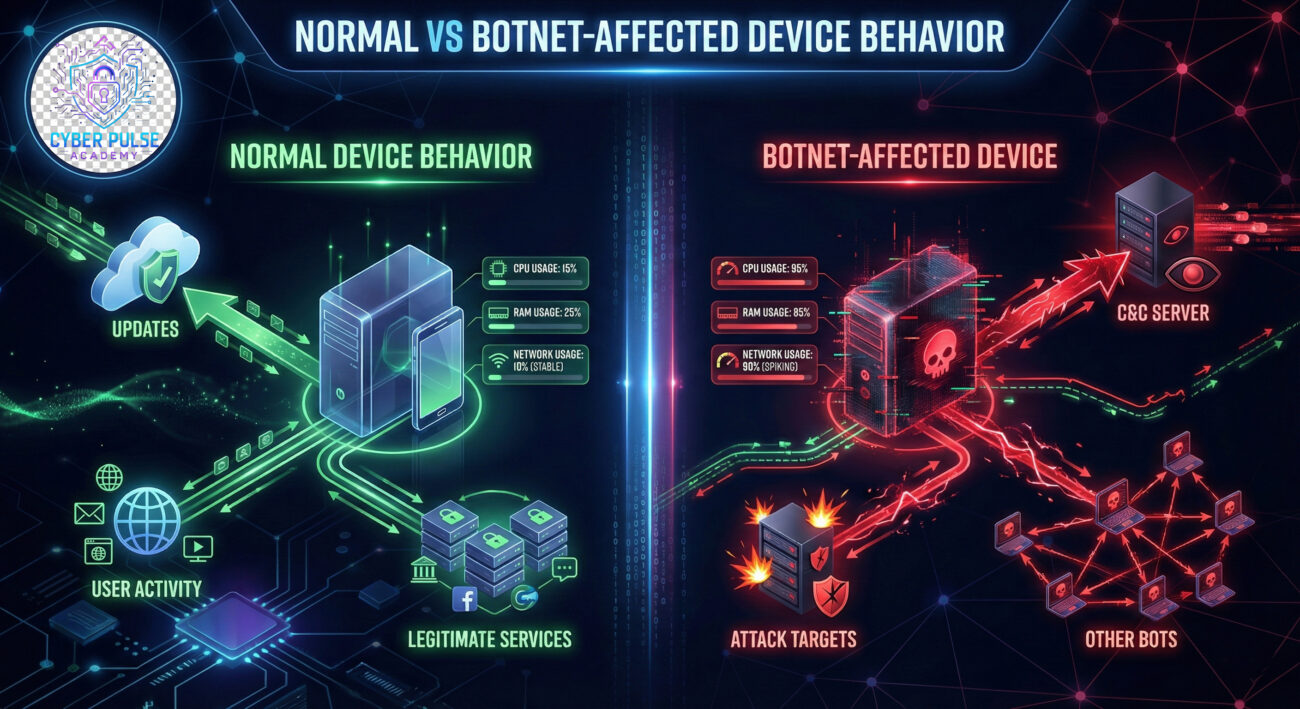
Imagine a simple attack path: A hacker scans for webcams with default passwords (admin/admin). They find thousands, install botnet malware, and now control a camera army. The cameras normally send video to owners, but now also send small data packets to a gaming website, overwhelming it (DDoS). The website pays the hacker to stop.
The defender's counter-move: Monitor for devices making unusual outbound connections. A camera shouldn't connect to gaming websites. By detecting this anomaly and blocking it, then identifying and cleaning infected cameras, the defender breaks the attack chain. The mindset shift: Don't just look for malware; look for devices behaving abnormally for their purpose.
Conclusion: Your Role in Fighting Botnets
Understanding botnets transforms you from a potential victim to an informed defender. Remember these key takeaways:
- Botnets are networks of compromised devices controlled by attackers
- Every connected device is a potential target, computers, phones, and IoT gadgets
- Simple security practices dramatically reduce your infection risk
- Collective security matters, your protected device helps protect others
The battle against botnets isn't just fought by cybersecurity professionals. Each individual who updates their software, uses strong passwords, and practices safe browsing strengthens our collective digital defense. As our world becomes more connected through smart homes, wearable tech, and IoT devices, our shared responsibility for cybersecurity grows.
Begin your cybersecurity journey today by implementing just one protection step from this guide. Whether it's enabling automatic updates, installing a password manager, or simply changing your router's default password, each action makes you, and the entire internet, safer from the threat of botnets.
Ready to Secure Your Digital Life?
Start with one action today: Check if all your devices have automatic updates enabled. This single step addresses the most common botnet infection vector.
Have questions about botnets or personal cybersecurity? Share your thoughts in the comments below or explore our related guides on password security and two-factor authentication.
© 2026 Cyber Pulse Academy. This content is provided for educational purposes only.
Always consult with security professionals for organization-specific guidance.