























Certification Courses
Hands-On Labs
Threat Intelligence
Latest Cyber News
MITRE ATT&CK Breakdown
All Cyber Keywords
Ever noticed that little padlock icon in your browser's address bar when you're banking or shopping online? That's your Certificate Authority (CA) working behind the scenes to keep you safe. But what exactly is this digital guardian, and why should you care? If you've ever felt a pang of anxiety clicking "Submit" on a form or wondered if a website is truly secure, you're about to discover the invisible force that makes the internet trustworthy.
In this guide, you'll learn: what a Certificate Authority is using a simple analogy, how it prevents digital impersonation, the step-by-step process it uses, the biggest mistakes people make with certificates, and actionable best practices to ensure your own security.
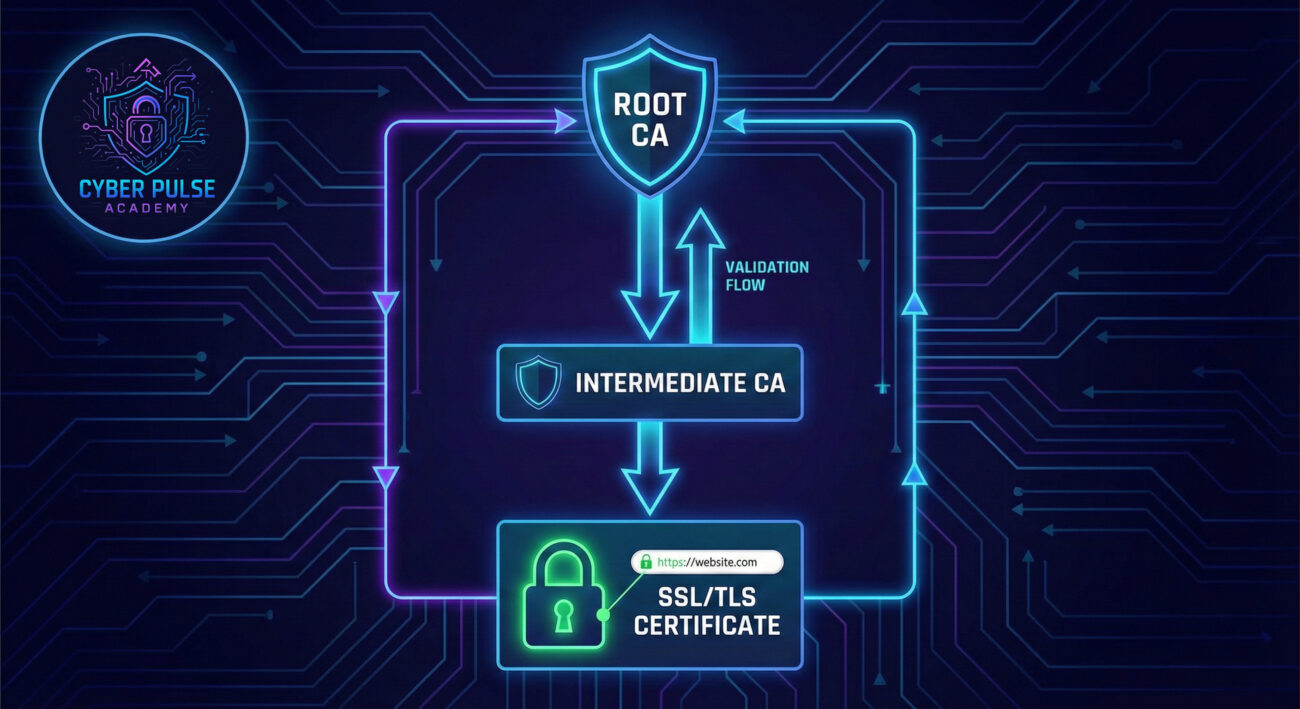
Imagine walking into a massive, global airport where anyone can set up a check-in counter claiming to be "Airline XYZ." Without a trusted authority to verify which counter is legitimate, you could easily hand your luggage (your personal data) to a criminal in a uniform. The internet works the same way. A Certificate Authority is the universally trusted "airport authority" for the web. It's a highly secure organization that issues digital certificates, like unforgeable passports, to websites and entities, proving they are who they claim to be.
This system, called Public Key Infrastructure (PKI), is the foundation of secure communication online. Every time you see "HTTPS" and the padlock, you're experiencing the result of a CA's work. Without it, online banking, shopping, email, and even logging into your social media would be fraught with the risk of eavesdropping and impersonation.
In 2023, over 70% of all web traffic was encrypted using HTTPS (Google Transparency Report). This massive shift towards a secure web is powered by Certificate Authorities. They don't just enable privacy; they enable trust at a global scale. When you log into your email, a Certificate Authority has vetted your provider's identity, ensuring you're not sending your password to a fake look-alike site set up by a hacker.
Recent news highlights their critical role. CISA advisories frequently warn about threats like phishing and man-in-the-middle attacks, which exploit weaknesses in digital identity verification. A robust CA system is our primary defense. For you, this means your credit card details stay private during checkout, your private messages remain confidential, and your sensitive work documents are shielded from industrial spies. The Certificate Authority is the silent, diligent notary of the digital age, stamping "VERIFIED" on the entities you interact with daily.
| Term | Simple Definition | Everyday Analogy |
|---|---|---|
| Certificate Authority (CA) | A trusted organization that creates and issues digital certificates to verify the identity of websites, people, or companies online. | The government's passport office. It issues passports (certificates) that are hard to forge and trusted worldwide. |
| SSL/TLS Certificate | A digital file installed on a website's server that proves its identity and enables an encrypted connection. | A combination passport and secure diplomatic pouch. It proves who you're talking to and scrambles the conversation. |
| Phishing | A cyber attack where a malicious actor pretends to be a trustworthy entity to steal sensitive data. | A con artist wearing a fake police uniform to "verify" your ID and wallet. |
| Encryption | The process of scrambling data into a secret code so only authorized parties can read it. | Sending a letter in a locked briefcase that only the recipient has the key to open. |
| Public Key Infrastructure (PKI) | The entire system of hardware, software, policies, and CAs that creates, manages, and verifies digital certificates. | The entire global ecosystem for passports: the offices, the paper mills, the laws, and the border agents who check them. |
Sarah, a freelance graphic designer, received an urgent email from her "bank" asking her to update her details via a link to avoid account suspension. Stressed and in a hurry, she clicked. The site looked identical to her real bank's login page, complete with a padlock icon. She entered her username and password. Within hours, her account was emptied. What happened?
The hacker had obtained a cheap, domain-validated certificate for a look-alike domain (e.g., "mybank-update.com"). While the padlock showed a secure, encrypted connection (HTTPS), it did not mean the site was legitimate, only that the data sent was scrambled between her and the fake site. Sarah missed a crucial detail: the browser's address bar showed the slightly-off domain name, not her actual bank's. This is a classic phishing attack exploiting the common misconception that "padlock = safe."
| Time / Stage | What Happened | Impact |
|---|---|---|
| Day 1 | Hacker registers a look-alike domain and obtains a basic SSL certificate. | A fake site is built that has technical "legitimacy" (HTTPS padlock). |
| Day 2 | Sarah receives a convincing phishing email with a link to the fake site. | Sarah's guard is down; the presence of the padlock reduces suspicion. |
| Day 2, +5 mins | Sarah enters her credentials on the fake but HTTPS-secured site. | Credentials are stolen, though transmitted "securely" to the criminal. |
| Day 2, +2 hours | Hacker uses Sarah's credentials to log into her real bank account and initiates transfers. | Financial breach occurs. Loss of funds and personal security. |
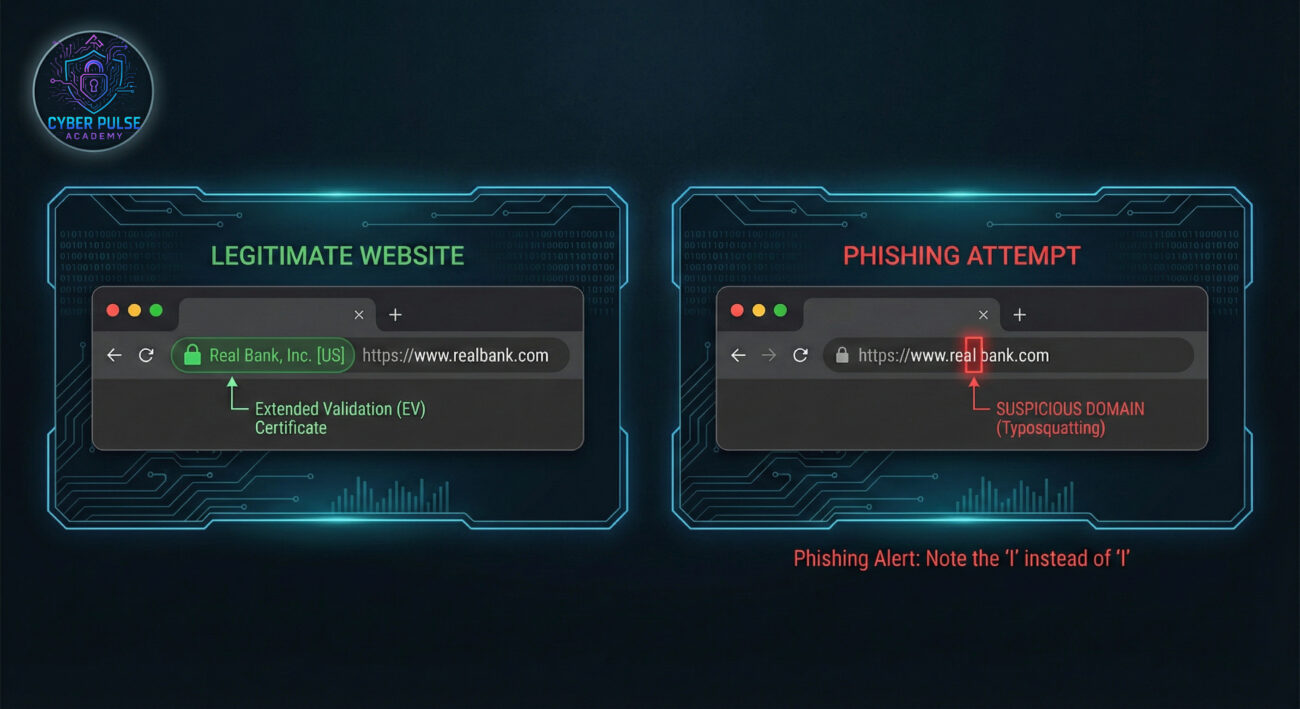
Don't just rely on the padlock. Follow these steps to actively verify the trust signaled by a Certificate Authority.
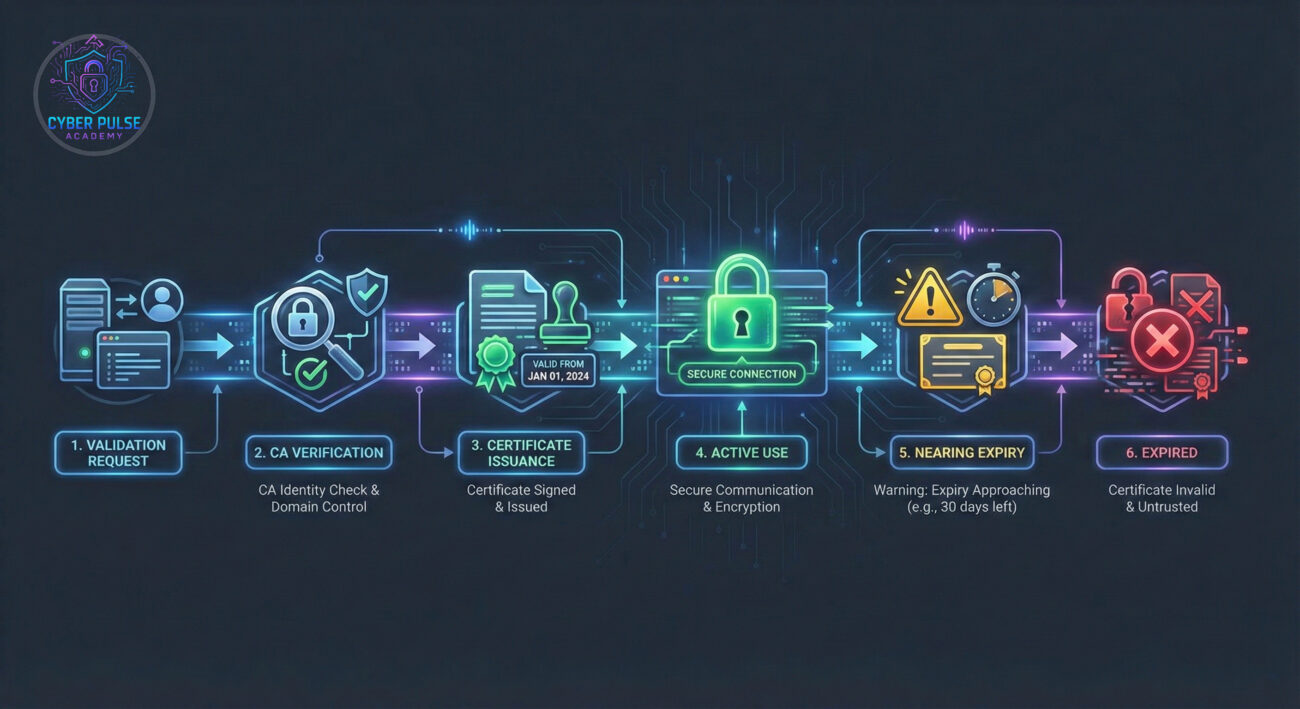
An attacker doesn't try to break the encryption math (which is nearly impossible). Instead, they target the people and processes around the Certificate Authority system. A simple attack path involves domain spoofing and social engineering. First, the attacker registers a domain name very similar to a target company (e.g., "g00gle.com" with zeros). They then use readily available services to get a valid SSL certificate for this fake domain, this is easy and cheap. Now they have a site with a padlock. Their final step is to trick users (via email, ads, or SMS) into visiting this legitimate-looking, "secure" site to steal credentials.
The defender's counter-move is user education and vigilant verification. By training users to always scrutinize the domain name in the address bar, not just the padlock, the effectiveness of this entire attack crumbles. Additionally, companies can register similar-looking defensive domains and use certificate monitoring services to get alerts if certificates are issued for look-alike domains, allowing them to take them down quickly.
A Certificate Authority is a hurdle, but also a potential tool for camouflage. The Red Team's goal is to bypass trust or exploit its perception. They see the CA system as a source of legitimacy they can borrow cheaply (by getting a cert for a fake domain) or as a high-value target itself. If they could somehow compromise a CA or trick it into issuing a certificate for a legitimate domain they don't own (like "google.com"), they could perform virtually undetectable man-in-the-middle attacks. Their focus is on finding weaknesses in the CA's validation processes or in the human element, the end-user's trust in the padlock.
A Certificate Authority is the cornerstone of cryptographic trust and a critical dependency. The Blue Team's job is to maintain the integrity of this trust chain. They rigorously vet which root CAs are included in their organization's trust stores, aggressively monitor for fraudulent certificates for their domains, and ensure all their internal web services use properly issued and frequently renewed certificates. They view the CA as a powerful ally but understand its limitations, knowing that user education is required to complement the technical assurance it provides. Their mantra is "trust, but verify and monitor."
Understanding the role of a Certificate Authority transforms you from a passive user into an active participant in your own cybersecurity. You now know that the padlock is a tool, not a guarantee. Let's recap your key takeaways:
By applying the simple steps in this guide, clicking the padlock, reading URLs, and heeding warnings, you leverage the power of the global Certificate Authority system to its fullest, creating a much more secure and confident online experience for yourself.
Did this guide demystify Certificate Authorities for you? What other cybersecurity concepts would you like explained simply? Share your thoughts or questions below, let's build a more secure digital world together, one concept at a time.
Every contribution moves us closer to our goal: making world-class cybersecurity education accessible to ALL.
Choose the amount of donation by yourself.