



















Certification Courses
Hands-On Labs
Threat Intelligence
Latest Cyber News
MITRE ATT&CK Breakdown
All Cyber Keywords
When a major cloud provider like AWS, Azure, or Cloudflare suffers an outage, the internet doesn’t just slow down, it fractures. While consumers see a pizza order fail, businesses face a complete identity crisis. Authentication and authorization, the gatekeepers of every system, rely on a fragile chain of cloud dependencies: databases, DNS, control planes, and policy engines. If any link breaks, access collapses.
This article explores the cloud outage identity resilience challenge: why traditional high‑availability fails, how to map dependencies, and practical steps to keep identity systems alive when the cloud goes dark. We’ll also connect these risks to MITRE ATT&CK tactics, so you can think like both attacker and defender.
Imagine an airline’s booking platform, a complex mesh of microservices, APIs, and identity checks. During a recent cloud outage, the provider’s managed database for user profiles became unreachable. The identity provider (IdP) itself was still running, but it couldn’t fetch user attributes or session data. Result: every login attempt failed. Passengers couldn’t check in, pilots couldn’t access flight plans, and revenue evaporated.
This isn’t hypothetical. In 2025–2026, multiple high‑profile cloud incidents have shown that identity is the single point of failure. Even with multi‑region failover, if the control plane or a global DNS service goes down, every region tumbles.
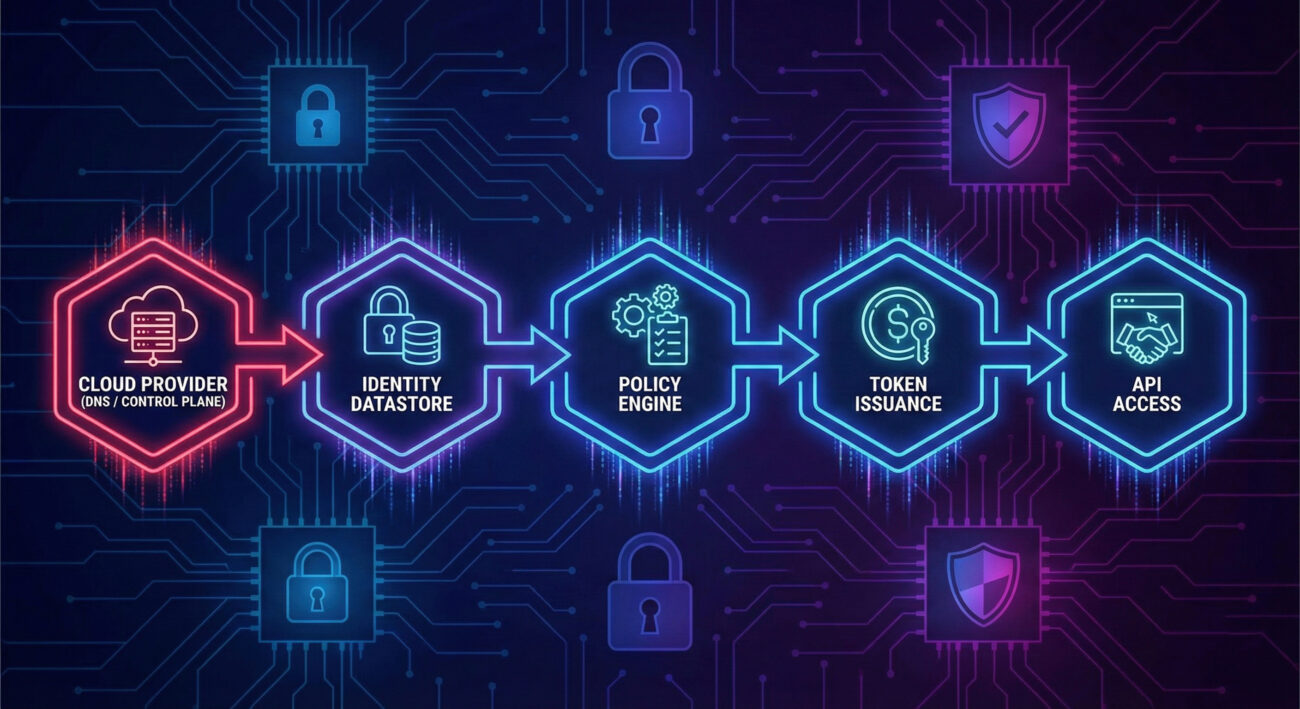
Modern identity architectures are deeply woven into cloud infrastructure. Even if your OIDC or SAML provider is “up,” these backend components can break authentication:
A single authentication event triggers a cascade: resolve user → fetch attributes → evaluate policies → issue token → validate token at API. Every hop depends on the underlying cloud fabric. When that fabric fails, so does identity.
Understanding these dependencies helps defenders anticipate how adversaries might exploit availability gaps. Below is a mapping to relevant MITRE ATT&CK tactics and techniques:
| Tactic | Technique ID | Name | Relevance to Cloud Outage |
|---|---|---|---|
| Impact | T1499 | Endpoint Denial of Service | Attackers may trigger resource exhaustion in identity databases, mimicking an outage. |
| Impact | T1498 | Network Denial of Service | DNS or control plane flooding can block identity lookups. |
| Defense Evasion | T1578 | Modify Cloud Compute Infrastructure | Adversaries could alter identity policies or disable redundancy during an outage window. |
| Credential Access | T1556 | Modify Authentication Process | If identity systems are down, attackers might try to bypass authentication altogether. |
While a natural outage isn’t an attack, the effect is identical: denial of access. Resilience planning must account for both accidental and malicious disruptions.
Use this practical guide to evaluate your exposure to cloud‑outage‑induced identity failure.
Document every external service your identity system touches: cloud provider services (DNS, databases, load balancers), third‑party APIs, and internal microservices. Include both runtime and configuration dependencies.
Look for dependencies that share a single cloud provider, region, or control plane. For example, if your primary and backup IdP both use the same cloud DNS, a DNS outage takes down both.
Simulate outages of each dependency. Can users still authenticate using cached tokens or attributes? Does authorization fall back to local policies? Measure the blast radius.
Design fallback mechanisms: cache user sessions, precompute authorization decisions for critical APIs, and allow read‑only access when identity writes fail. Define what “limited access” means for your business.
For truly critical identity functions, consider a secondary provider or on‑premises lightweight directory that can operate independently during a major cloud outage. Test failover regularly.
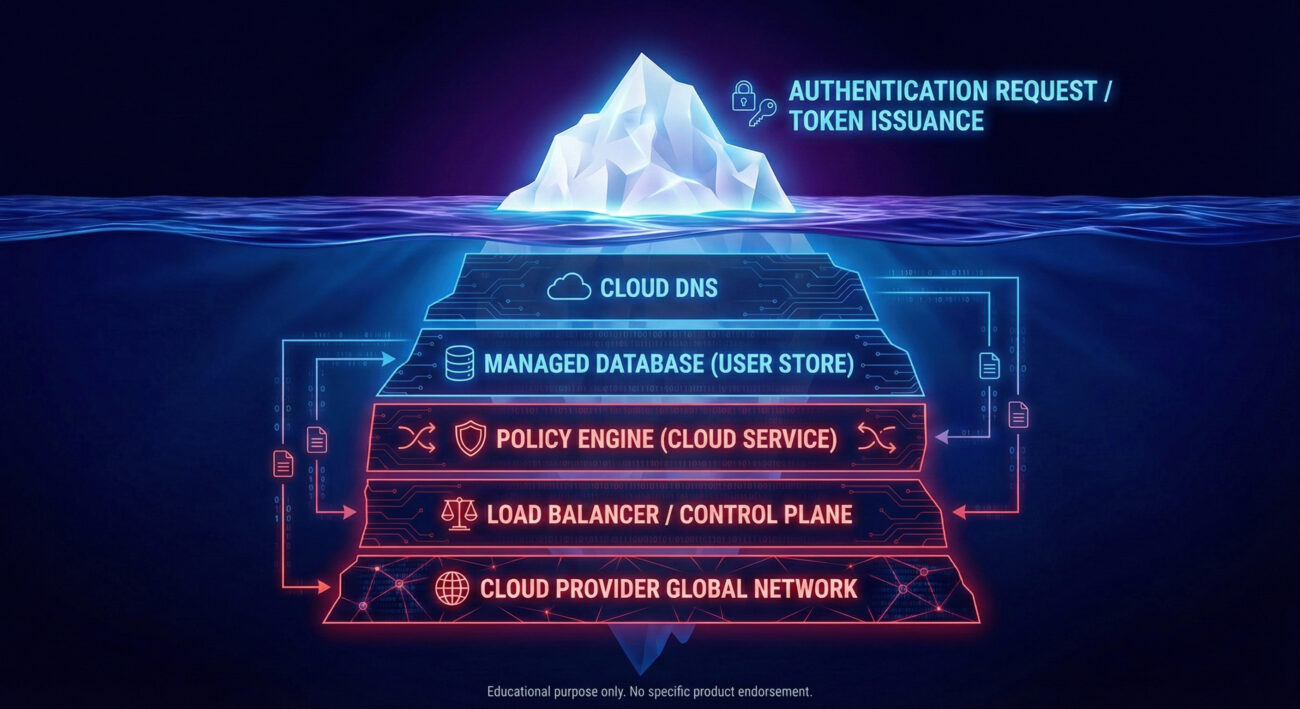
Traditional HA (active‑passive regions) is not enough when the failure is global. Consider these architectural patterns:
These strategies ensure that when the cloud outage hits, your identity systems degrade instead of collapse.
A: SLAs cover uptime of their service, but not the myriad dependencies your identity flow has. An outage in a “different” service (like DNS) can still break authentication. Resilience is your responsibility.
A: Not the only, but it's a strong pattern. You can also use a hybrid model with an on‑premises directory replica. The key is to avoid a single shared failure domain.
A: At least twice a year, and after any major change to your identity infrastructure. Use game days to simulate a cloud DNS or control plane failure.
A: Map your dependencies. You can't fix what you don't know. Start with the step‑by‑step guide above.
Start with our free dependency‑mapping template and join the Cyber Pulse Academy newsletter for weekly deep dives into identity security and cloud architecture.
👉 Explore more at The Hacker News for real‑time updates, or check MITRE ATT&CK® and AWS Well‑Architected for official guidance.
© Cyber Pulse Academy. This content is provided for educational purposes only.
Always consult with security professionals for organization-specific guidance.
Every contribution moves us closer to our goal: making world-class cybersecurity education accessible to ALL.
Choose the amount of donation by yourself.