


















































📚 Table of Contents
- Introduction: Your Digital Files Are Under Attack
- Why File Viruses Matter in Cybersecurity Today
- Key Terms & Concepts Decoded
- Real-World File Virus Attack: Sarah's Story
- How to Protect Yourself From File Viruses in 7 Steps
- Common Mistakes & Best Practices
- Threat Hunter's Eye: Inside the Attacker's Mind
- Red Team vs Blue Team View
- Conclusion & Next Steps
🔓 Introduction: Your Digital Files Are Under Attack
Have you ever downloaded what looked like a harmless document, only to have your computer start acting strangely? That innocent-looking file might have been hiding a dangerous secret – a file virus. These digital parasites are more common and destructive than most people realize.
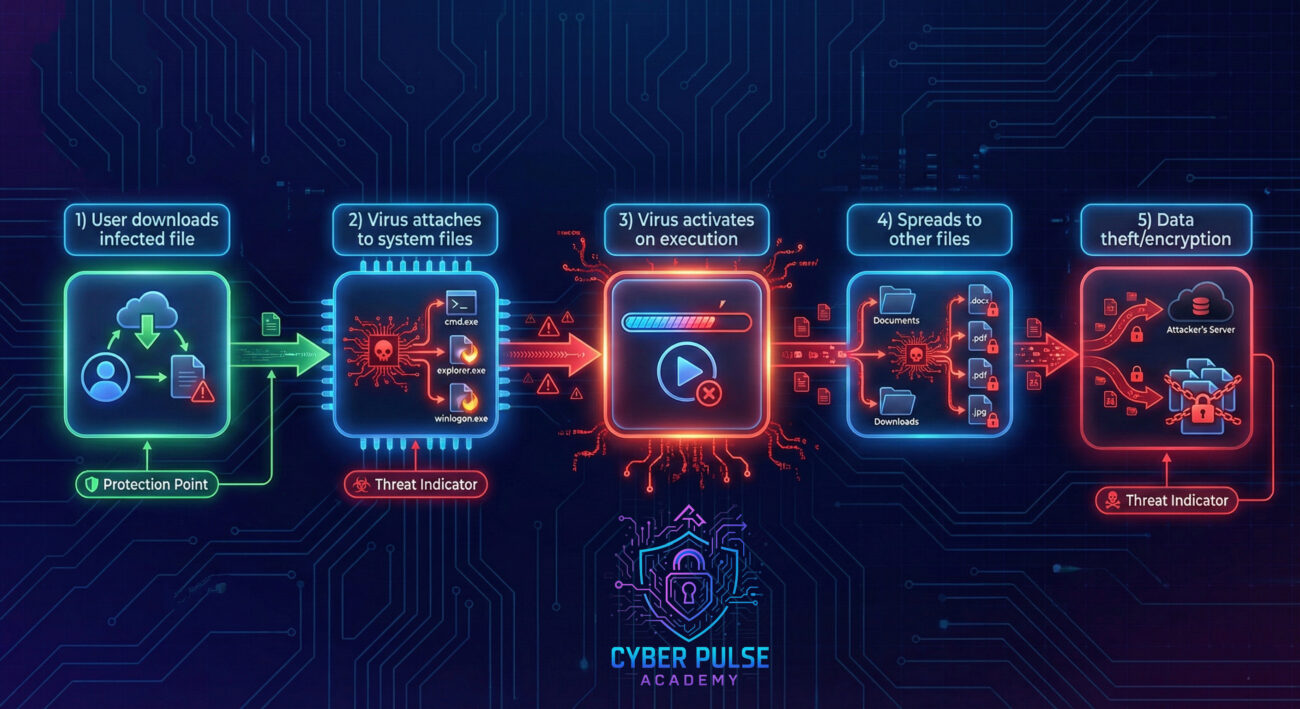
A file virus is a type of malicious software that attaches itself to legitimate files on your computer. When you open the infected file, the virus activates and can spread to other files, steal your data, or even take control of your system. Think of it like a termite that hollows out a wooden beam – from the outside, everything looks normal, but inside, there's destructive activity eating away at the structure.
In this beginner-friendly guide, you'll learn exactly how file viruses work, see a real-world example of an attack, and discover seven actionable steps to protect yourself. By the end, you'll have the knowledge to identify suspicious files and secure your digital life with confidence.
⚠️ Why File Viruses Matter in Cybersecurity Today
File viruses aren't just a historical curiosity – they're evolving threats that continue to cause billions in damages annually. According to recent data from the Cybersecurity and Infrastructure Security Agency (CISA), malware attacks (including file viruses) increased by 358% in 2023 compared to the previous year.
What makes file viruses particularly dangerous is their delivery method. They often arrive as seemingly legitimate attachments: resumes, invoices, reports, or photos. The attackers rely on human curiosity and trust to get you to open the file. Once activated, a modern file virus might not just damage files – it could install ransomware that encrypts all your data, steal passwords and banking information, or turn your computer into part of a botnet used for larger attacks.
Everyday activities like checking email, downloading software updates, or transferring files via USB drives become potential vulnerability points. The protected approach is understanding how these threats operate so you can implement proper defenses before disaster strikes.
📖 Key Terms & Concepts Decoded
| Term | Simple Definition | Everyday Analogy |
|---|---|---|
| File Virus | Malicious software that attaches itself to legitimate files and executes when those files are opened | Like a glitter bomb hidden inside a birthday card – it looks normal until opened, then makes a mess everywhere |
| Payload | The harmful action a virus performs after infecting a system (data theft, encryption, etc.) | The actual "crime" committed after the criminal gets inside the building |
| Signature Detection | Antivirus method that identifies known viruses by their unique code patterns | Like recognizing a wanted criminal by their fingerprints on file |
| Zero-Day Exploit | A vulnerability unknown to software vendors, giving attackers advantage | A secret backdoor into a building that even security doesn't know exists |
| Heuristic Analysis | Advanced antivirus technique that detects suspicious behavior patterns | Security noticing someone trying every door handle, even if they don't match any known criminal |
🎬 Real-World File Virus Attack: Sarah's Story
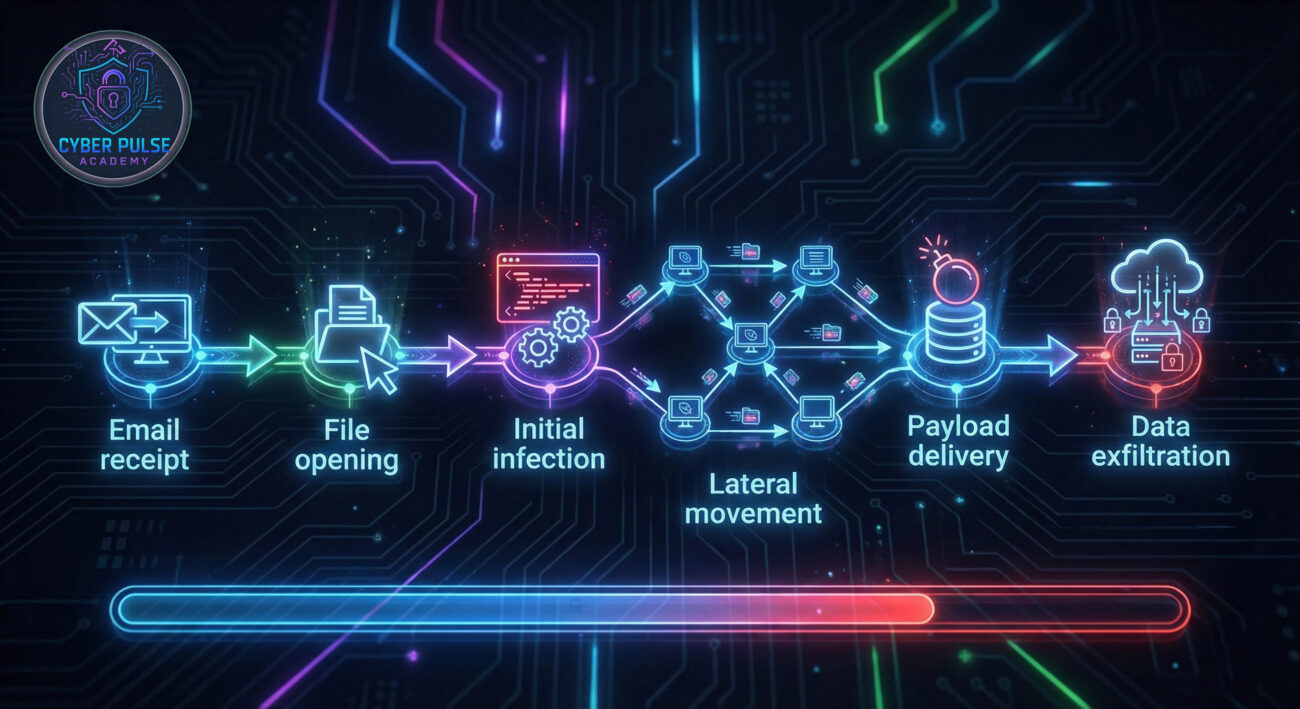
Sarah, a freelance graphic designer, received an email from what appeared to be a potential client. The email contained a "project brief" Word document attachment. The sender address looked legitimate ([email protected]), and the message referenced details from Sarah's portfolio website.
When Sarah opened the document, she saw a message saying "Enable content to view the full brief." Thinking this was normal for Word documents with embedded images, she clicked "Enable Content." Nothing seemed to happen immediately, so she assumed the document was corrupted and deleted it.
Over the next 72 hours, strange things occurred:
| Time/Stage | What Happened | Impact |
|---|---|---|
| Hour 1 | Macro virus embedded in Word document executed, installing backdoor | System breach established, antivirus silently disabled |
| Hours 2-24 | Virus spread to .exe and .dll files, copied itself to USB drives | Multiple system files corrupted, spread to Sarah's backup drive |
| Day 2 | Ransomware payload activated, encrypting all design files | 3 years of work inaccessible, ransom demand: $2,000 in Bitcoin |
| Day 3 | Data theft module sent saved passwords to hacker server | Bank account compromised, social media accounts hijacked |
Sarah's recovery took weeks and cost thousands in data recovery services. The attack could have been prevented with proper secure practices, which we'll cover next.
🛡️ How to Protect Yourself From File Viruses in 7 Steps
Step 1: Enable "Show File Extensions" in Windows/Mac
File viruses often disguise .exe files as documents by using double extensions like "Report.pdf.exe." When you enable file extensions, you can see the true file type.
- Windows: Open File Explorer > View tab > Check "File name extensions"
- Mac: Finder > Preferences > Advanced > Check "Show all filename extensions"
- Always be suspicious of files with double extensions like .doc.exe or .pdf.scr
Step 2: Install & Update Quality Antivirus Software
A good antivirus provides both signature-based and heuristic detection. Update it regularly to recognize new threats.
- Choose reputable antivirus with real-time scanning (Bitdefender, Kaspersky, or Windows Defender)
- Enable automatic updates and daily scans
- Consider adding a second opinion scanner like Malwarebytes for monthly deep scans
Step 3: Disable Macros in Office Documents by Default
Most legitimate documents don't require macros. Disabling them prevents common file virus delivery methods.
- In Microsoft Office: File > Options > Trust Center > Trust Center Settings > Disable all macros with notification
- Only enable macros from verified sources when absolutely necessary
- Consider using PDF instead of Word/Excel for document exchange
Step 4: Practice Safe Download & Email Habits
The human element is often the weakest link. Develop skeptical browsing and email habits.
- Never open attachments from unknown senders
- Verify unexpected attachments even from known contacts (call to confirm)
- Download software only from official vendor websites or secure app stores
- Learn more about phishing recognition techniques
Step 5: Implement Regular Backup Strategy
When prevention fails, backups are your recovery lifeline. Follow the 3-2-1 backup rule.
- Keep 3 copies of important data (primary + 2 backups)
- Use 2 different media types (external drive + cloud storage)
- Keep 1 backup offsite (cloud services like Backblaze or encrypted online storage)
- Test restoration periodically to ensure backups work
Step 6: Keep Your System & Software Updated
Updates patch vulnerabilities that file viruses exploit. Enable automatic updates wherever possible.
- Enable Windows Update or macOS Software Update for automatic installation
- Update browsers, Adobe Reader, Java, and other commonly targeted software
- Remove unused software to reduce attack surface
- Learn about effective patch management
Step 7: Use Sandboxing for Suspicious Files
When you must open a questionable file, use a sandboxed environment to contain potential threats.
- Use Windows Sandbox (available in Windows 10/11 Pro) for isolated testing
- Virtual machines with snapshots allow safe file inspection
- Online services like VirusTotal analyze files without executing them on your system
- Sandboxie or similar tools provide application-level isolation
⚖️ Common Mistakes & Best Practices
❌ Mistakes to Avoid
- Disabling antivirus to improve performance or run "special" software
- Using the same computer for high-risk activities (torrents, adult sites) and important work
- Keeping weak passwords that allow viruses to spread to other accounts
- Assuming Mac/Linux systems are immune to all file viruses (they're not)
- Sharing USB drives without scanning them first on an isolated system
✅ Best Practices
- Implement MFA (Multi-Factor Authentication) on all important accounts
- Use a standard user account (not administrator) for daily computing
- Regularly audit installed programs and remove unnecessary applications
- Educate family or team members about file virus risks and prevention
- Consider using application whitelisting for critical systems
🎯 Threat Hunter's Eye: Inside the Attacker's Mind
From a hacker's perspective, file viruses offer an elegant attack vector. The goal isn't just to infect one computer, but to establish persistence and move laterally through networks. A simple attack path might look like this:
Attack Path: Craft a malicious Excel invoice with embedded macros → Send to accounting department using spoofed vendor email → When opened, the macro downloads additional payload from command server → Use harvested credentials to access shared network drives → Deploy ransomware across the entire organization.
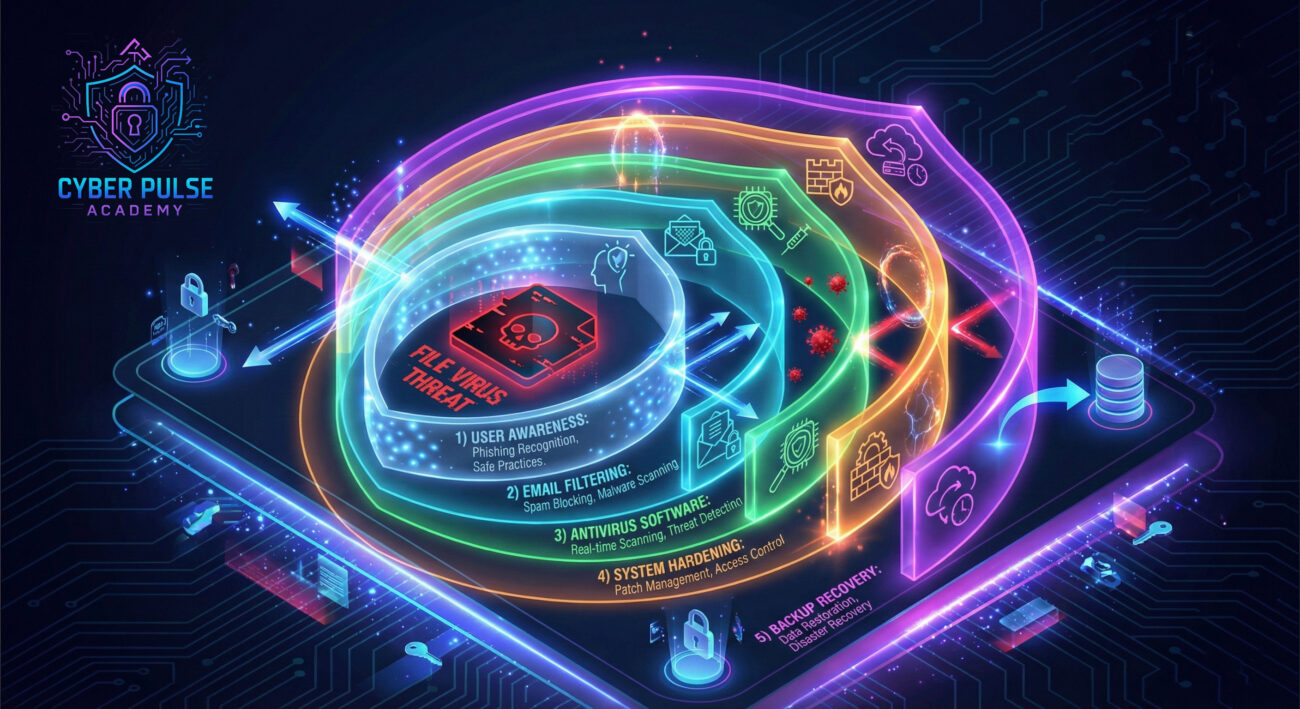
Defender's Counter-Move: Here's where a cybersecurity professional would intervene. By implementing email attachment filtering that blocks macros, using network segmentation to limit lateral movement, and deploying endpoint detection that alerts on unusual macro behavior, the defender creates multiple choke points. The key insight? Don't just look for known bad files – monitor for suspicious behavior like a Word document trying to download files from the internet or modify system registry entries.
🔴 Red Team vs Blue Team View
From the Attacker's Eyes (Red Team)
For a red teamer (ethical hacker simulating attacks), file viruses represent opportunity. They're looking for the path of least resistance: Which users open attachments without verification? What file types bypass current filters? Can they leverage social engineering to increase open rates? Their success metrics include infection rate, dwell time (how long undetected), and lateral movement potential. They care about evasion techniques – polymorphic code that changes signatures, living-off-the-land binaries that use legitimate system tools, and timing attacks when defenses might be relaxed.
From the Defender's Eyes (Blue Team)
For a blue teamer (defensive security), file viruses represent constant vigilance. They're building layered defenses: Email gateways that strip dangerous attachments, endpoint protection with behavioral analysis, user training programs, and incident response plans. Their success metrics include mean time to detect (MTTD), mean time to respond (MTTR), and false positive rates. They care about visibility – comprehensive logging, centralized monitoring, and threat intelligence feeds that provide early warnings about new file virus campaigns targeting their industry.
🏁 Conclusion & Next Steps
Understanding file viruses is your first line of defense in today's digital landscape. Remember these key takeaways:
- File viruses attach to legitimate files and activate when opened
- Modern variants often deliver ransomware, spyware, or backdoors rather than just destroying files
- The human element (opening suspicious attachments) remains the primary infection vector
- Layered defense combining technology, education, and good habits provides the best protection
Your next action should be to implement at least two protections from Step 4 this week. Start with enabling file extensions and reviewing your current antivirus setup. Cybersecurity isn't about achieving perfect security – it's about implementing reasonable precautions that make you a harder target than the next person.
Stay curious and continue learning. Consider exploring two-factor authentication to protect your accounts even if passwords are stolen by a file virus.
💬 Call to Action
Have questions about file viruses or personal experiences to share? Leave a comment below or join our beginner cybersecurity community. What's the most suspicious file you've ever received, and how did you handle it? Your experience might help someone else avoid becoming the next victim.
Remember: In cybersecurity, paranoia is a virtue, and healthy skepticism is your superpower.
© 2026 Cyber Pulse Academy. This content is provided for educational purposes only.
Always consult with security professionals for organization-specific guidance.