






















Certification Courses
Hands-On Labs
Threat Intelligence
Latest Cyber News
MITRE ATT&CK Breakdown
All Cyber Keywords
Have you ever wondered who's really behind those phishing emails trying to steal your bank details? Or what drives the relentless ransomware attacks on hospitals and businesses? Welcome to the world of financially motivated groups – the digital equivalent of organized crime syndicates, but operating in the shadows of the internet.
A financially motivated group is a collective of cybercriminals whose primary goal is simple: profit. Unlike hacktivists who attack for political reasons or nation-states spying for intelligence, these groups are in it for the money. Think of them like a highly specialized bank robbery crew, but instead of physical vaults, they target digital systems and human psychology.
In this guide, you'll learn: what exactly financially motivated groups are, how they operate in the real world, the devastating impact they can have, and most importantly – practical steps you can take to protect yourself and your organization from their attacks.
Imagine waking up to find your small business's computers frozen with a message demanding $50,000 in Bitcoin to unlock your files. Or receiving a convincing email from your "CEO" asking for an urgent wire transfer to a new account. These aren't random acts of digital vandalism – they're carefully orchestrated operations by financially motivated groups who treat cybercrime as their full-time business.
These groups represent the most common and dangerous threat in today's digital landscape. While movies often portray hackers as lone teenagers in basements, the reality is far more organized and professional. Modern financially motivated groups operate like corporations, with specialized roles, customer service departments (for ransomware negotiations), and even quarterly earnings targets.
This guide will take you inside their world, not to glorify their actions, but to demystify their methods. By understanding how these groups think and operate, you'll be far better equipped to defend against them. Whether you're protecting personal accounts or organizational systems, knowledge is your first and most powerful line of defense.
The rise of financially motivated groups isn't accidental. Several factors have converged to create a perfect storm for cybercrime profitability. First, the digital transformation of our lives has created more targets than ever before. Second, cryptocurrencies provide anonymous payment methods that are difficult to trace. Third, the emergence of "crime-as-a-service" platforms allows even non-technical criminals to launch sophisticated attacks.
According to the FBI's Internet Crime Complaint Center, reported losses from cybercrime exceeded $6.9 billion in 2021 alone. The Cybersecurity and Infrastructure Security Agency (CISA) warns that ransomware attacks in particular have become increasingly targeted and destructive. These aren't just statistics – they represent real businesses forced to close, medical treatments delayed, and personal savings wiped out.
What makes financially motivated groups particularly dangerous is their adaptability. When one method becomes less effective, they quickly pivot to new techniques. They study security trends, exploit human psychology, and constantly refine their approaches based on what yields the highest return on investment. This business-minded approach separates them from other threat actors and makes them persistently dangerous.

| Term | Simple Definition | Everyday Analogy |
|---|---|---|
| Financially Motivated Group | A team of cybercriminals working together primarily to make money through illegal digital activities | Like an organized crime syndicate, but instead of physical banks, they target digital systems and data |
| Ransomware | Malicious software that encrypts files or locks systems until a ransom is paid | A digital kidnapper that holds your files hostage until you pay for their release |
| Business Email Compromise (BEC) | A scam where criminals impersonate executives or trusted partners to trick employees into wiring money | Like someone perfectly forging your boss's signature on a check, but done digitally through email |
| Multi-Factor Authentication (MFA) | A security method that requires two or more proofs of identity to access an account | Like needing both a key and a fingerprint to open a safe instead of just a key |
| Crime-as-a-Service | Illegal services sold on dark web marketplaces, allowing less technical criminals to launch attacks | Like buying a pre-made burglary kit instead of having to create your own tools from scratch |
Let's follow the story of Valley Community Hospital, a mid-sized healthcare facility that became the target of a financially motivated group called "MedLock." This fictional scenario is based on numerous real incidents reported by healthcare organizations worldwide.
Sarah, a nurse at Valley Hospital, received what appeared to be a routine email from medical equipment supplier. The email had a legitimate-looking logo and referenced an order she had actually placed the previous week. Without thinking, she clicked the "view updated invoice" attachment. This single click unleashed the MedLock ransomware throughout the hospital network.
Within hours, critical systems began failing. Patient records became inaccessible, scheduling systems locked, and even some medical devices connected to the network stopped functioning properly. A red screen appeared on every workstation: "YOUR FILES HAVE BEEN ENCRYPTED. PAY 75 BITCOINS ($1.5 MILLION) WITHIN 72 HOURS OR YOUR DATA WILL BE DELETED PERMANENTLY." The attackers had also stolen sensitive patient data and threatened to publish it if their demands weren't met.
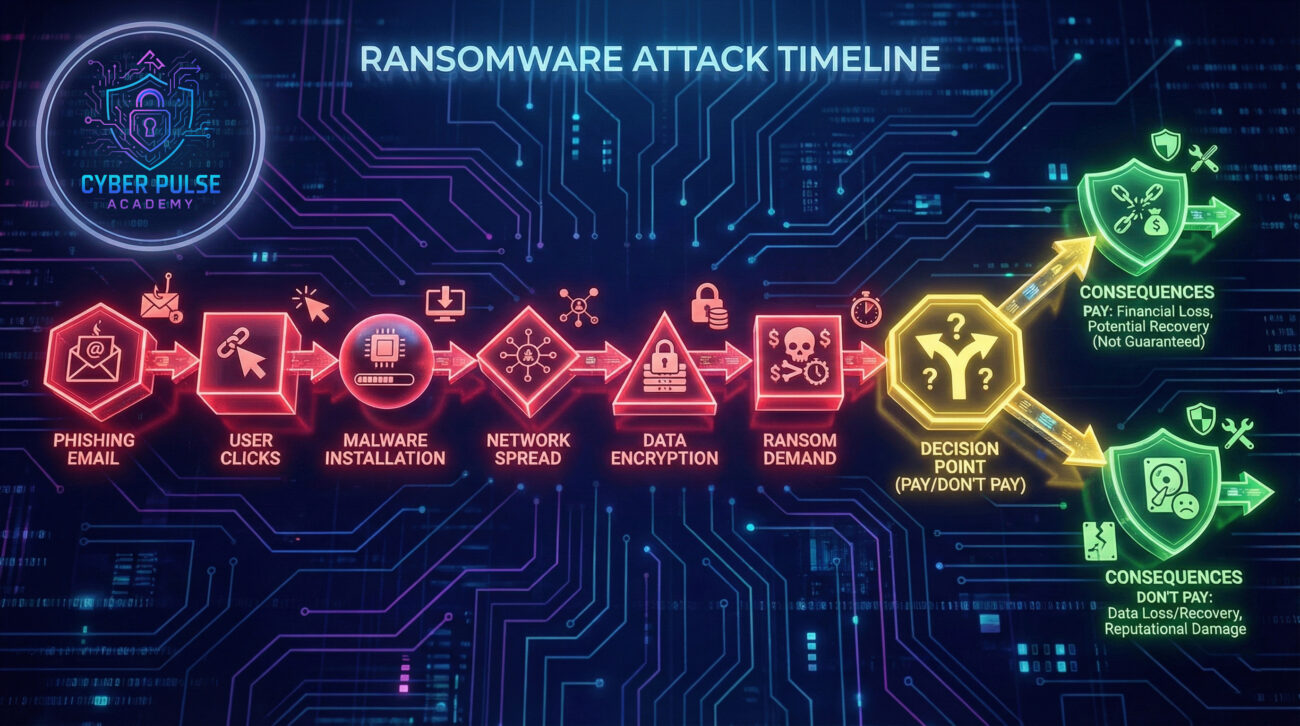
The hospital's administration faced an impossible choice: pay the ransom and potentially fund further criminal activity, or refuse and risk patient safety along with massive operational disruption. They contacted law enforcement and cybersecurity consultants. Meanwhile, emergency patients had to be redirected to hospitals 50 miles away, and non-critical procedures were canceled for days.
| Time/Stage | What Happened | Impact |
|---|---|---|
| Day 1: Initial Infection | Nurse clicked phishing email attachment containing ransomware | Malware installed silently; began spreading through network |
| Day 2: Encryption & Demand | Ransomware activated, encrypting files across all connected systems | Critical systems offline; patient care disrupted; ransom demand displayed |
| Days 3-5: Crisis Management | Hospital declared internal emergency; contacted authorities and cybersecurity firms | Emergency patients redirected; estimated losses: $250,000 per day |
| Week 2: Recovery | Decided not to pay ransom; began restoring from backups (some outdated) | Full operations restored after 11 days; total cost: $3.2 million + reputational damage |
This scenario illustrates why financially motivated groups specifically target sectors like healthcare and education: they provide essential services where downtime can have life-or-death consequences, creating pressure to pay ransoms quickly.
Understanding how attackers think is crucial for effective defense. Let's explore a simple attack path a financially motivated group might use, and how defenders can counter it.
Attack Path: The group begins by researching employees of a mid-sized accounting firm on LinkedIn. They identify the accounts payable manager and learn about their role, colleagues, and even recent company events. Using this information, they craft a highly targeted phishing email pretending to be the CEO, referencing a real upcoming company meeting. The email requests an "urgent, confidential wire transfer" to a new vendor account. The message creates urgency ("need this done before the board meeting tomorrow") and uses social pressure ("this is highly sensitive").
Defender's Counter-Move: The accounting firm has implemented a simple but effective policy: all payment requests over $10,000 require verbal confirmation through a known phone number (not one provided in the email). When the accounts payable manager receives the suspicious request, they call the CEO's office directly using the company directory. The CEO confirms no such request was made, and the attack is thwarted. The incident is reported to IT, who uses it as a training example for the entire company.

For a financially motivated group, every potential target is evaluated through a simple lens: risk versus reward. They look for the path of least resistance to the highest payoff. Time is money, so they prefer automated attacks that can scale, but will invest in targeted approaches for high-value victims. Their entire operation is metrics-driven – they track success rates, average payouts, and operational costs just like any business. They particularly favor targets with weak authentication, poor employee training, and insufficient backup systems, as these dramatically increase their success probability while decreasing their time investment.
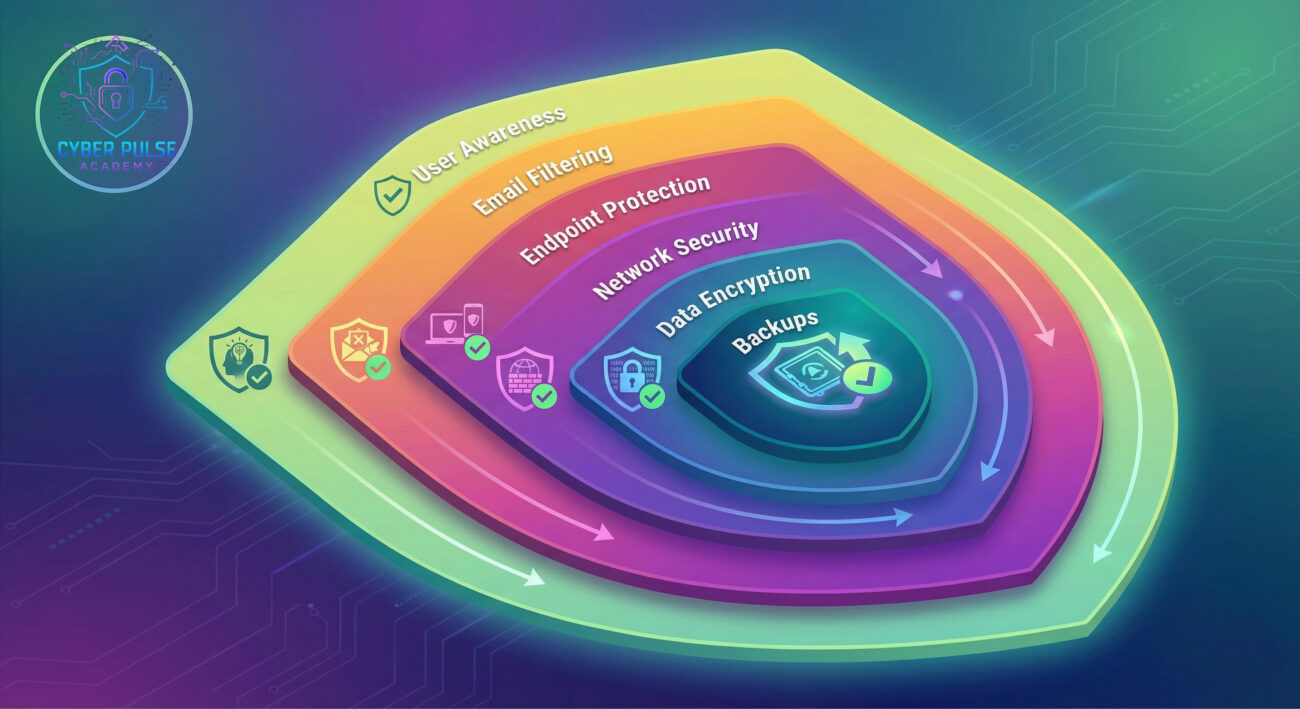
Defenders view financially motivated groups as persistent business adversaries who will relentlessly probe for weaknesses. The defensive strategy focuses on creating multiple layers of protection so that a single failure doesn't become catastrophic. Emphasis is placed on detection and response capabilities, assuming that some attacks will inevitably get through. Defenders prioritize protecting critical assets, maintaining operational resilience, and ensuring rapid recovery. They understand that their goal isn't to create an impenetrable fortress, but to make successful attacks too difficult, expensive, and time-consuming to be worthwhile for the criminal enterprise.
Financially motivated groups represent one of the most significant and growing threats in our digital world. Unlike other threat actors, their primary driver is pure profit, making them highly adaptive, persistent, and dangerous. However, understanding their methods and motivations gives us powerful tools to defend against them.
Let's recap the essential lessons:
The most important takeaway is this: cybersecurity isn't just about technology – it's about people, processes, and preparedness. By implementing the practical steps outlined in this guide, you significantly reduce your risk of becoming another statistic in the growing economy of cybercrime.
Have you encountered a suspicious email that might have been from a financially motivated group? What security practices have you found most effective? Share your thoughts and questions in the comments below – let's build a community of security-aware individuals who can help protect each other in our increasingly digital world.
For further reading, check out our guides on identifying advanced phishing attempts and implementing two-factor authentication across all your accounts.
Stay vigilant, stay informed, and remember: the best defense against financially motivated cybercrime is a prepared and aware user.
Every contribution moves us closer to our goal: making world-class cybersecurity education accessible to ALL.
Choose the amount of donation by yourself.