










Certification Courses
Hands-On Labs
Threat Intelligence
Latest Cyber News
MITRE ATT&CK Breakdown
All Cyber Keywords
Ever wondered how websites know you're really you? When you create a new bank account online or access sensitive work documents, how does the system verify that the person on the other end isn't an impostor? This verification process is called identity proofing, and it's the digital world's equivalent of showing your passport at airport security.
In this comprehensive guide, you'll learn exactly what identity proofing is, why it's crucial for your online safety, and how to navigate it confidently. We'll break down complex cybersecurity concepts into everyday language, complete with real-world examples and actionable steps to protect your digital identity.
Imagine you're renting an apartment. The landlord asks for your ID, pay stubs, and references to prove you're who you say you are and that you can afford the rent. Identity proofing is the digital version of this process, it's how online services verify that you are the legitimate owner of the identity you're claiming.
At its core, identity proofing is the process of collecting, validating, and verifying information about a person to establish that they are who they claim to be. This happens when you open a new online bank account, apply for government benefits digitally, or access your company's confidential systems remotely.
Think of it as a multi-layered security checkpoint. Just like airport security checks your boarding pass, ID, and sometimes even your fingerprints, digital identity proofing combines multiple verification methods to create confidence that you're not an impersonator, bot, or fraudster.
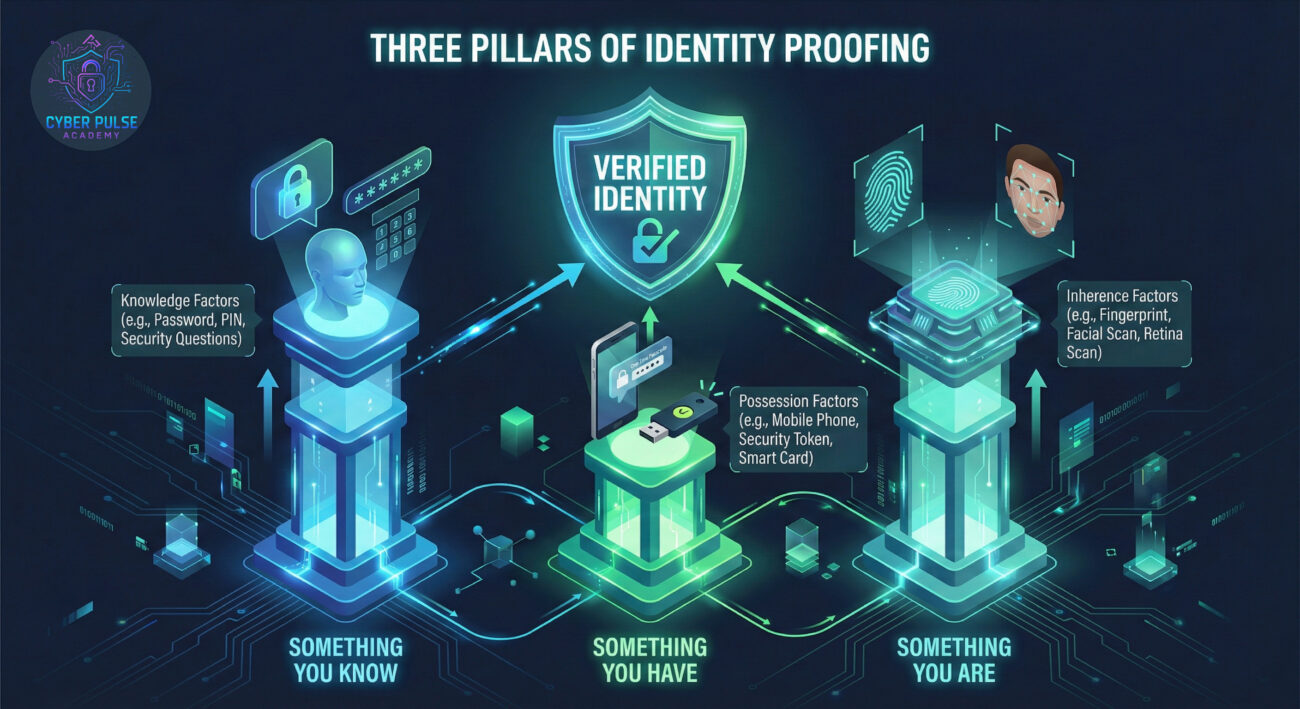
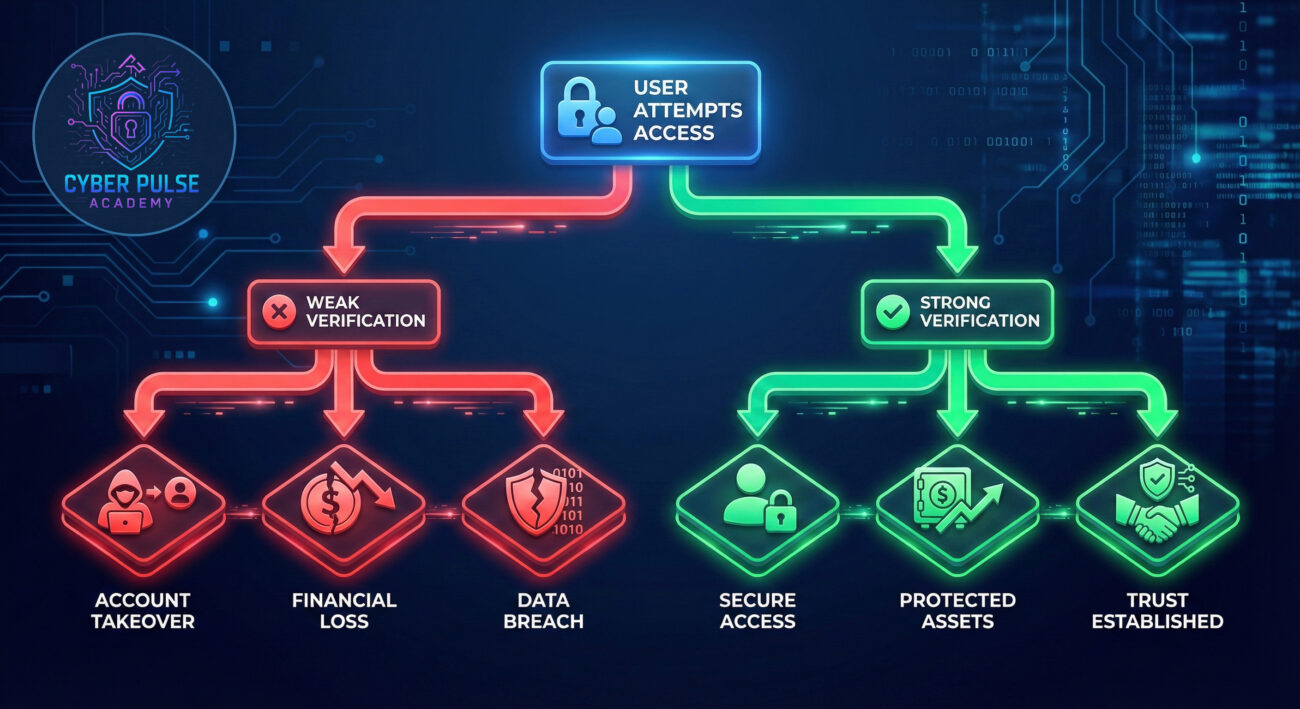
Identity proofing has become our first line of defense in an increasingly digital world. According to the Federal Trade Commission, identity theft reports doubled from 2019 to 2020, with losses exceeding $3.3 billion. When weak identity proofing processes fail, real people suffer financial loss, emotional distress, and damaged credit.
Consider this: every time you bypass a verification step because it seems "annoying," you're essentially leaving your digital front door unlocked. The Cybersecurity and Infrastructure Security Agency (CISA) emphasizes that strong identity verification is fundamental to national and personal security in our connected age.
From protecting your social media accounts from takeover to securing your retirement savings online, proper identity proofing processes create digital trust. This isn't just about convenience, it's about preventing fraudulent accounts opened in your name, unauthorized transactions, and data breaches that start with stolen credentials.
| Term | Simple Definition | Everyday Analogy |
|---|---|---|
| Identity Proofing | The process of verifying that someone is who they claim to be before giving them access | Showing your driver's license when picking up a prescription |
| Multi-Factor Authentication (MFA) | Using two or more different methods to verify your identity | Needing both a key (something you have) and a code (something you know) to enter a building |
| Biometric Verification | Using unique physical traits like fingerprints or facial features for identification | A customs officer comparing your face to your passport photo |
| Knowledge-Based Authentication (KBA) | Questions about personal history that supposedly only you would know | Security questions like "What was your first pet's name?" |
| Synthetic Identity Fraud | Creating a fake identity using combinations of real and fabricated information | A forger creating a convincing but fake ID using parts of multiple real documents |
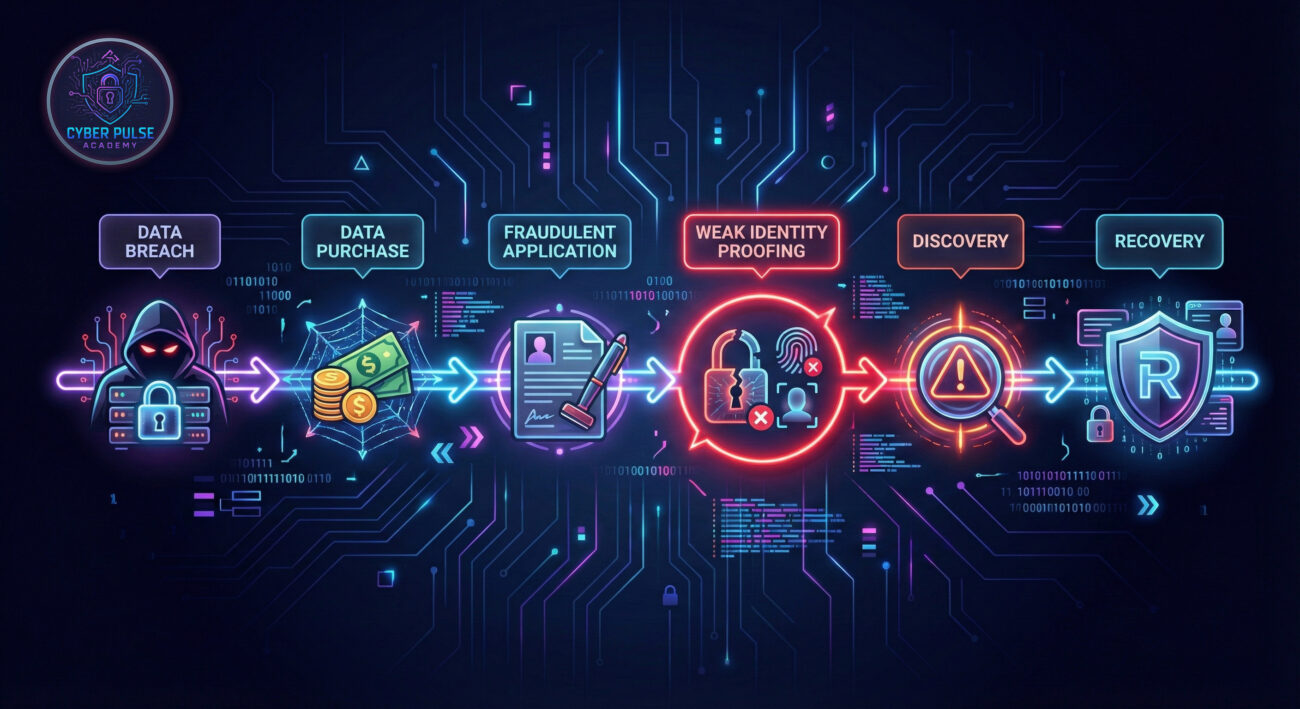
Meet Sarah, a freelance graphic designer. She recently received an email alert about a new credit card opened in her name, one she never applied for. The fraudster had used her basic personal information (name, birth date, address) found from a previous data breach to bypass weak identity proofing at an online lender.
The attacker exploited Sarah's information through a process called synthetic identity fraud, combining her real Social Security number with a slightly different name variation. Because the lender relied only on basic information matches (a weak form of identity proofing), the application was approved.
| Time/Stage | What Happened | Impact |
|---|---|---|
| Week 1 | Sarah's information was exposed in a data breach at a retail website where she shopped | Her name, email, and partial address became available on the dark web |
| Week 3 | A fraudster purchased her full profile (including SSN) from a data broker | Complete identity dossier now in criminal hands |
| Week 4 | Attacker applied for credit using "Sarah J." (her real name is Sarah without middle initial) | Weak identity proofing system at LenderX approved based on data matches alone |
| Week 6 | Sarah received the first billing statement for the fraudulent account | $8,500 in charges, credit score dropped 120 points, 40+ hours of recovery work |
| Week 8 | Sarah implemented credit freezes and strong identity monitoring | Future applications now require additional verification steps |
Different services require different verification levels. Your social media might just need an email, while your bank needs much more.
Learn more about verification levels in our guide to password security fundamentals.
MFA adds layers of protection beyond just passwords. Think of it as needing both a key and a code to enter your house.
Our detailed two-factor authentication guide explains each method.
Not every service needs your mother's maiden name or your first pet's name. Be selective about what you share.
Regularly check what information about you is publicly available and correct inaccuracies.
Legitimate services follow certain patterns. Deviations can signal phishing attempts or fraudulent sites.
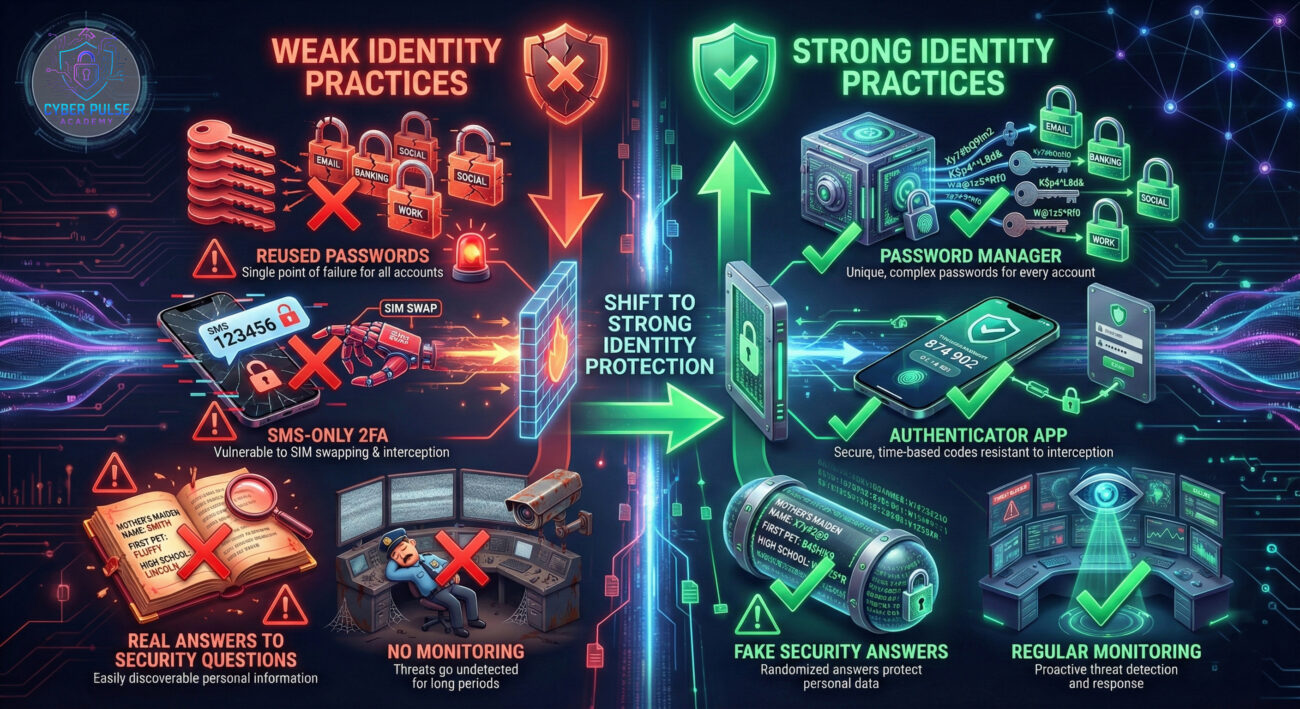
Attackers view identity proofing as an obstacle course to navigate. They're looking for the weakest link, the service with the most lax verification requirements. Their goal is to find where they can use stolen or synthetic identities with minimal friction. They particularly love services that rely only on knowledge-based authentication (like "What street did you grow up on?") since this information is often findable online or purchased cheaply on the dark web. Every extra verification step you enable is another hurdle in their path.
Defenders see identity proofing as a trust-building process. Their challenge is balancing security with user experience, making verification strong enough to prevent fraud but smooth enough that legitimate users don't abandon the process. They're implementing layered defenses, knowing that any single method can be compromised. Modern defenders are moving away from static knowledge questions toward dynamic verification methods, biometrics, and continuous authentication that checks "Is this still the right person?" throughout the session, not just at login.
You've now mastered the fundamentals of identity proofing, the digital gatekeeping that protects your online presence. Remember these key points:
Your digital identity is worth protecting as carefully as your physical wallet and keys. The few minutes you spend setting up proper identity proofing measures today can prevent months of headaches from identity theft tomorrow.
Start today: Pick one important account (email or banking), enable MFA if you haven't already, and use a unique, strong password. Then work through your other accounts systematically. Your future self will thank you.
Have you encountered particularly strong or weak identity proofing processes? What verification methods do you find most effective or frustrating? Share your experiences or questions in the comments below, let's learn from each other's digital security journeys!
Remember: In cybersecurity, staying informed is your first and best defense.
Every contribution moves us closer to our goal: making world-class cybersecurity education accessible to ALL.
Choose the amount of donation by yourself.