










Understand Log Ingestion Effortlessly
Your Friendly Cybersecurity Companion
What Is Log Ingestion?
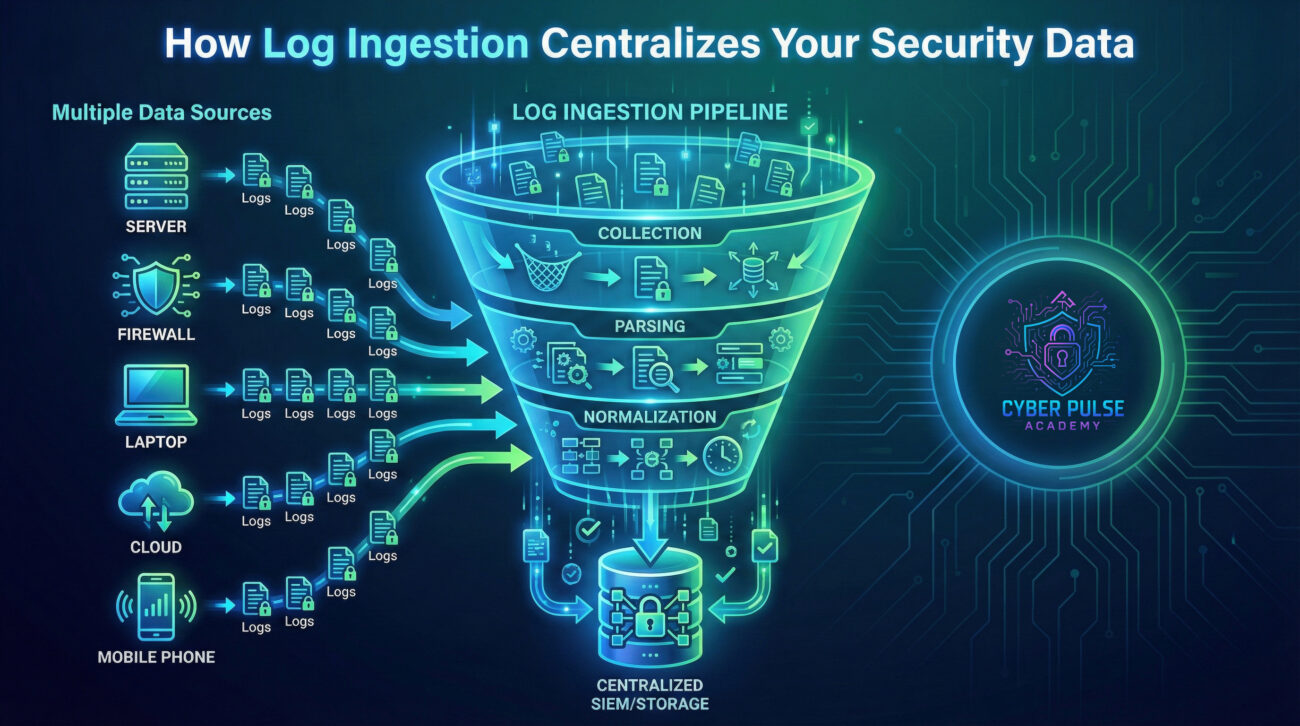
Have you ever wondered how security teams catch hackers in the act? Or how companies know when something suspicious is happening on their networks? The answer often comes down to one powerful process: log ingestion.Imagine your home has security cameras in every room. Each camera records everything that happens, who enters, what time they arrive, and what they do. Now imagine trying to review footage from 50 cameras all stored in different places, using different formats. That’s chaos, right? Log ingestion is like having a central command center that automatically collects, organizes, and stores all that footage in one searchable location.
In simple terms, log ingestion is the process of collecting data from various sources across your IT environment and funneling it into a centralized system for analysis and storage.
In this comprehensive guide, you’ll learn exactly what log ingestion means, why it’s absolutely critical for cybersecurity, how it works in real-world situations, and how you can implement it effectively. Whether you’re an IT beginner or a small business owner wanting to understand security basics, this post will give you the foundation you need.
Why Log Ingestion Matters for Cybersecurity
Before diving deeper into log ingestion, let’s break down the technical jargon into everyday language. Understanding these terms will help you grasp why this process is so vital.Jargon vs. Simple English: A Quick Translation Guide
| Technical Term | Simple Explanation |
|---|---|
| Logs | Digital diaries that record every action on a computer or network |
| Ingestion | The process of collecting and importing data into a system |
| SIEM (Security Information and Event Management) | A central security hub that analyzes all your logs |
| Parsing | Breaking down log data into readable, organized pieces |
| Normalization | Converting different log formats into one standard format |
| Retention | How long you keep your log data stored |
The Dangerous Risks of Ignoring Log Ingestion
What happens when organizations don’t prioritize log ingestion? The consequences can be devastating:- Blind Spots Everywhere: Without centralized logs, attackers can operate undetected for months. According to IBM’s Cost of a Data Breach Report, the average time to identify a breach is 277 days.
- Compliance Nightmares: Regulations like GDPR, HIPAA, and PCI-DSS require proper log management. Failing to comply can result in massive fines.
- Slow Incident Response: When a breach occurs, scattered logs mean slower investigation times and greater damage.
- Lost Forensic Evidence: Without proper log ingestion and retention, crucial evidence may be overwritten or lost forever.
Simply put, log ingestion is the foundation of visibility in cybersecurity. You can’t protect what you can’t see.
Real-World Scenario: When Log Ingestion Saves the Day
Let me tell you the story of two companies, TechStart Solutions and SafeGuard Industries, both medium-sized businesses with similar IT infrastructures. Both faced the same threat. Only one survived unscathed.Before: TechStart’s Nightmare
It was a quiet Tuesday morning when Sarah, TechStart’s lone IT administrator, noticed something strange. Customer complaints were flooding in, accounts were locked, passwords weren’t working, and sensitive data seemed to be missing.Sarah’s heart raced as she began investigating. She checked the email server logs, but they only stored three days of data. She looked at the firewall logs, but they were in a completely different format and stored on a separate system. The application server? Those logs had been overwritten due to limited storage. Sarah was flying blind.
After three agonizing weeks of investigation, an expensive forensics team finally pieced together what happened. An attacker had compromised an employee’s credentials through a phishing email six weeks earlier. They had been quietly exfiltrating customer data ever since, covering their tracks by deleting logs wherever possible.
The damage? Over 50,000 customer records stolen. A $2.3 million regulatory fine. Reputation destroyed. TechStart Solutions filed for bankruptcy within the year.
After: SafeGuard’s Victory
Meanwhile, SafeGuard Industries faced the exact same attacker using the exact same phishing technique. But their story ended very differently.Marcus, SafeGuard’s security analyst, received an automated alert at 6:47 AM from their SIEM system. The alert indicated unusual authentication patterns, an employee account was logging in from two different countries within minutes.
Thanks to their robust log ingestion pipeline, Marcus had immediate access to:
- Email gateway logs showing the original phishing email
- Authentication logs revealing the compromised credentials
- Network logs tracking the attacker’s lateral movement
- Application logs showing attempted data access
Within 45 minutes, Marcus had isolated the threat, reset affected credentials, blocked the attacker’s IP addresses, and begun a comprehensive investigation. The attacker had been in the system for only 18 hours and accessed zero sensitive records.

SafeGuard’s CEO later said, “Our investment in log ingestion and SIEM technology paid for itself a thousand times over that day.” The difference between these two outcomes? Centralized, properly configured log ingestion.
How Log Ingestion Works: Step-by-Step
Now that you understand why log ingestion matters, let’s explore how it actually works. Whether you’re setting up your first system or evaluating your current setup, these steps will guide you.Step 1: Identify Your Log Sources
First, catalog every device and application that generates logs in your environment:- Servers (web, email, database, file)
- Network devices (firewalls, routers, switches)
- Endpoints (laptops, desktops, mobile devices)
- Cloud services (AWS, Azure, Google Cloud)
- Security tools (antivirus, IDS/IPS)
- Applications (custom software, SaaS tools)
Step 2: Choose Your Log Ingestion Platform
Select a centralized platform to receive your logs. Popular options include:- SIEM Solutions: Splunk, Microsoft Sentinel, IBM QRadar
- Open-Source Tools: Elastic Stack (ELK), Graylog, Wazuh
- Cloud-Native Options: AWS CloudWatch, Google Cloud Logging
Step 3: Configure Log Collection Agents
Install agents or configure protocols to send logs to your central platform:- Syslog: The standard protocol for sending log messages
- Agents: Lightweight software installed on devices (like Beats or Fluentd)
- APIs: For cloud services and SaaS applications
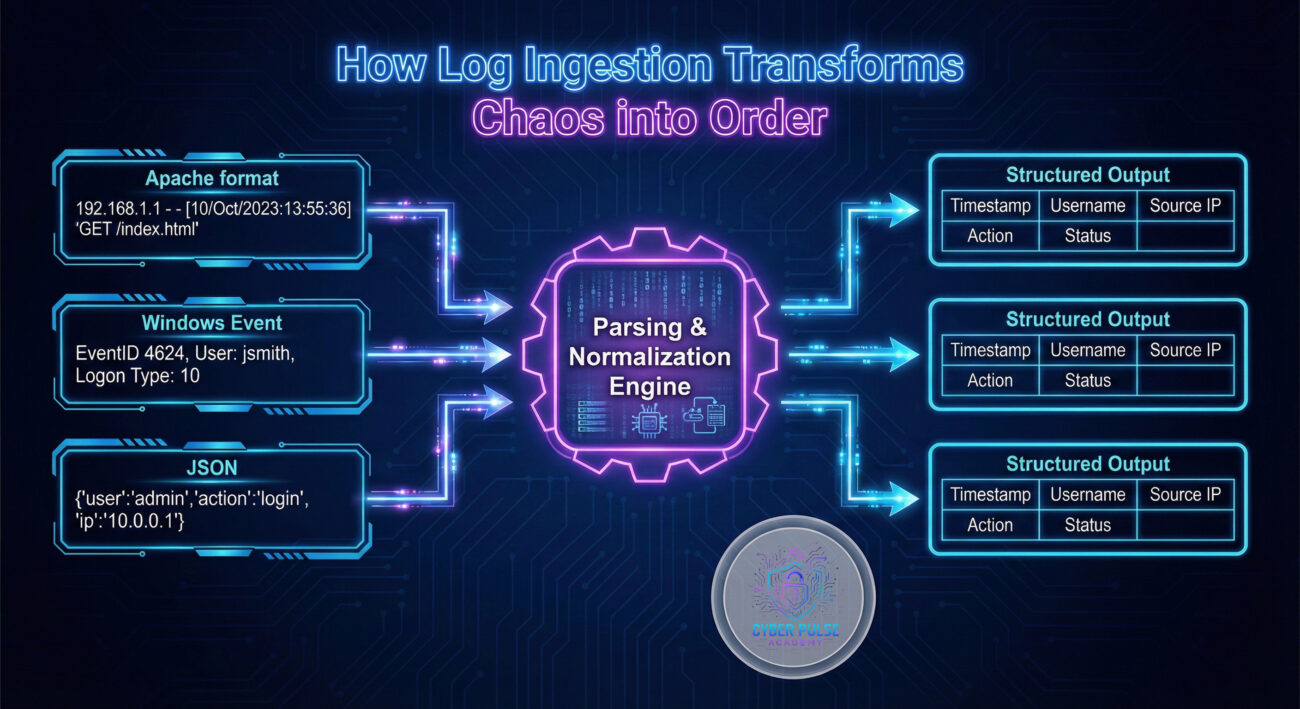
Step 4: Parse and Normalize Your Logs
Raw logs come in countless formats. Your log ingestion system must:- Parse logs to extract meaningful fields (timestamps, usernames, IP addresses)
- Normalize data so logs from different sources can be compared and correlated
Step 5: Set Retention Policies
Determine how long to keep your logs based on:- Regulatory requirements (often 1-7 years)
- Storage costs and capacity
- Investigation needs
Step 6: Create Alerts and Dashboards
Configure your system to:- Send automatic alerts for suspicious patterns
- Display real-time dashboards showing system health
- Enable quick searching for incident investigations
Step 7: Test and Validate
Regularly verify that:- All sources are sending logs correctly
- Alerts trigger when they should
- Stored logs are searchable and complete
Common Pitfalls and Best Practices
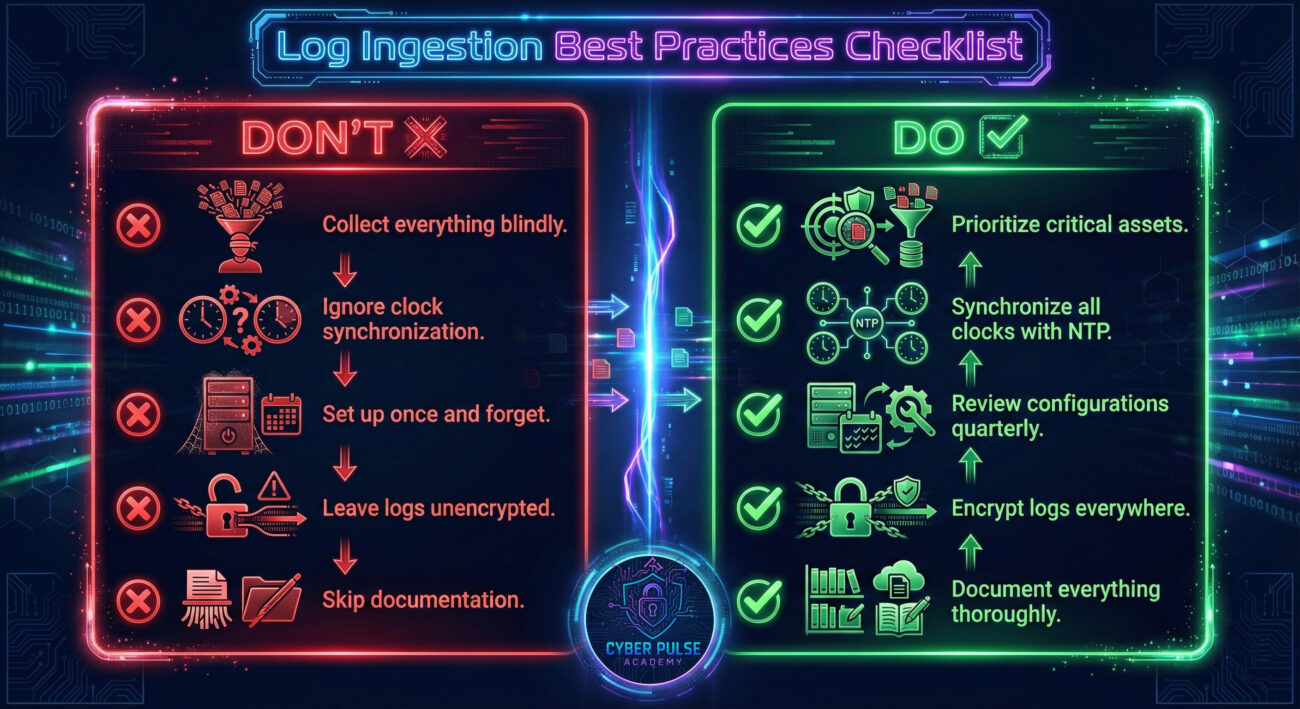
Even the best-intentioned log ingestion implementations can fail. Here’s how to avoid common mistakes and follow proven strategies.❌ Common Pitfalls to Avoid
1. Ingesting Everything Without a Strategy More isn’t always better. Collecting every possible log without prioritization leads to:- Overwhelming storage costs
- Alert fatigue from too many notifications
- Difficulty finding relevant information
2. Ignoring Time Synchronization If your devices have mismatched clocks, correlating events becomes nearly impossible. A firewall might show an attack at 3:15 PM while your server shows the related event at 3:18 PM, making investigations confusing.
3. Setting and Forgetting Log ingestion isn’t a one-time project. New devices, applications, and threats emerge constantly. Static configurations quickly become outdated.
4. Storing Logs Without Security Ironically, logs themselves become targets. If attackers access your logs, they can:
- Learn your security detection capabilities
- Delete evidence of their activities
- Extract sensitive information
5. Lacking Proper Documentation Without documentation, only one person might understand how your log ingestion works. When that person leaves, knowledge disappears.
✅ Best Practices for Success
1. Prioritize Critical Assets First Start with your most valuable and vulnerable systems:
- Authentication systems (Active Directory, SSO)
- Internet-facing servers
- Databases containing sensitive data
- Security infrastructure
2. Implement NTP (Network Time Protocol) Ensure all devices synchronize their clocks to a central time source. This makes log correlation accurate and reliable.
3. Use a Tiered Retention Strategy
- Hot storage (1-30 days): Fast, searchable, expensive
- Warm storage (30-90 days): Accessible but slower
- Cold storage (90+ days): Archived for compliance, hard to search
4. Encrypt Logs in Transit and at Rest Protect your log data using TLS encryption for transmission and AES encryption for storage.
5. Review and Update Quarterly Schedule regular reviews to:
- Add new log sources
- Tune alert thresholds
- Remove obsolete configurations
- Update parsing rules
6. Test Your Detection Capabilities Run periodic tests to ensure your log ingestion catches suspicious activity. Tools like Atomic Red Team can simulate attacks safely.
Take Action: Your Next Steps
Congratulations! You now understand what log ingestion is, why it’s essential for cybersecurity, and how to implement it effectively. Let’s recap the key takeaways:- Log ingestion centralizes security data from across your environment
- Without it, you’re flying blind against cyber threats
- Proper implementation can mean the difference between a minor incident and a catastrophic breach
- Success requires ongoing maintenance, not just initial setup
Your Action Plan
If you’re just starting:- Audit your current log sources, do you know what’s generating logs?
- Explore free tools like Graylog or Elastic SIEM
- Start with authentication and firewall logs as your foundation
If you have existing log management:
- Verify all critical systems are sending logs
- Check your time synchronization across devices
- Test your alerting by simulating suspicious activity
- Review your retention policies for compliance
Continue Learning
Log ingestion is just one piece of the cybersecurity puzzle. Consider exploring related topics like:- Threat Detection and Response
- SIEM Implementation Strategies
- Security Operations Center (SOC) Basics
Remember: Every security expert started as a beginner. The fact that you’re learning about log ingestion today puts you ahead of countless others who remain vulnerable.
Have questions about log ingestion or want to share your implementation experience? Drop a comment below or connect with us on social media. Together, we can build a more secure digital world.