
















Certification Courses
Hands-On Labs
Threat Intelligence
Latest Cyber News
MITRE ATT&CK Breakdown
All Cyber Keywords
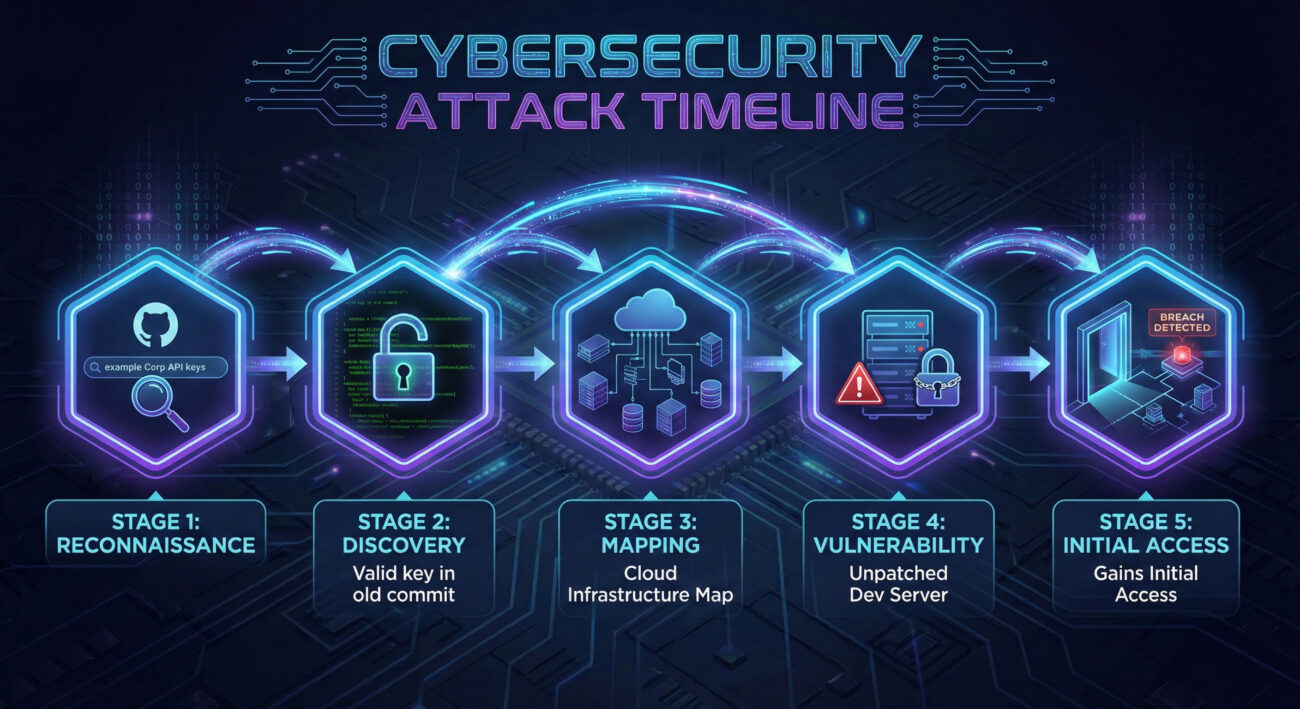
Reconnaissance is the systematic information gathering that every cyber attacker performs before launching an assault. Think of it as the attacker's homework, and skipping it is like planning a heist without ever seeing the building blueprints.
This foundational phase determines the success or failure of everything that follows. A skilled attacker who executes effective Reconnaissance understands your digital footprint, identifies your weakest points, and crafts a bespoke attack that bypasses generic defenses. For defenders, catching this phase is your golden opportunity to stop an attack before it truly begins, turning a potential breach into a mere failed attempt.
Imagine a professional cat burglar targeting a luxury neighborhood. They don't just randomly pick a house and smash a window. First, they case the joint. They drive through the area at different times, noting which houses have no cars during the day (empty targets), which have visible alarm stickers (security vendors), and which have a gardener who leaves a side gate unlocked (third-party vulnerabilities).
They might sift through the target's trash ("dumpster diving" for discarded documents) to find names, bank info, or schedules. They could pose as a utility worker to get a closer look at locks and cameras ("phishing" for physical access). Every piece of data, the brand of the lock, the dog walker's schedule, the model of the security system, shapes their final, stealthy entry plan.
This is Reconnaissance. Your company's digital "neighborhood" is the public internet and your online presence. The "cat burglar" is the threat actor. The "trash" is your exposed data on code repositories, breached password databases, and outdated subdomains. The goal isn't to break in yet; it's to learn everything needed to break in successfully and silently.
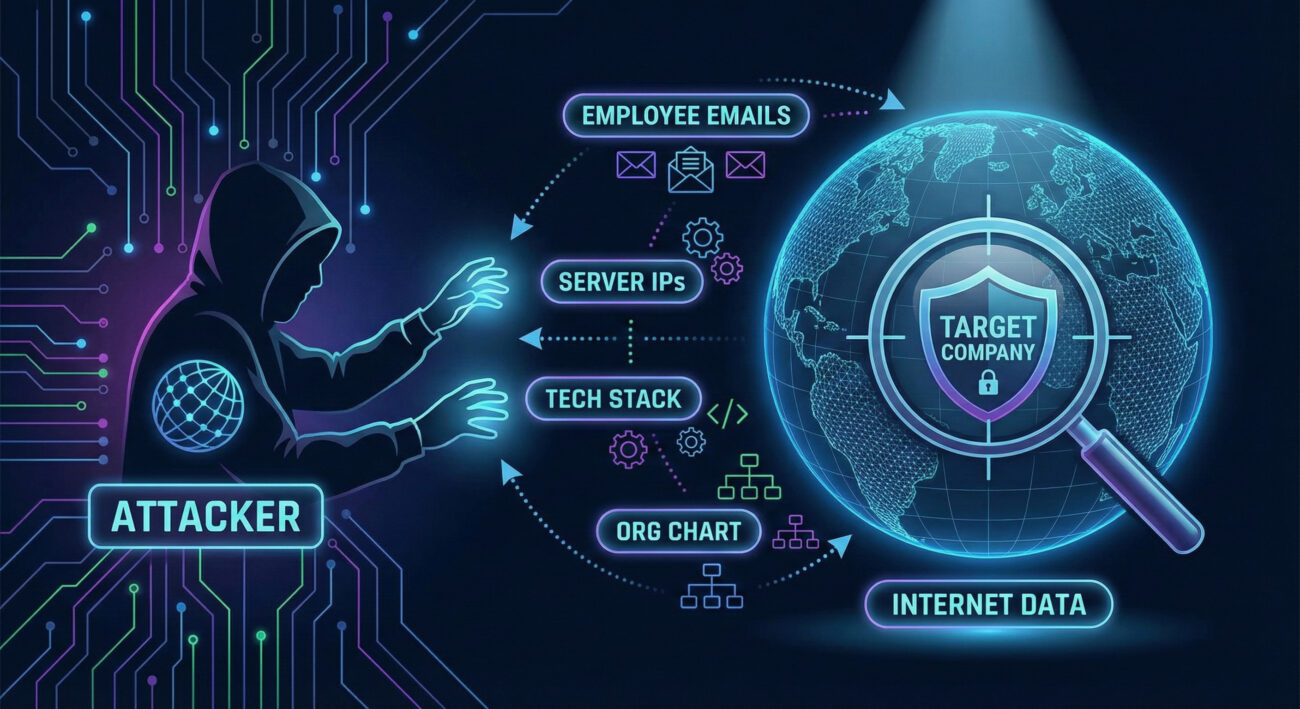
test.example.com or legacy.example.com).From the attacker's view, Reconnaissance is about building a target dossier. Our cat burglar's goal is confidence and precision. The feeling is one of calculated patience. The methodology is systematic: start broad (the neighborhood), then narrow in (the specific house, its routines, its weaknesses). Every bit of information reduces risk and increases the likelihood of a clean, untraceable entry.
# Using nslookup for DNS enumeration (Passive/Active Recon)
        nslookup
        > set type=any
        > server 8.8.8.8
# Using Google's DNS
        > ls -d example.com
# Attempts a zone transfer (often restricted, but worth trying)


        # Using theHarvester to gather OSINT
        theHarvester -d "example.com" -b google,linkedin


        # Simple port scan with netcat (Active Scanning)
        for port in {80,443,22,3389}; do
          nc -zv target-ip $port 2>&1 | grep succeeded
        done
From the defender's chair, you are the Neighborhood Watch coordinator. You can't stop the burglar from driving through the neighborhood (passive recon). But you can look for the unfamiliar car circling the block multiple times, the person taking photos of houses, or someone checking door handles. Your goal is to identify the suspicious pattern before the break-in occurs.
/wp-admin/, /phpmyadmin/), or requests with tools like "sqlmap" or "nikto" in the User-Agent string.dnsrecon or sublist3r patterns.Hypothesis: "An adversary is performing targeted subdomain enumeration against our primary domain prior to a phishing campaign."
Hunt: Query DNS logs for sources generating an abnormally high volume of unique subdomain permutations (e.g., api-dev, mail-test, vpn-staging) within a short time window, especially from IPs associated with cloud/VPS providers (DigitalOcean, AWS, Linode) not used by your legitimate employees.
title: Potential DNS Reconnaissance / Zone Transfer Attempt
description: Detects multiple AXFR or IXFR type DNS queries which are indicative of a DNS zone transfer attempt, a common reconnaissance technique.
logsource:
    category: dns
detection:
    selection:
        query_type:
            - 'AXFR'
            - 'IXFR'
    condition: selection
falsepositives:
    - Legitimate network administration or DNS replication between trusted servers
level: medium
Narrative: The 2020 SolarWinds SUNBURST compromise is a masterclass in sophisticated cyber operations. Before the infamous malicious update was deployed, the threat actors (believed to be APT29/Cozy Bear) conducted extensive, patient reconnaissance.
Explicit Connection: In the SolarWinds attack, the threat group used Reconnaissance when they systematically mapped SolarWinds' internal network, development environment, and update infrastructure after gaining an initial foothold. This allowed them to understand the build process, identify the perfect vehicle for their malware (the Orion platform's update mechanism), and craft an attack that remained undetected for months, ultimately compromising thousands of downstream customers.
Their recon was so thorough that they even identified and avoided certain high-security customer networks, demonstrating how recon informs not just the attack, but also the attacker's risk assessment.
Below are the top-level Techniques for TA0043 - Reconnaissance. Remember, each of these contains numerous Sub-techniques that detail specific procedures. This table is your high-level map.
| Technique ID | Name | Brief Purpose |
|---|---|---|
| T1595 | Active Scanning | Probe victim's infrastructure via network scans to gather information about IPs, open ports, and services. |
| T1596 | Search Open Technical Databases | Use online resources (Shodan, Censys, SSL certs) to find victim assets and technical details. |
| T1590 | Gather Victim Network Information | Collect data about the victim's network (IP ranges, domain names, DNS) to understand their perimeter. |
| T1589 | Gather Victim Identity Information | Collect employee names, emails, and social profiles to enable targeted social engineering. |
| T1594 | Search Victim-Owned Websites | Analyze the victim's own public websites and posts for technical details and employee information. |
| T1592 | Gather Victim Host Information | Discover details about the victim's operating systems, software, and hardware to find vulnerabilities. |
Every contribution moves us closer to our goal: making world-class cybersecurity education accessible to ALL.
Choose the amount of donation by yourself.