


Certification Courses
Hands-On Labs
Threat Intelligence
Latest Cyber News
MITRE ATT&CK Breakdown
All Cyber Keywords
Have you ever wondered who's behind the biggest, most sophisticated cyber attacks in the news? The ones that shut down hospitals, steal national secrets, or influence elections? You're about to learn about the digital world's most formidable players: nation-state actors.
Imagine international espionage, but instead of spies in trench coats, it's teams of hackers with keyboards. Instead of stealing physical documents, they siphon data at the speed of light. This is the realm of the nation-state actor.
A nation-state actor is a hacker or hacking group sponsored by a country's government to conduct cyber operations for political, economic, or military gain. They're not lone teenagers in basements; they are well-funded, highly skilled professionals with the resources of a government behind them.
In this guide, you'll learn what makes these actors so dangerous, see a real-world example of their impact, and, most importantly, discover practical steps you can take to protect yourself and your organization from their advanced tactics. Let's dive in.
You might think, "I'm not a government agency or a large corporation. Why should I care?" The truth is, nation-state actors often target supply chains. To get to a big target (like a defense contractor), they might first attack a smaller supplier, a software vendor, or even use popular websites to spread malware. Your data or your company's access could be a stepping stone.
According to the Cybersecurity and Infrastructure Security Agency (CISA), these threats are among the most sophisticated and persistent. Recent years have seen a sharp rise in incidents, from the SolarWinds breach affecting thousands of companies to ransomware attacks on critical infrastructure. A report by CSO Online highlights that businesses now rank nation-state attacks as a top-tier threat.
Their goals vary: stealing intellectual property to boost a country's economy, gathering intelligence for geopolitical advantage, disrupting critical services during times of tension, or spreading disinformation to influence public opinion. Understanding this landscape is the first step in building effective defenses.
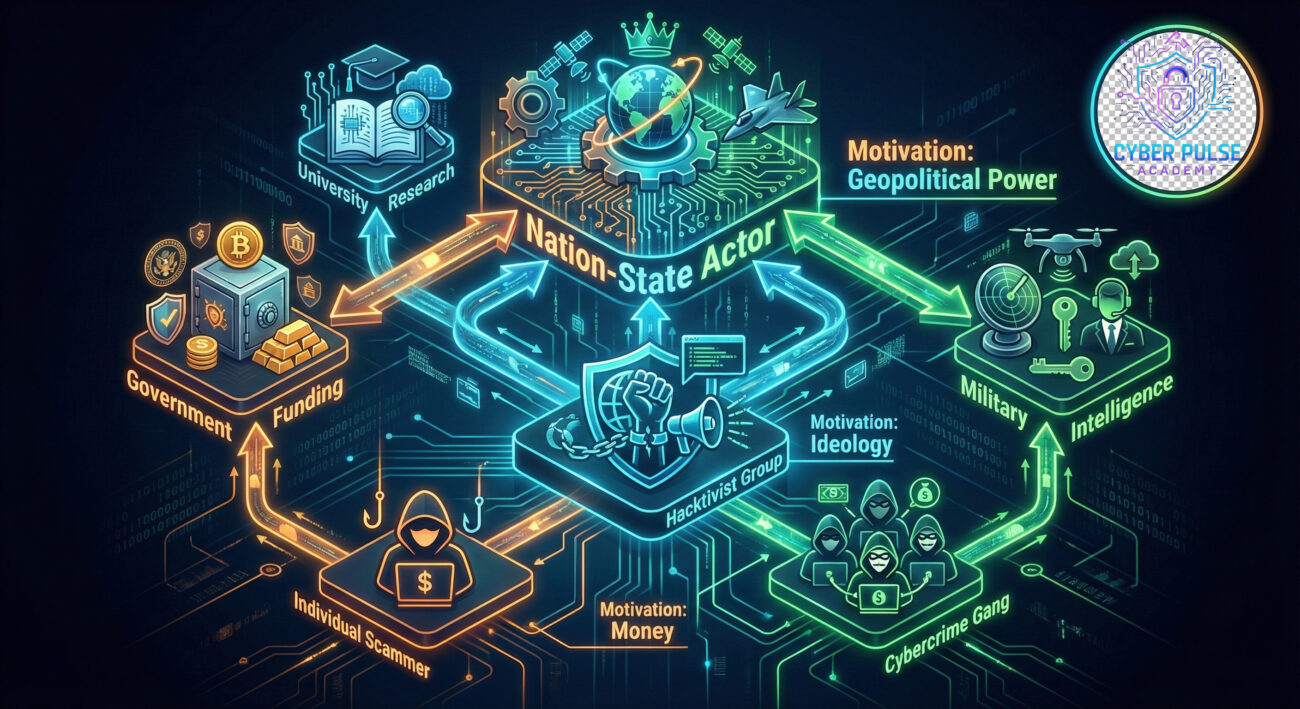
Let's break down the jargon into plain English. Here are the essential terms you need to know.
| Term | Simple Definition | Everyday Analogy |
|---|---|---|
| Advanced Persistent Threat (APT) | A prolonged, targeted cyber attack where an intruder remains in a network undetected for a long time, often used by nation-state actors. | A spy who moves into your apartment complex, slowly learns everyone's routines, and copies your mail for months without you noticing. |
| Zero-Day Exploit | A vulnerability in software that is unknown to the vendor. Attackers use it before a fix exists, making it highly valuable. | A secret flaw in a bank vault's design that only thieves know about. The bank can't fix it because they don't know it's there. |
| Supply Chain Attack | Targeting a less-secure element in a supply chain (like a software update) to compromise the final, more valuable target. | Poisoning the bottled water at a factory to make an entire office building sick, instead of trying to infiltrate the office directly. |
| Cyber Espionage | The use of computer networks to gain illicit access to confidential information, typically for state-level intelligence purposes. | Digital wiretapping and secret photography, but conducted across the internet to steal blueprints, plans, or communications. |
| Attribution | The difficult process of identifying who is behind a cyber attack. Nation-state actors are experts at hiding their tracks. | Trying to figure out which country sent a spy, but all you have are fake passports, disguised voices, and routed communications. |
Let's follow "Maria," a senior engineer at "VoltFlow Energy," a mid-sized power grid management software company. Her story illustrates how a nation-state actor operates.
Maria's company uses a popular project management tool. One day, she receives a phishing email that looks like a legitimate security update notification from that tool. The email is flawless, perfect grammar, correct logos, and it references an internal project name. This is "spear-phishing," a hallmark of a sophisticated actor who has done their research. Maria, busy and trusting, clicks the link.
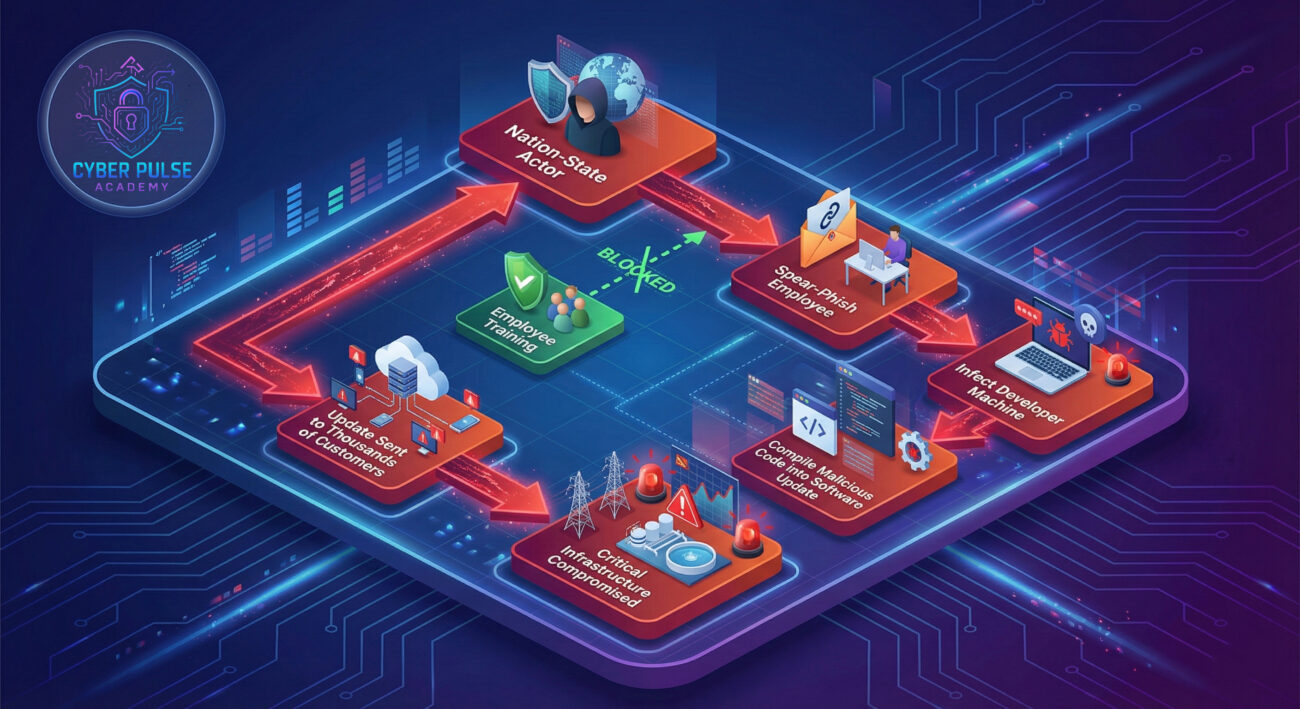
That click installed malware that gave the attackers a foothold in VoltFlow's network. For six months, they moved silently, mapping the network, stealing credentials, and eventually gaining access to the servers where the power grid management software was developed. They inserted a hidden backdoor into a routine software update.
When that compromised update was automatically sent to dozens of power utilities, the nation-state actor gained control inside critical infrastructure. Their ultimate goal wasn't immediate destruction; it was positioning, having the ability to disrupt power during a future geopolitical crisis.
| Time/Stage | What Happened | Impact |
|---|---|---|
| Day 0: Reconnaissance | Attackers research VoltFlow employees on LinkedIn and social media, identifying Maria as a target. | Enables highly tailored, convincing phishing attack. |
| Day 1: Initial Compromise | Maria clicks the link, installing stealthy malware. | Breach achieved. Attackers are inside the corporate network. |
| Months 1-6: Persistence & Movement | Attackers explore, escalate privileges, and locate critical software development servers. | Complete network map created. Preparation for major attack phase. |
| Month 7: Payload Insertion | Backdoor code is secretly added to a legitimate software update. | The "weaponized" update is ready for distribution to all customers. |
| Month 8: Supply Chain Compromise | Utilities install the update, unknowingly giving attackers access to their control systems. | Critical national infrastructure is now vulnerable to remote disruption. |
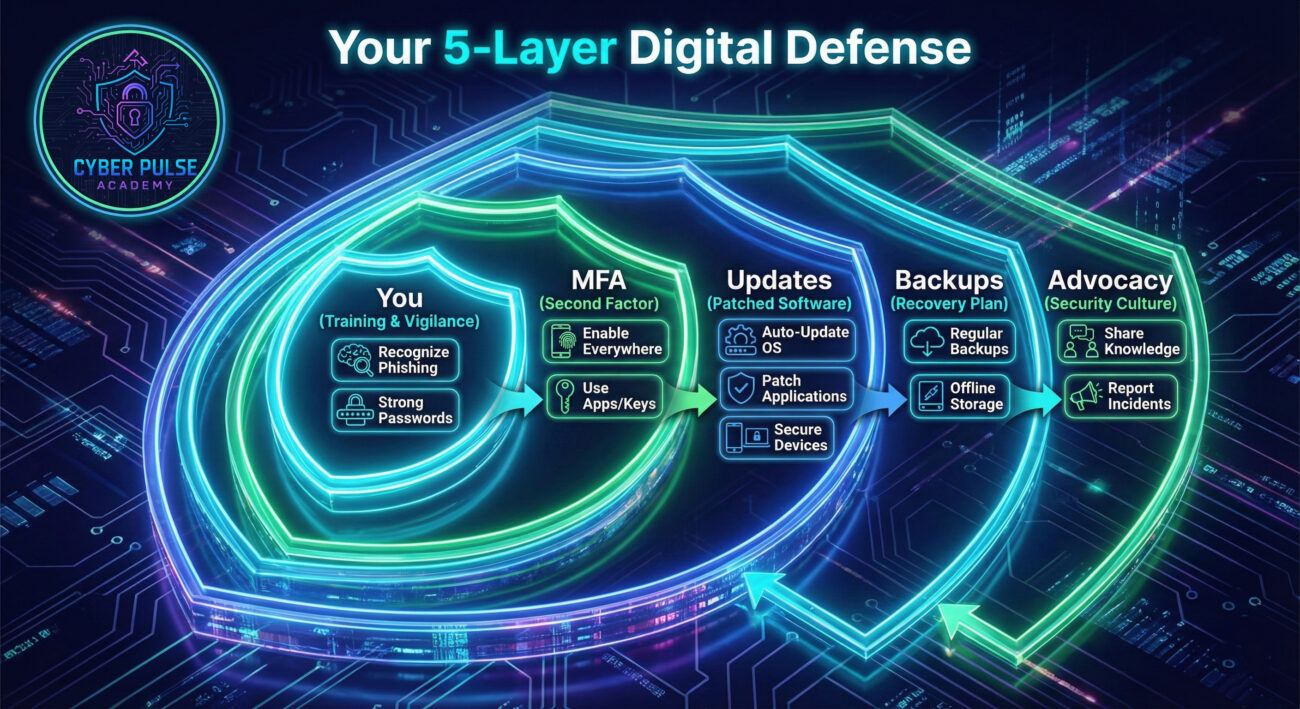
While you can't single-handedly stop a government-backed hacker, you can build defenses that make you a very hard target. Here’s a step-by-step guide for individuals and small teams.
The most common entry point is a person. Training is your first line of defense.
A password alone is weak. MFA adds a critical second layer.
Updates patch security holes that attackers exploit.
Shifting your mindset is powerful. This is about preparedness.
Cybersecurity is a team sport. Your voice matters.
Let's look at a simple, high-level example of how an attacker thinks and how a defender can respond.
Simple Attack Path (The Attacker's Play): A nation-state actor wants intellectual property from "TechNova Inc." Instead of attacking TechNova's strong defenses directly, they target "CloudSupport Pro," the smaller, less-security-focused IT company that manages TechNova's helpdesk software. By compromising CloudSupport's update server, they can push malware to TechNova (and all of CloudSupport's other clients) through a trusted channel. This bypasses TechNova's firewalls because the update comes from a verified, expected source.
Defender's Counter-Move (The Security Mindset): TechNova's security team practices "vendor risk management." Before using CloudSupport Pro, they asked about the vendor's own security practices, demanded evidence of regular security audits, and insisted all updates be delivered over encrypted channels with integrity checks (like digital signatures). They also segment their network, so the helpdesk software has limited access to the servers holding the valuable intellectual property. This "defense-in-depth" approach contains the damage even if the initial breach occurs.
For a nation-state actor, the mission is everything: steal this data, maintain this access, achieve this geopolitical objective. Time and stealth are their primary weapons. They care about finding the one unlocked door in a fortress, the unpatched server, the trusting employee, the vulnerable third-party vendor. Their goal is to get in, achieve their objective, and remain undetected for as long as possible to enable future operations. Failure is not an option when state resources are invested.
The defender's mission is to protect the integrity, confidentiality, and availability of systems and data. They know they can't block every possible attack, so they focus on raising the cost for the attacker. They implement layered defenses (MFA, patches, segmentation), monitor for anomalous activity, and have plans to detect, respond, and recover quickly. Their mindset is resilience: assuming a breach will happen and being prepared to limit its impact and eject the threat.
Understanding nation-state actors isn't about fostering fear; it's about building awareness and resilience. These powerful threats highlight why cybersecurity fundamentals are non-negotiable for everyone, from individuals to global enterprises.
Your key takeaways:
By demystifying this complex topic and taking proactive steps, you move from being a potential victim to an informed and protected participant in our connected world.
Did this guide help you understand the world of nation-state actors? What cybersecurity topic should we break down next? Share your thoughts or questions in the comments below, and let's continue the conversation about building a more secure digital future together.
Every contribution moves us closer to our goal: making world-class cybersecurity education accessible to ALL.
Choose the amount of donation by yourself.