

















Certification Courses
Hands-On Labs
Threat Intelligence
Latest Cyber News
MITRE ATT&CK Breakdown
All Cyber Keywords
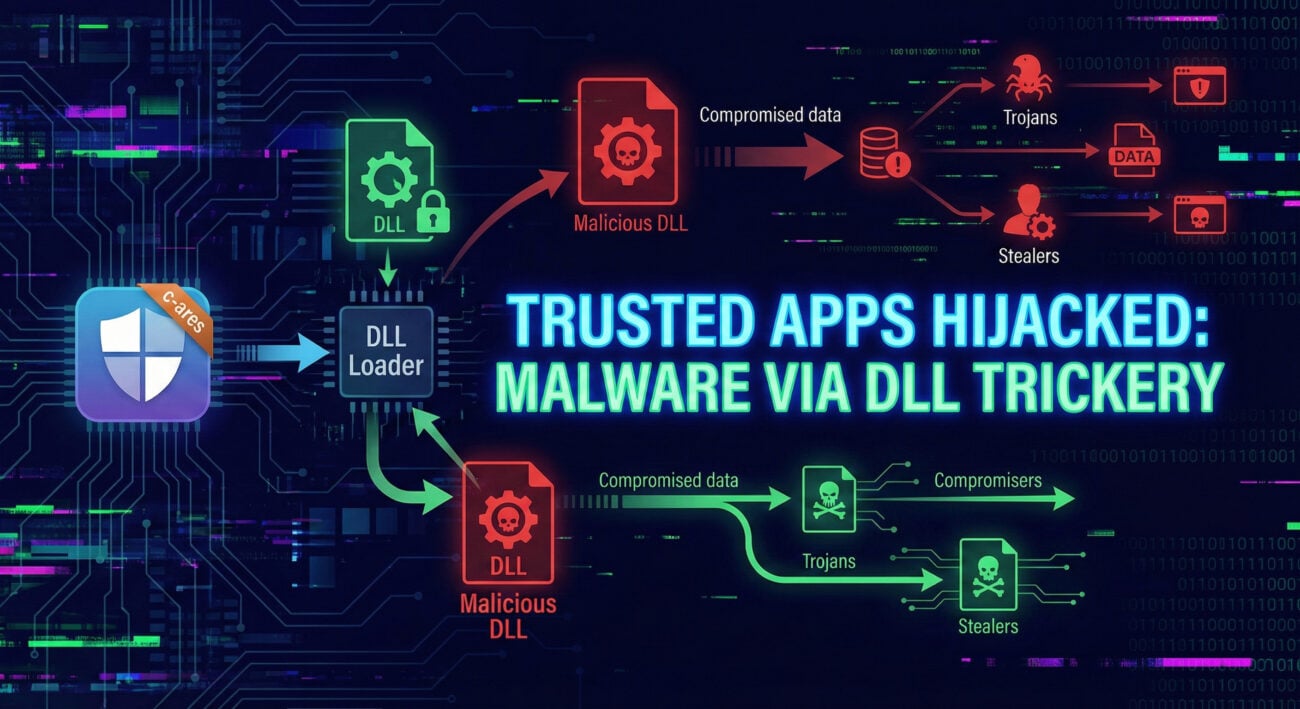
Network Trust Dependencies involve mapping relationships between organizations, domains, and third-party services to identify valuable attack paths that bypass direct security controls. Think of it as drawing a map of who trusts whom in the digital world to find the weakest link in the chain.
ATT&CK ID T1590.003
Tactics Reconnaissance
Platforms PRE (Windows, Linux, macOS, Cloud, Network)
Difficulty 🟢 Low
Prevalence High
Imagine you're trying to get into a highly secure office building. The front door has multiple guards, biometric scanners, and reinforced locks, it's practically impenetrable. But what if the building shares a ventilation system with the coffee shop next door? Or what if the CEO's personal assistant uses the same dry cleaner as you?
Network Trust Dependencies work on the same principle. Instead of attacking your main network directly, attackers look for the digital equivalent of shared ventilation systems, trust relationships between your organization and others that could provide a backdoor entry.
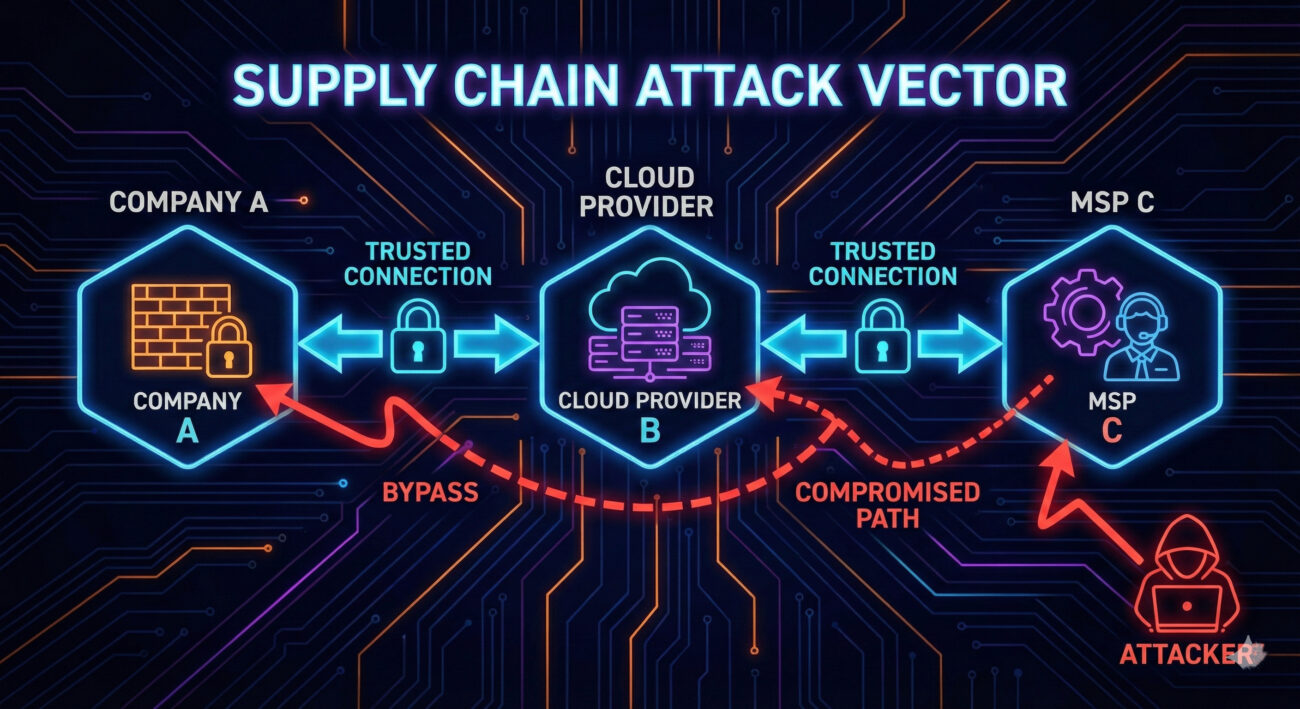
These dependencies come in many forms: cloud service providers that sync with your directory, managed security providers with remote access, subsidiaries with domain trusts, or even vendors with VPN connections to your billing systems. Each represents a potential attack vector that might be less defended than your primary perimeter.
Before diving deeper, let's clarify essential terminology. Understanding these terms will help you grasp both the attack and defense aspects of this technique.
| Term | Definition | Why It Matters |
|---|---|---|
| Domain Trust | A relationship between two Active Directory domains that allows users in one domain to access resources in another | Attackers can move laterally between trusted domains once they compromise one |
| Federation Trust | An authentication agreement between organizations using protocols like SAML or OAuth | Compromising a federated partner can lead to access in your environment |
| Third-Party Risk | The security risk introduced to your organization by vendors, suppliers, or partners | Your security is only as strong as your weakest trusted partner |
| Attack Surface | All possible points where an unauthorized user can try to enter your systems | Trust dependencies dramatically expand your attack surface beyond your control |
| Supply Chain Attack | An attack that targets a less-secure element in the supply chain to reach the primary target | Network trust dependencies are the reconnaissance phase for supply chain attacks |
A sophisticated attacker doesn't start by trying to breach your firewall. They begin by understanding your ecosystem. Here's their typical playbook:
nltest or BloodHound) and federation relationships from publicly accessible endpoints.Think like a burglar casing a neighborhood. You don't just look at the target house; you observe who delivers packages, which houses share fences, who has alarm signs and who doesn't. The goal is to find the easiest path, not the most direct one.
From a red team perspective, Network Trust Dependencies represent low-hanging fruit. Why spend months trying to breach a Fortune 500 company's defenses when you can breach their small marketing agency that has VPN access to their internal networks?
Attackers use a combination of public and custom tools to map trust relationships:
Example Commands:
# Enumerate domain trusts using nltest (Windows native)
nltest /domain_trusts /all_trusts

# PowerView command to get domain trusts
Get-DomainTrust -API

# Using BloodHound Collector (SharpHound)
SharpHound.exe --CollectionMethods All --Domain corp.example.com

# Checking for federated domains via Office 365 (recon)
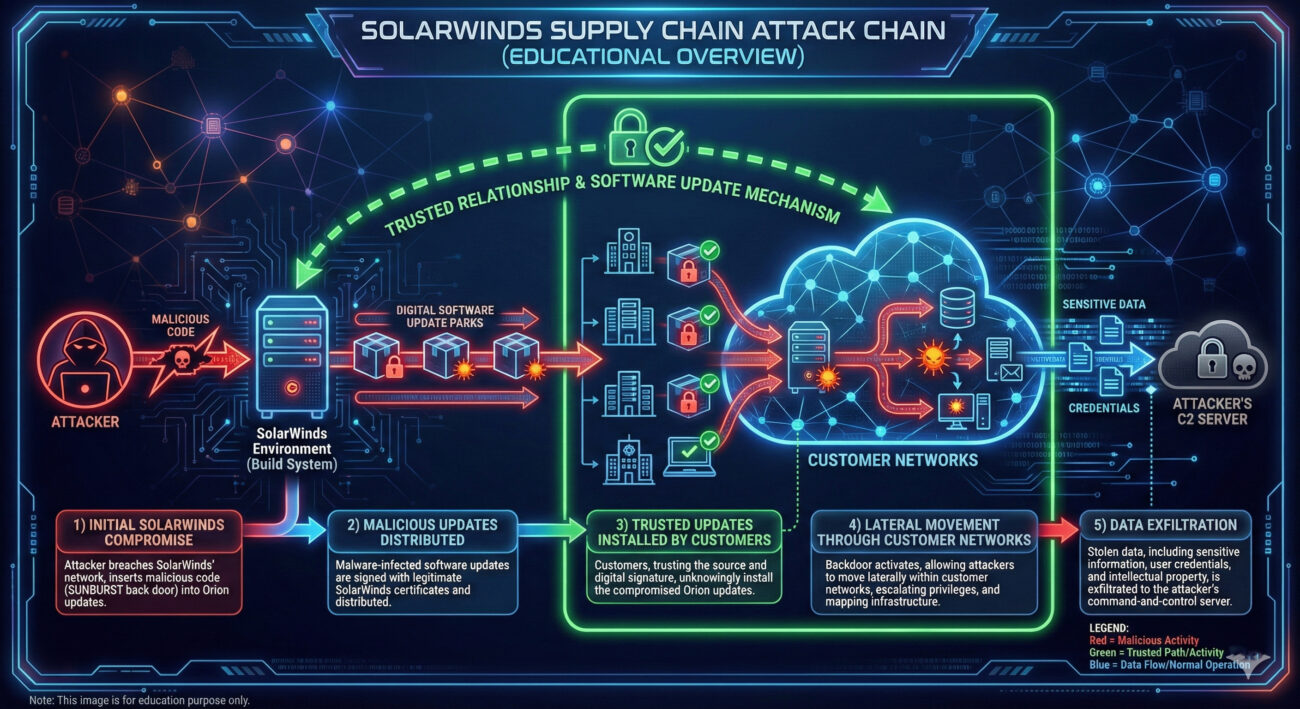
Get-MsolDomain -TenantId <tenant_id>The SolarWinds SUNBURST attack is perhaps the most famous example of trust dependency exploitation. Attackers didn't breach Microsoft, Cisco, or government agencies directly. Instead, they compromised SolarWinds' software build system and distributed trojanized updates to 18,000+ customers.
This campaign demonstrated how a single trusted vendor with widespread network access could become the perfect attack vector. The attackers performed extensive reconnaissance to understand SolarWinds' position in various trust networks before executing their compromise.
Another notable example is the APT29 (Cozy Bear) campaign against multiple governments, where they exploited trust relationships between government agencies and think tanks to gain initial access.
External Report: For a detailed analysis of supply chain attacks leveraging trust dependencies, see the Mandiant SUNBURST technical analysis.
As a defender, you need to think like a building security manager who doesn't just secure their own building, but also knows which contractors have keys, which adjacent buildings share infrastructure, and who has after-hours access privileges.
Your detection philosophy should shift from "protect our perimeter" to "understand and monitor all trust relationships." This means implementing controls that can detect abnormal use of legitimate trust relationships.
In a typical Security Operations Center, trust dependency attacks often manifest as:
The challenge is separating malicious activity from legitimate business use. This requires establishing baselines for normal trust relationship usage.
Here's a Sigma rule to detect suspicious cross-domain authentication patterns that could indicate trust relationship exploitation:
# Sigma Rule: Suspicious Cross-Domain Authentication Pattern
# Identifies authentication attempts between domains that rarely communicate
# Useful for detecting trust relationship exploitation
title: Suspicious Cross-Domain Authentication
id: a7b3c9d2-4e5f-6a7b-8c9d-0e1f2a3b4c5d
status: experimental
description: Detects unusual authentication patterns between trusted domains
author: MITRE ATT&CK Field Guide
date: 2024/03/15
logsource:
    product: windows
    service: security
detection:
    selection:
        EventID: 4769  # Kerberos Service Ticket Operations
        TicketEncryptionType: '0x17'  # RC4 (often used in attacks)
        ServiceName: '*$@*'  # Service account
        ClientAddress: '192.168.*'  # Internal IP range
    filter:
        ServiceName:
            - '*DC$@*'  # Exclude domain controller communication
            - '*SQL$@*'  # Exclude common service accounts
    condition: selection and not filter
fields:
    - ClientUserName
    - ServiceName
    - ClientAddress
    - TicketEncryptionType
falsepositives:
    - Legitimate cross-domain service accounts
    - Domain migration activities
level: medium
For Azure/Microsoft 365 environments, use this KQL query to detect unusual federation trust usage:
// Azure Sentinel KQL: Unusual Federation Trust Usage
// Monitors authentication from federated domains for anomalies
SigninLogs
| where ResourceId contains "office365"
| where Identity contains "@"  // Ensure we have UPN format
| where UserType == "Guest" or Identity has "@partnerdomain.com"  // External identities
| where ResultType == "0"  // Successful logins
| summarize LoginCount = count(), DistinctIPs = dcount(IPAddress),
    LastLogin = max(TimeGenerated) by Identity, AppDisplayName
| where LoginCount > 10 and DistinctIPs > 3  // Thresholds may vary
| order by LoginCount descMitigating Network Trust Dependencies requires a combination of technical controls and process improvements:
| Attacker's Goal (Red Team) | Defender's Action (Blue Team) |
|---|---|
| Map all trust relationships to identify attack paths | Maintain an authoritative inventory of all trust relationships |
| Find the weakest link in the trust chain | Apply consistent security requirements across all trusted entities |
| Use legitimate trust to bypass security controls | Implement conditional access and anomaly detection on trust usage |
| Move laterally through trusted domains | Segment networks and enforce inter-domain boundary controls |
| Maintain persistence through trusted third parties | Regularly review and recertify all third-party access |
Sudden spike in authentication requests between domains that normally have minimal communication, especially using older encryption types like RC4.
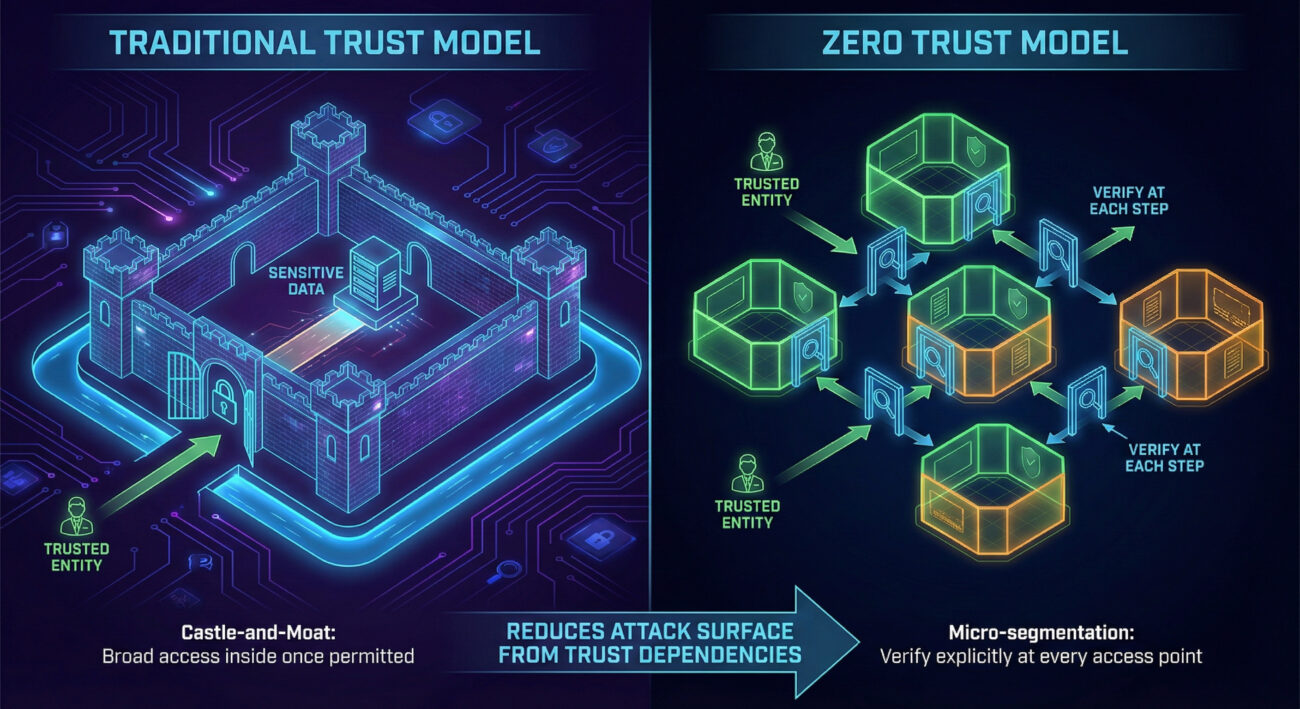
Implement a Zero Trust architecture with micro-segmentation and continuous verification of all access requests, regardless of source.
Azure AD sign-in logs for guest/external user anomalies, Windows Security Event ID 4769 for cross-domain Kerberos tickets, and VPN logs for third-party access patterns.
Network Trust Dependencies represent one of the most insidious reconnaissance techniques because they exploit legitimate business relationships. As organizations become more interconnected, our attack surface expands beyond our direct control.
The key takeaway is that trust is a vulnerability that must be managed. You can't eliminate trust relationships, business requires them, but you can make them visible, monitor their usage, and apply consistent security controls across all trust boundaries.
Your Action Plan:
Continue Learning:
Remember: In cybersecurity, you're only as strong as your weakest trust relationship. By understanding and securing these dependencies, you're building a more resilient defense that extends beyond your organizational boundaries.
Every contribution moves us closer to our goal: making world-class cybersecurity education accessible to ALL.
Choose the amount of donation by yourself.