










































Certification Courses
Hands-On Labs
Threat Intelligence
Latest Cyber News
MITRE ATT&CK Breakdown
All Cyber Keywords
Ever wondered who companies call before the hackers strike? Imagine a professional who’s paid to think like a criminal, but with one crucial difference: they’re the good guy. That’s the life of a penetration tester. In our digitally-driven world, where headlines scream of data breaches and crippling ransomware attacks, these digital guardians are the secret weapon for security.
A penetration tester (or "ethical hacker") is a cybersecurity professional who is legally authorized to simulate cyber attacks on computer systems, networks, and applications. Their mission is to discover vulnerabilities before malicious actors do, providing a roadmap for organizations to fortify their defenses.
Think of them as a home inspector, but for digital infrastructure. Instead of checking for faulty wiring or a weak foundation, they probe for weak passwords, unpatched software, and misconfigured servers. In this guide, you’ll learn exactly what a penetration tester does, why it’s one of the most in-demand tech careers, and the clear, step-by-step path you can take to become one, even if you're starting from zero.
Cybercrime is predicted to cost the world $10.5 trillion annually by 2025, according to Cybersecurity Ventures. In this high-stakes environment, waiting for an attack to happen is a recipe for disaster. This is where the penetration tester shifts from a "nice-to-have" to a critical line of defense.
A penetration tester provides proactive security. Unlike automated vulnerability scanners that just list potential problems, a skilled tester exploits vulnerabilities to demonstrate real-world impact. They answer the crucial question: "If a real hacker got in here, what could they actually do?" Could they steal patient records? Shut down a power grid? Drain a bank account? By finding out first, organizations can prioritize fixing the most dangerous flaws.
For beginners, understanding this role matters because it represents a tangible, high-growth career path. The U.S. Bureau of Labor Statistics projects information security analyst jobs (which includes penetration testers) to grow 32% from 2022 to 2032, much faster than average. It’s a field built on continuous learning, puzzle-solving, and making a tangible difference in securing our digital world.
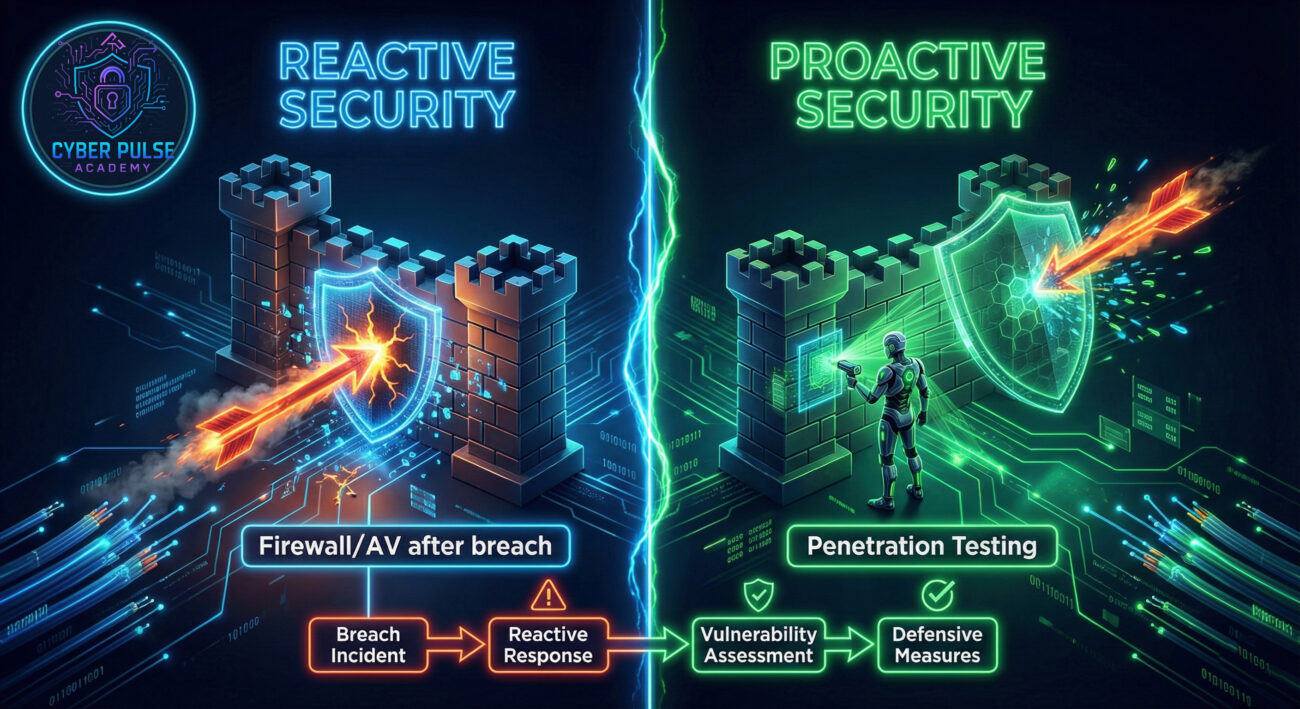
Cybersecurity has its own language. Let's break down the essential jargon you'll encounter on the path to becoming a penetration tester.
| Term | Simple Definition | Everyday Analogy |
|---|---|---|
| Vulnerability | A weakness or flaw in a system that could be exploited. | An unlocked window on the ground floor of a house. |
| Exploit | A piece of code, technique, or sequence of commands that takes advantage of a vulnerability. | The method a thief uses to climb through the unlocked window. |
| Payload | The part of an exploit that performs the malicious action (e.g., installing malware). | The tool the thief uses to pick the lock on the interior door once inside. |
| Penetration Test | A authorized, simulated attack to evaluate security. | Hiring a security consultant to try to break into your house and report how they did it. |
| Scope | The clearly defined boundaries of a test (e.g., which systems, what methods are allowed). | Giving the consultant permission to check doors/windows but not to pick the safe. |
| Post-Exploitation | Actions taken after gaining initial access to a system (e.g., moving laterally, stealing data). | After entering the house, the thief searches other rooms for valuables. |
Let’s follow "Alex," a seasoned penetration tester, hired by "City General Hospital" for a routine security audit. The hospital's management is confident in their firewalls but wants an expert eye.
The Goal: Assess the security of the hospital's external website and patient portal without disrupting any critical medical systems (a strictly defined scope).
| Time/Stage | What Happened | Impact & Finding |
|---|---|---|
| Day 1: Reconnaissance | Alex uses public tools to "map" the hospital's online presence, finding old developer subdomains and employee names from social media. | Discovers a forgotten test server still online, not listed in the official scope. |
| Day 2: Scanning & Enumeration | Automated scanners probe the test server, finding it runs outdated, unpatched software with a known vulnerability. | Identifies a critical entry point that IT didn't even know existed. |
| Day 3: Gaining Access | Alex writes a custom exploit for the old software, gaining a low-level "foothold" on the test server. | Demonstrates that the forgotten server is a direct path into the network. |
| Day 4: Post-Exploitation | From the test server, Alex finds it can communicate with the main internal database server due to poor network segmentation. | Shows that a breach of the test server could lead to exposure of sensitive patient health records. |
| Day 5: Reporting & Remediation | Alex delivers a clear report: 1. Immediately take down the test server. 2. Patch all similar software. 3. Implement better network segmentation. | The hospital fixes the flaws, significantly reducing its risk of a real, damaging data breach. Alex's work provided a actionable roadmap, not just a list of problems. |
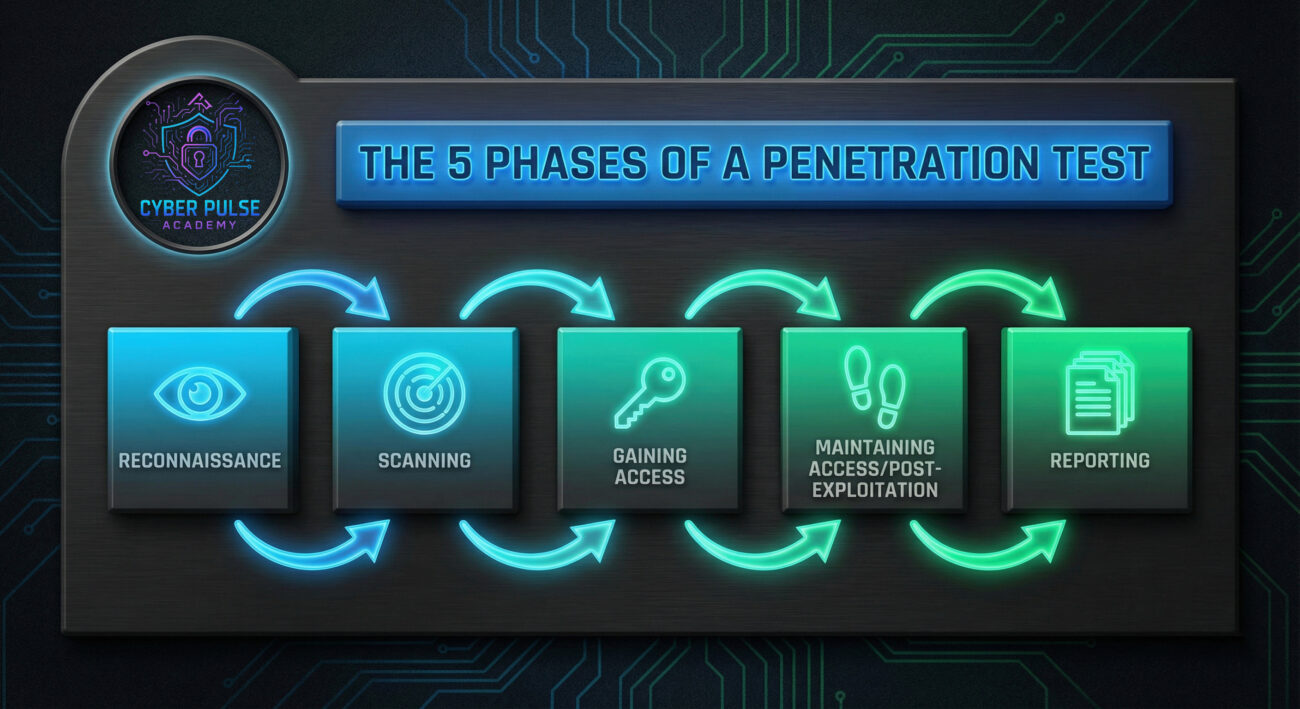
Ready to explore this career? This is your actionable, beginner-friendly roadmap. You don't need a fancy degree to start, just curiosity and persistence.
You can't attack what you don't understand. Start with the absolute basics:
Understand the landscape you're entering:
This is where it gets fun. Start learning the tools and techniques in a safe, legal environment:
Certifications validate your skills to employers. Start with an entry-level cert:
Penetration testing has niches. Explore what excites you most:
Employers want proof. Create a professional portfolio:
Your first job title might not be "Penetration Tester." Look for adjacent roles to gain experience:
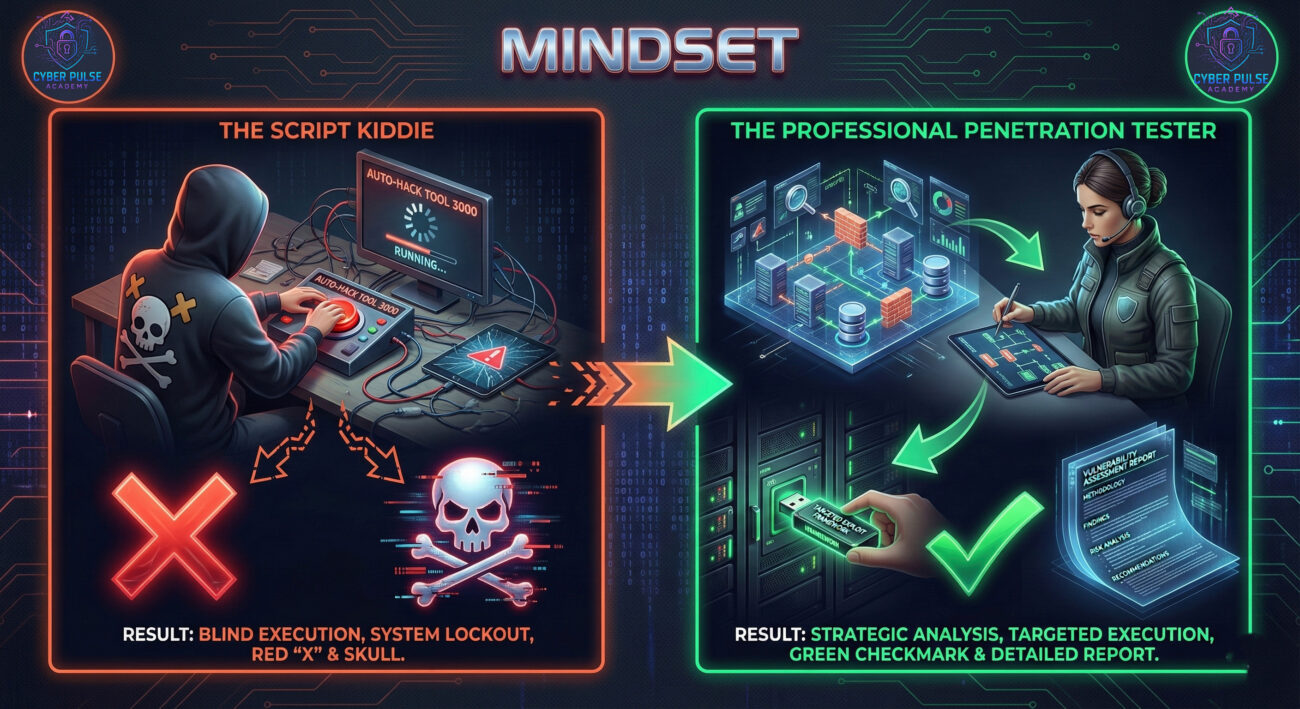
Let's think like an attacker targeting a small business. Their public website has a contact form. A simple, automated scan reveals the form is vulnerable to a common SQL Injection flaw. The attacker crafts a special "payload" in the form's message field. Instead of submitting a message, this payload tricks the website's database into revealing a list of all user emails and hashed passwords. With these in hand, the attacker can try to crack the weak hashes or use the emails for a sophisticated phishing campaign against employees.
This is where the penetration tester's work shines. During a routine web app test, they would have found that same contact form vulnerability. Their report wouldn't just say "SQL Injection found." It would demonstrate the exact steps to exploit it (just as the attacker would), show proof that customer data could be stolen, and provide the developer with the exact secure code fix, using "parameterized queries", to permanently close the flaw. The mindset shift is from "there's a bug" to "here is how an adversary will use this to harm you, and here is how to stop them."
A penetration tester on the Red Team focuses on one goal: achieve the objective. This could be "steal the prototype files" or "gain access to the CEO's email." They are creative, patient, and opportunistic. They look for the easiest path in, not necessarily the most technical. They care about stealth, avoiding detection by security tools, and understanding the human element (social engineering). For them, a single vulnerability is a puzzle piece; their skill lies in chaining several small flaws together to build a path to the prize.
The Blue Team views the penetration tester as their most valuable ally. They are defenders tasked with monitoring, detecting, and responding to real incidents. When a pentester provides a report, the Blue Team uses it as a treasure map. They work to patch the found vulnerabilities, but more importantly, they analyze the tester's methods. Could their Security Information and Event Management (SIEM) system have detected the anomalous behavior? Could stronger access controls have limited the damage? The pentest gives them a safe, controlled rehearsal for a real attack, allowing them to tune their defenses.
Becoming a penetration tester is a journey of continuous learning that starts with a single step. It's a career that combines technical challenge with the profound satisfaction of being a digital protector.
Let's recap the key takeaways:
The world needs more ethical hackers. Whether you're looking for a career change or want to deepen your tech knowledge, the door to penetration testing is open. Your mission, should you choose to accept it, begins now.
Start today by setting up a free account on TryHackMe and completing the "Pre Security" learning path. Have questions about this guide or want to share your progress? Leave a comment below! Let's build a more secure future, together.
Every contribution moves us closer to our goal: making world-class cybersecurity education accessible to ALL.
Choose the amount of donation by yourself.