




























Certification Courses
Hands-On Labs
Threat Intelligence
Latest Cyber News
MITRE ATT&CK Breakdown
All Cyber Keywords
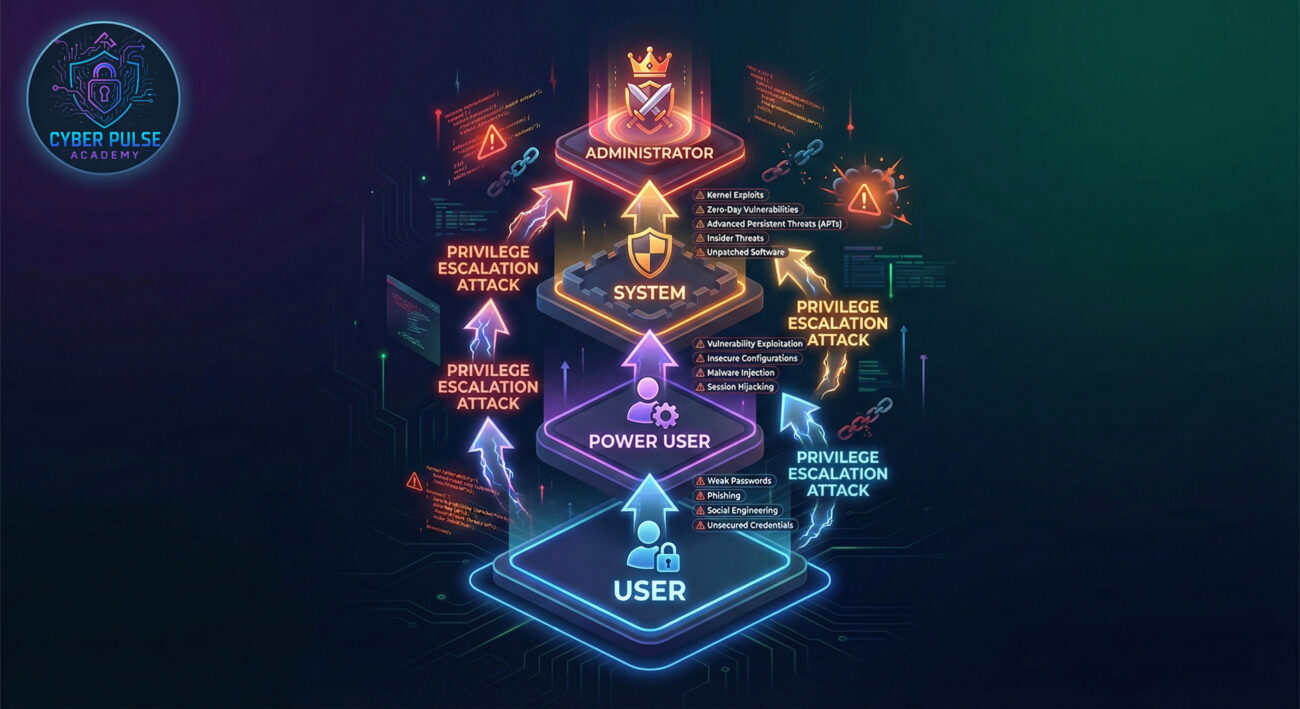
Imagine if a stranger could suddenly access your bank account, emails, and photos just by knowing your social media password. That terrifying possibility is at the heart of privilege escalation, a common yet dangerous attack in cybersecurity. In simple terms, privilege escalation is when an attacker gains higher-level permissions than they should have, like a hotel guest finding a master key that opens all rooms instead of just their own. In this guide, you'll learn: what privilege escalation really is, why it's so risky, how it happens in real life, and practical steps to protect yourself or your organization.
Have you ever wondered how a hacker goes from stealing a simple password to controlling an entire network? The answer often lies in privilege escalation. This vulnerability occurs when someone with limited access, like a regular user account, finds a way to boost their permissions to an administrator or root level, granting them unauthorized control over systems, data, and resources. Think of it as climbing a ladder you weren't supposed to: starting on the ground floor (user access) and sneaking up to the penthouse (full system control). By the end of this post, you'll understand this critical concept clearly, see real examples, and learn how to build defenses against it.
Privilege escalation isn't just technical jargon, it's a real-world threat that impacts businesses and individuals daily. According to the Cybersecurity and Infrastructure Security Agency (CISA), over 80% of data breaches involve compromised credentials or privilege abuse. When attackers escalate privileges, they can steal sensitive data, install malware, or even cripple entire operations, leading to financial losses and reputational damage. For beginners, understanding privilege escalation is essential because it highlights why basic security measures, like strong passwords and updates, matter so much. In our connected world, a single weak link can cascade into a full-blown breach, making this topic crucial for anyone using computers or the internet.
Before diving deeper, let's break down some essential terms with simple analogies. This table will help you grasp the basics of privilege escalation quickly.
| Term | Simple Definition | Everyday Analogy |
|---|---|---|
| Privilege Escalation | Gaining higher access rights than originally granted. | A movie ticket holder sneaking into the VIP lounge. |
| User Account | A standard login with limited permissions. | A library card that lets you borrow books but not manage the library. |
| Administrator (Admin) | A high-level account with full system control. | A building manager with keys to every room and system. |
| Exploit | A method to take advantage of a security weakness. | Using a copied key to open a locked door you shouldn't access. |
| Least Privilege | Giving users only the access they need. | Letting a babysitter use the kitchen but not the safe. |
Let's follow Sarah, an employee at "TechFlow Inc.," to see how privilege escalation unfolds in reality. Sarah uses a weak password for her work account, which is phished by an attacker. Initially, the attacker only has access to Sarah's emails, but they discover an unpatched software vulnerability on her computer. By exploiting it, they gain administrator rights on the local system, then move laterally to the company server, stealing customer data. Below is a timeline of this attack.
| Time/Stage | What Happened | Impact |
|---|---|---|
| Day 1: Initial Access | Attacker phishes Sarah's password via a fake login email. | Low: Access to Sarah's account with limited privileges. |
| Day 2: Discovery | Attacker scans system and finds outdated software with a known exploit. | Medium: Identifies a path for privilege escalation. |
| Day 3: Escalation | Exploit is used to gain admin rights on Sarah's computer. | High: Full control over local machine; can install tools. |
| Day 4: Lateral Movement | Attacker accesses server using stolen admin credentials. | Critical: Sensitive data breached; company operations at risk. |
This scenario shows how a small weakness, like a weak password, can spiral into a major crisis through privilege escalation. For TechFlow, the aftermath included financial losses and trust erosion with customers.
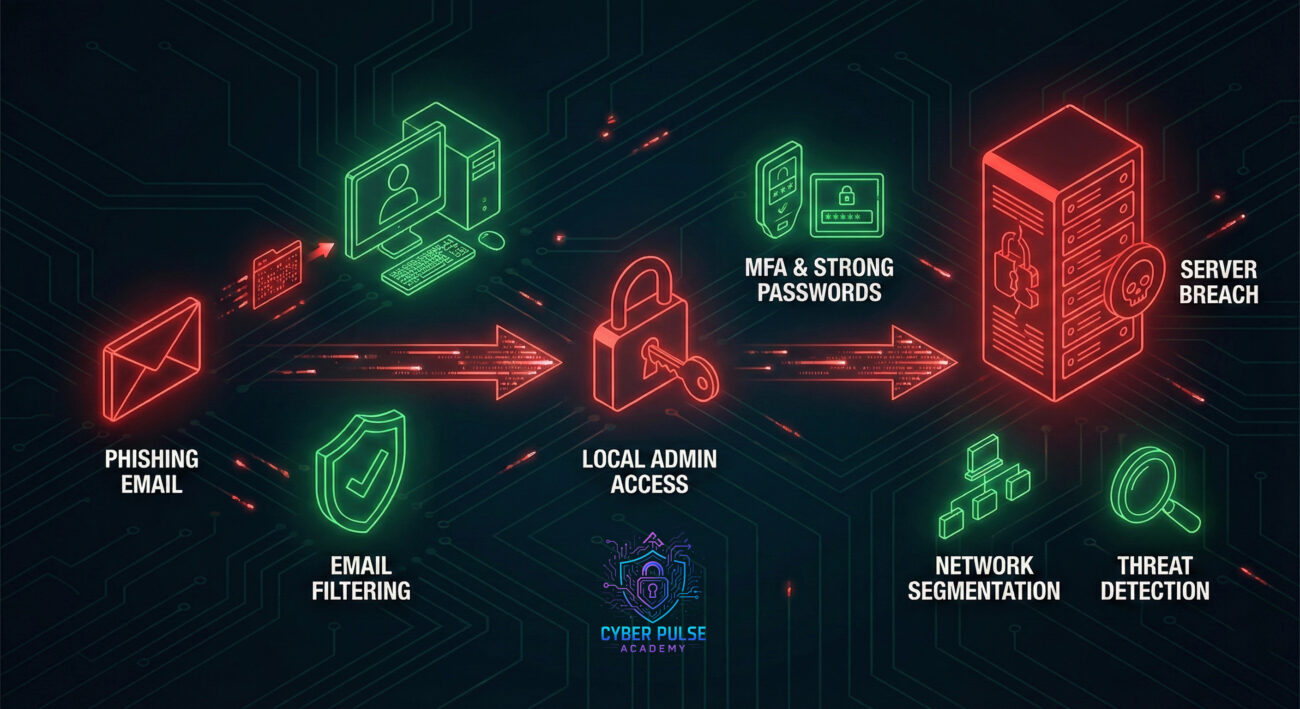
Protecting against privilege escalation doesn't require advanced skills, just consistent habits. Here's a practical guide to secure your systems.
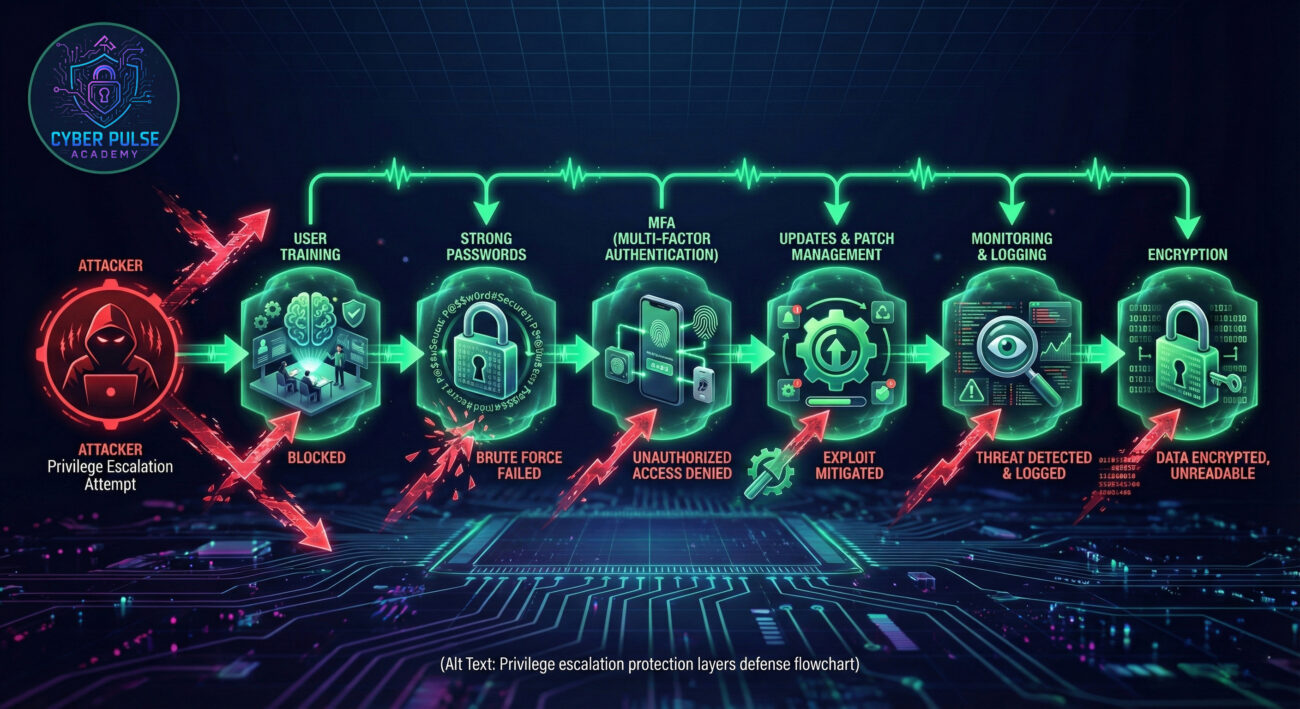
From a threat hunter's perspective, privilege escalation is like a chess game. An attacker might start by compromising a low-privilege account through phishing, then search for misconfigurations, like a service running with admin rights, to escalate privileges silently. Their goal is to move horizontally across the network without triggering alarms. On the defense side, a savvy hunter monitors for anomalies, such as unusual process executions or privilege changes, and isolates compromised accounts quickly. By thinking like an attacker, defenders can anticipate moves and strengthen controls, such as segmenting networks and enforcing strict access policies.
Red teams view privilege escalation as a golden opportunity. Their focus is on finding the easiest path to higher permissions, whether through exploiting software bugs, stealing credentials, or abusing misconfigured settings. They care about stealth and efficiency, often using tools to automate discovery of vulnerabilities. For them, success means gaining persistent access to sensitive data or systems without detection, turning a minor foothold into a major compromise.
Blue teams see privilege escalation as a critical threat to contain. Their priority is prevention and detection: implementing controls like least privilege, monitoring logs for suspicious activity, and responding swiftly to incidents. They care about resilience and minimizing damage, often conducting regular assessments to identify weaknesses before attackers do. For them, success is maintaining a secure environment where privileges are tightly controlled and anomalies are caught early.
Privilege escalation is a powerful yet dangerous concept in cybersecurity, but with this guide, you're now equipped to understand and counter it. Let's recap:
Remember, cybersecurity is a journey, and mastering concepts like privilege escalation is a crucial step toward staying safe online.
Found this guide helpful? Share your thoughts or questions in the comments below! If you're interested in more beginner-friendly cybersecurity topics, explore our blog on password security or network basics. Stay curious and stay secure!
Every contribution moves us closer to our goal: making world-class cybersecurity education accessible to ALL.
Choose the amount of donation by yourself.