













Certification Courses
Hands-On Labs
Threat Intelligence
Latest Cyber News
MITRE ATT&CK Breakdown
All Cyber Keywords
Why Purple Team Matters in Cybersecurity Today
Have you ever wondered why, despite having firewalls, antivirus, and security experts, big companies still get hacked? It’s not always because of a lack of tools, but often a lack of teamwork between the people defending the castle and the ones trying to break in. That’s where Purple Team comes in.
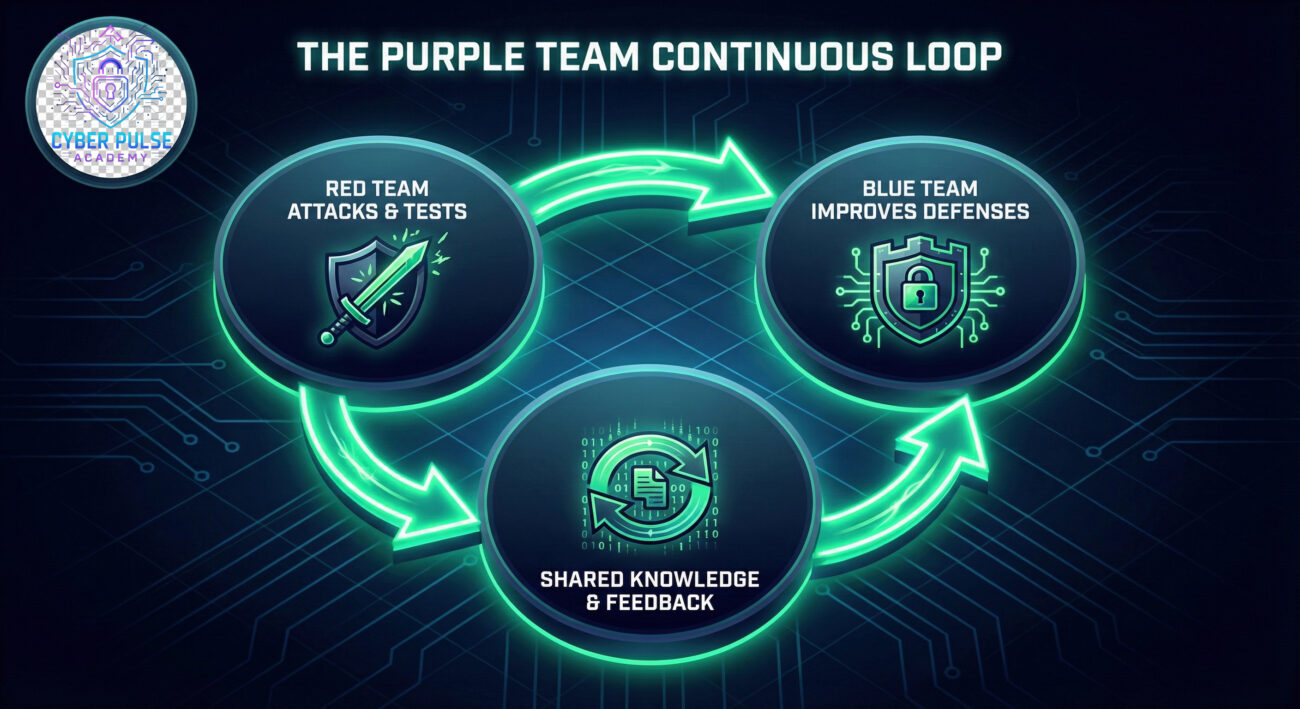
In simple terms, a Purple Team is not a separate team, but a powerful collaborative mindset where the "attackers" (Red Team) and "defenders" (Blue Team) work together continuously to make security smarter, faster, and stronger. Think of it like a football team where the offense and defense practice together every day, learning each other's moves to win the championship.
In this beginner-friendly guide, you’ll learn exactly what Purple Teaming is, why it’s revolutionizing cybersecurity, and how this approach creates a defense that is proactive, intelligent, and incredibly resilient.
Traditional cybersecurity often operated in silos. The Red Team (attack simulation) would launch a secret test, find vulnerabilities, and write a report. The Blue Team (defense) would receive that report weeks later, often feeling criticized, and would patch the holes. This reactive, slow, and sometimes adversarial cycle left windows of risk wide open.
Purple Teaming shatters this old model. According to a SANS Institute report, organizations with a mature collaborative security posture (the essence of Purple Teaming) detect and respond to incidents 55% faster. It transforms security from a periodic audit into a continuous, learning conversation.
Imagine a hospital where surgeons and infection-control nurses only talked once a year. Dangerous, right? Purple Team is the daily briefing where they share knowledge in real-time, leading to better patient (protected data) outcomes. In our digital world, where attacks evolve daily, this continuous loop of testing, learning, and improving isn't just smart, it's essential for survival.
Let's break down the essential jargon so you can speak about Purple Team with confidence.
| Term | Simple Definition | Everyday Analogy |
|---|---|---|
| Red Team | The authorized "ethical hackers" who simulate real-world attacks to find security weaknesses. | Like a mystery shopper hired to test a store's security and customer service by trying to find problems. |
| Blue Team | The defenders who monitor, detect, and respond to incidents to protect the organization. | Like the store's security guards and managers who watch cameras, check alarms, and handle suspicious activity. |
| Purple Team | The collaborative process where Red and Blue teams work together, sharing tools, tactics, and findings in real-time. | Like the mystery shopper and security guard having a daily debrief to immediately fix gaps and train staff, making the store safer together. |
| Threat Intelligence | Knowledge about current threats and attackers used to inform defenses. | Like getting a neighborhood watch bulletin about recent break-in methods so you can upgrade your locks and alarms. |
| Closed-Loop Feedback | The core of Purple Teaming: an attack is detected, lessons are learned, defenses are improved, and the cycle repeats. | Like a video game where you instantly replay a level you failed, learning from mistakes until you master it. |
Let's follow "SecureBank" and their new Purple Team initiative. Maria (Blue Team Lead) and Alex (Red Team Lead) now have a shared goal: strengthen security, not just score points.
The Challenge: A new phishing campaign is targeting financial institutions. Instead of waiting for a quarterly test, Alex's Red Team designs a realistic phishing email and launches it against a controlled group of employees with Maria's Blue Team fully aware and monitoring.
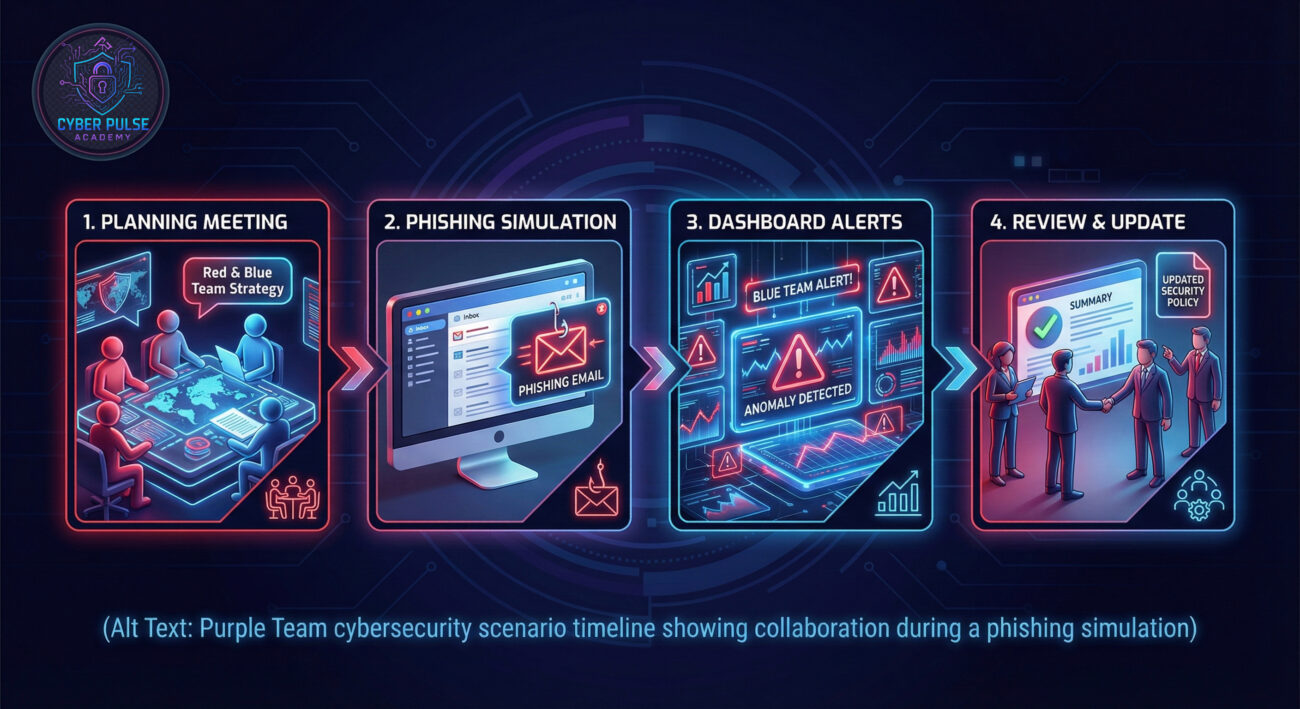
The timeline below shows how this collaborative play unfolds:
| Time / Stage | What Happened (Purple Team Action) | Impact & Learning |
|---|---|---|
| 09:00 AM Planning |
Alex (Red) briefs Maria (Blue) on the exact phishing technique they'll use. Together, they define the rules of engagement. | Blue Team knows what to look for. No surprises, just a focused training exercise. |
| 10:15 AM Simulation Launch |
The simulated phishing email is sent. Blue Team's secure email gateway is tuned to log everything but not block the test. | Real-time data flows in on click rates, showing which departments are most vulnerable. |
| 10:30 AM Detection & Response |
Maria's team sees the alerts. They practice their response: isolating endpoints, analyzing the email's payload, and verifying it's a test. | Blue Team hones their incident response muscle memory in a safe environment. |
| 11:30 AM Immediate Debrief |
Both teams meet. Alex shows what made the email convincing. Maria shares what detection rules worked or were missed. | Instant feedback loop. A new email filtering rule and a user awareness micro-training are created on the spot. |
The Result: In one morning, SecureBank's defenses evolved. The Blue Team's tools are sharper, employees are better trained, and the Red Team understands the defensive hurdles better. This is the Purple Team advantage: protected today, stronger tomorrow.
Implementing a Purple Team approach is more about culture than hiring a new team. Here’s how any organization can start.
Shift the mindset from "Red vs. Blue" to "Us vs. The Threat." Leadership must communicate that the goal is organizational security, not individual team "wins."
Don’t start with a massive, complex attack simulation. Begin small and focused.
Break down physical and communication barriers. The magic happens in the shared space.
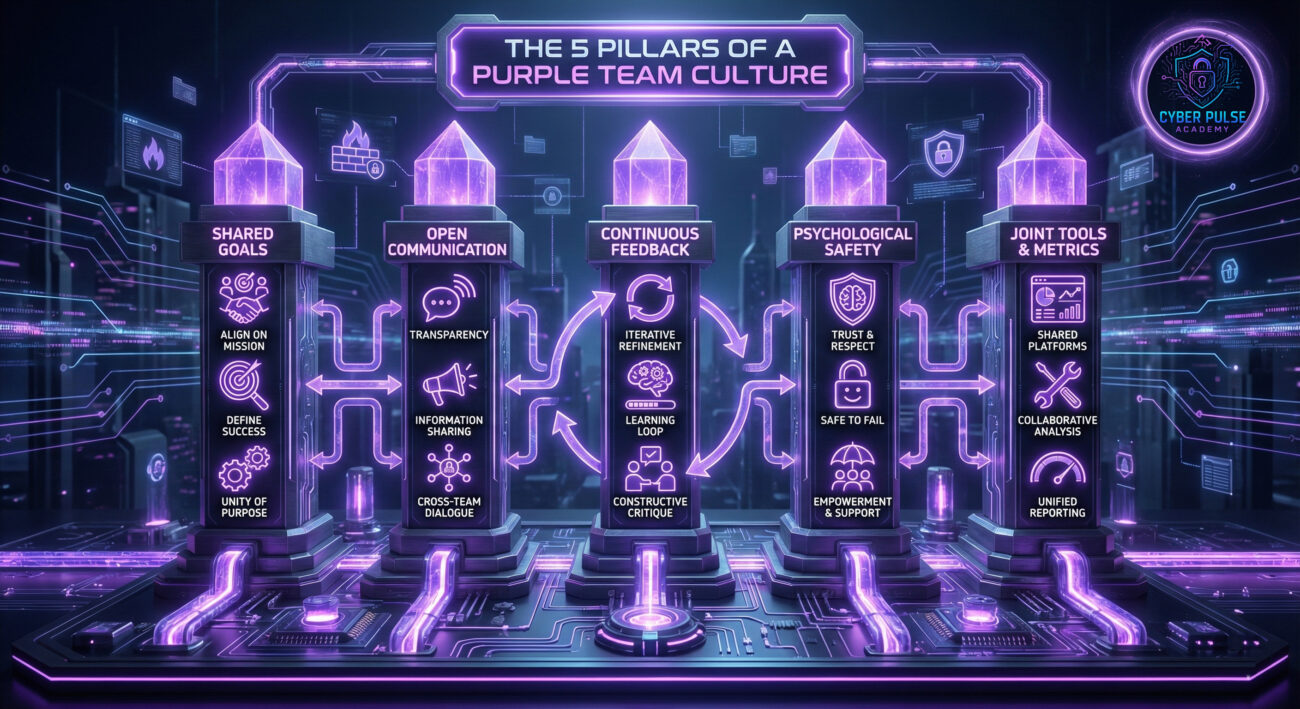
The review session is the most critical part. Focus on systems and processes, not people.
Turn lessons into automated defenses. This closes the loop and scales the Purple Team effect.
A core benefit of Purple Teaming is developing a "threat hunter" mindset, thinking like the adversary to defend better.
Simple Attack Path: A real hacker doesn't try every door. They look for the easiest one: an employee who reuses passwords. They find a leaked password from an old breach on the dark web, try it on the company's email portal, and get in. From there, they look for internal documents to launch a bigger attack.
Defender’s Counter-Move (Purple Team Style): The Red Team simulates this exact "credential stuffing" attack. The Blue Team, working alongside, sees which accounts are vulnerable. Together, they don't just reset passwords. They implement a company-wide password manager and enforce multi-factor authentication (MFA) for all cloud logins. They've now closed an entire class of attacks by thinking one step ahead of the adversary.
"My mission is to find a way in, no matter what. I look for the tiniest crack, an out-of-date server, a weak password policy, a gullible employee. I'm creative, persistent, and I use deception. In a Purple Team, I get to explain my tricks. I show the Blue Team how easy it was to send a fake email that looked like the CEO's. My success is no longer a secret; it's a teaching moment that makes the whole organization stronger against real hackers who won't share their methods."
"My mission is to protect. I monitor endless logs, manage complex tools, and respond to alerts. It can feel like searching for a needle in a haystack. In a Purple Team, I get to ask the 'attacker' directly: 'What would you do next?' This inside knowledge is priceless. Instead of guessing, I can now build strong detection rules for the specific techniques they use. My tools become smarter, and I can focus on real threats instead of false alarms. We learn and improve together."
The world of cyber threats is moving too fast for a "set and forget" defense. Purple Teaming is the strategic answer, a continuous cycle of collaboration that turns security into a dynamic, learning organism.
By embracing the Purple Team philosophy, organizations move from a state of periodic panic to one of confident, continuous readiness. It’s the ultimate secret to building a digital defense that doesn’t just resist attacks but learns from them and emerges stronger.
Cybersecurity is a journey, and understanding how teams work together is a huge first step. Have questions about Purple Teaming, Red Teams, or Blue Teams? Drop a comment below or explore our other beginner guides to continue building your knowledge!
Share your thoughts: Does your organization use a collaborative security approach? What's the biggest challenge you see in breaking down silos?
Every contribution moves us closer to our goal: making world-class cybersecurity education accessible to ALL.
Choose the amount of donation by yourself.