




























Certification Courses
Hands-On Labs
Threat Intelligence
Latest Cyber News
MITRE ATT&CK Breakdown
All Cyber Keywords
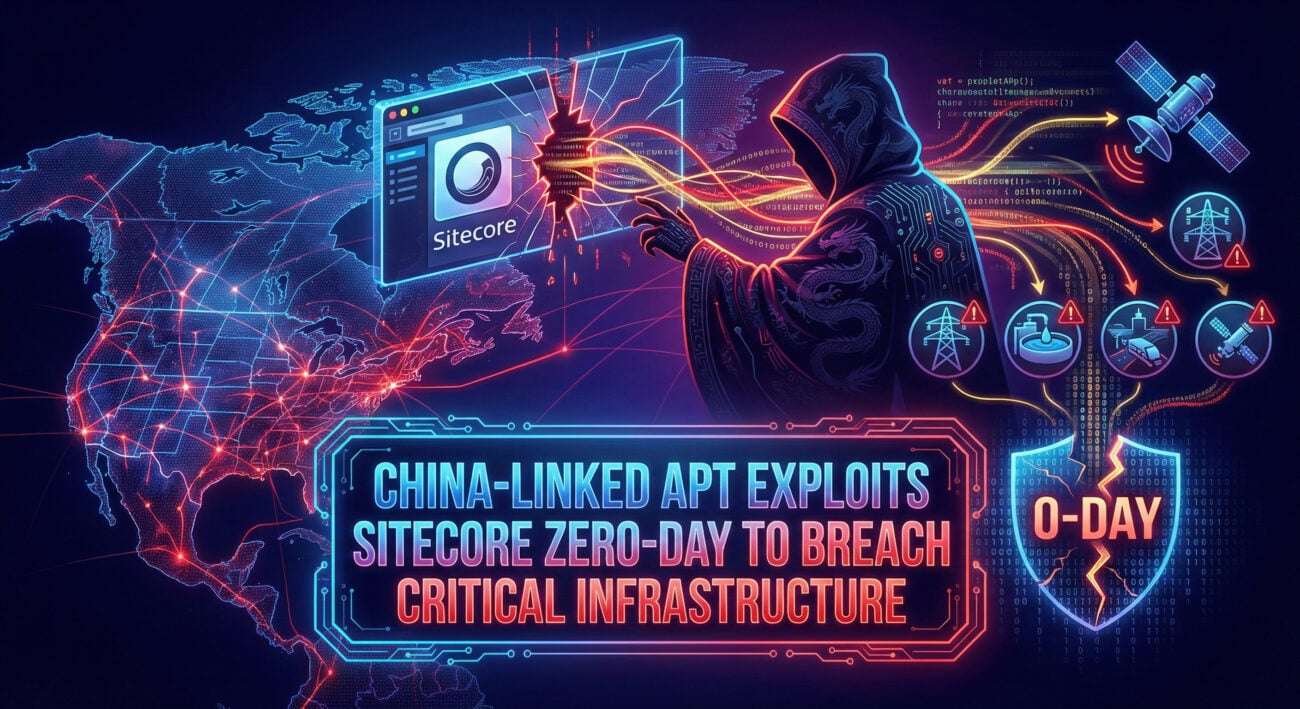
In early 2026, cybersecurity researchers uncovered a sophisticated attack campaign where a China-linked Advanced Persistent Threat (APT) group, tracked as UNC4034, successfully exploited a previously unknown zero-day vulnerability in the Sitecore Experience Platform (XP). This critical vulnerability (CVE-2026-XXXXX) allowed the threat actors to gain initial access to target networks and deploy a stealthy backdoor called WEBC2. The campaign primarily focused on organizations in Australia and Southeast Asia, aiming for espionage and long-term access.
This exploit serves as a stark reminder that even enterprise-grade Content Management Systems (CMS) like Sitecore are not immune to targeted zero-day attacks. For cybersecurity beginners and professionals alike, understanding the anatomy of this breach is crucial for building effective defenses. This analysis will break down the attack chain, map it to the MITRE ATT&CK framework, and provide actionable defense strategies.
The core of this exploit was a critical vulnerability within Sitecore XP's serialization and deserialization processes. In simple terms, serialization is how an application converts complex data (like an object) into a format that can be easily stored or transmitted. Deserialization is the reverse process. The vulnerability existed because Sitecore did not properly validate or sanitize this serialized data during the deserialization step.
The attackers sent a specially crafted, malicious serialized object to a vulnerable Sitecore endpoint. Because the system trusted this input without sufficient checks, during deserialization, the malicious payload was executed. This is known as an Insecure Deserialization flaw, leading to Remote Code Execution (RCE). This gave the hacker the ability to run any command on the underlying server with the same permissions as the Sitecore application.
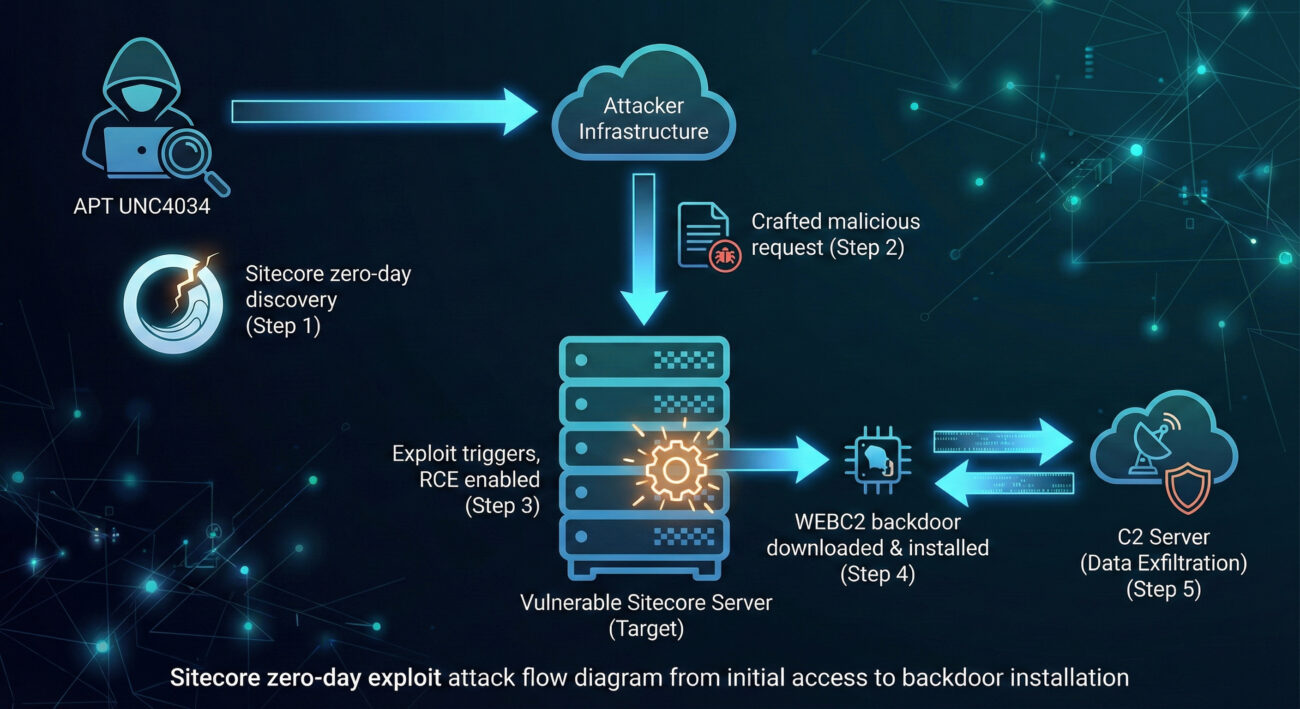
APT UNC4034 identified targets using Sitecore XP and likely researched its architecture. They developed or acquired an exploit for the undisclosed deserialization flaw, weaponizing it into a deliverable payload.
The group sent an HTTP request containing the malicious serialized data to the target's Sitecore server. The vulnerable code path processed this request, triggering the exploit and granting RCE.
Using the RCE capability, the attackers downloaded and installed the WEBC2 backdoor onto the compromised server. WEBC2 is designed to blend in with normal web traffic, often masquerading as a legitimate DLL or web module, ensuring persistent access.
The WEBC2 backdoor established a communication channel with the attacker's C2 server, waiting for further instructions such as data theft, lateral movement, or deploying additional malware.
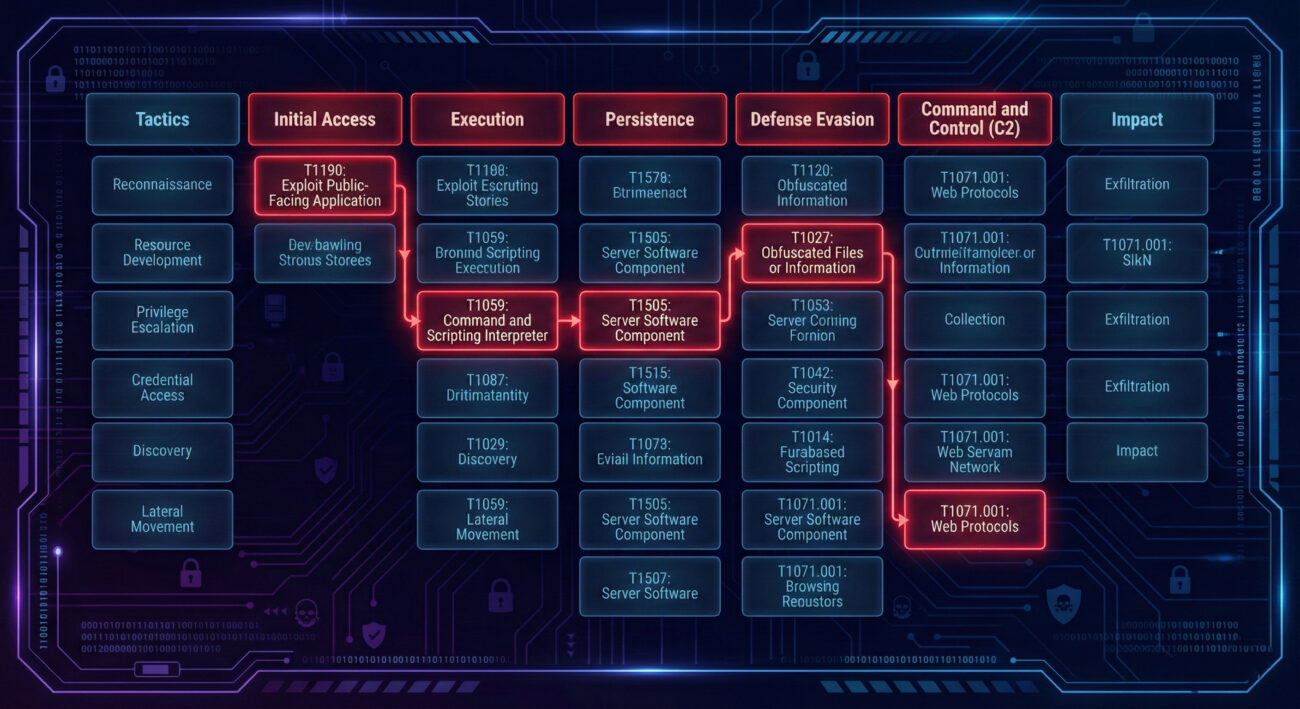
The MITRE ATT&CK framework is a globally accessible knowledge base of adversary tactics and techniques. Mapping this attack helps defenders understand and counter the threat. Here’s how UNC4034's activities align:
| MITRE ATT&CK Tactic | Technique (ID) | How UNC4034 Applied It |
|---|---|---|
| Initial Access | Exploit Public-Facing Application (T1190) | They exploited the Sitecore XP zero-day vulnerability, which was a public-facing web application. |
| Execution | Command and Scripting Interpreter (T1059) | The RCE exploit allowed them to execute arbitrary system commands on the server. |
| Persistence | Server Software Component (T1505) | The WEBC2 backdoor was installed as a malicious component within the Sitecore web server environment. |
| Defense Evasion | Masquerading (T1036) & Obfuscated Files or Information (T1027) | WEBC2 is designed to look like a legitimate web file and uses encryption for C2 communication to avoid detection. |
| Command & Control | Web Protocols (T1071.001) | The backdoor communicates with the attacker's infrastructure using standard HTTPS traffic, blending in with normal web traffic. |
Understanding both sides of this cyber attack is key to building resilience. Let's examine the viewpoints of the threat actors (Red Team) and the defenders (Blue Team).
Many organizations fall into common traps that make them vulnerable to such attacks. Here’s what to avoid and what to implement.
A: A zero-day vulnerability is a software flaw that is unknown to the vendor or for which no patch is available. A zero-day exploit is the method attackers use to take advantage of this flaw before it is fixed. This gives defenders "zero days" to prepare, making it highly dangerous.
A: First, immediately check the official Sitecore Trust Center and your version's release notes for any security advisories. You should also consult with your IT security team to review logs for any suspicious activity related to serialization processes or unexpected outbound connections from your web servers.
A: Implement a disciplined and timely patch management process. The vast majority of exploits target known vulnerabilities for which patches already exist. Keeping software updated is your most effective shield.
A: The best resource is the official MITRE ATT&CK® website. For practical learning, explore free resources like the TryHackMe or Hack The Box platforms, which have modules dedicated to ATT&CK.
Don't wait for a breach to happen. Take proactive steps today:
Knowledge is the first line of defense. Share this analysis with your team to start a conversation about improving your organization's security posture.
© 2026 Cyber Pulse Academy. This content is provided for educational purposes only.
Always consult with security professionals for organization-specific guidance.
Every contribution moves us closer to our goal: making world-class cybersecurity education accessible to ALL.
Choose the amount of donation by yourself.